Spaghetti Squash Pad Thai Flavorful and Easy Recipe

- 1 medium spaghetti squash - 2 tablespoons peanut oil - 2 cloves garlic, minced - 1 red bell pepper, thinly sliced - 1 cup fresh bean sprouts - 2 green onions, sliced (separating the white and green parts) - 2 large eggs, lightly beaten The main ingredients create the base for our dish. The spaghetti squash acts as our noodle substitute. It has a mild taste and absorbs flavors well. Fresh vegetables add crunch and color. Garlic boosts the flavor, while eggs add richness. - 3 tablespoons soy sauce - 1 tablespoon tamarind paste - 1 tablespoon brown sugar - ½ teaspoon red pepper flakes (or to taste) Seasonings bring everything together. Soy sauce adds saltiness. Tamarind paste gives a tangy flavor. Brown sugar balances the taste. Red pepper flakes add heat, making it exciting. Adjust these to suit your taste. - Fresh cilantro, for garnish - Chopped peanuts, for garnish - Lime wedges, for serving Garnishes elevate the dish visually and in flavor. Fresh cilantro adds a burst of freshness. Chopped peanuts provide crunch. Lime wedges offer a zesty kick. Squeeze lime over the top before eating for extra zest. {{ingredient_image_2}} Roasting method First, preheat your oven to 400°F (200°C). Take your medium spaghetti squash and cut it in half lengthwise. Be careful with the knife! Scoop out the seeds with a spoon. Brush the inside with olive oil and sprinkle some salt and pepper. Place the squash cut-side down on a baking sheet lined with parchment paper. Roast it for 35-40 minutes. The flesh should be tender and easy to scrape. How to scrape strands Once the squash cools slightly, grab a fork. Gently pull the flesh to create long spaghetti-like strands. This is the fun part! Set these strands aside while you cook the other ingredients. Heating oil and sautéing garlic In a large skillet or wok, heat 2 tablespoons of peanut oil over medium-high heat. Add 2 cloves of minced garlic and sauté for about 30 seconds. You want the garlic to be fragrant and just golden. Adding bell pepper and onions Next, toss in the thinly sliced red bell pepper and the white parts of the green onions. Stir-fry these for about 3-4 minutes. Keep stirring until the veggies are tender but still a bit crisp. Scrambling eggs Now, push the cooked vegetables to one side of the skillet. Pour in 2 beaten eggs in the empty space. Scramble them until fully cooked, then mix them with the veggies. Making and adding the sauce In a small bowl, whisk together 3 tablespoons of soy sauce, 1 tablespoon of tamarind paste, 1 tablespoon of brown sugar, and ½ teaspoon of red pepper flakes. Pour this sauce over the veggie and egg mix. Stir everything well to coat it evenly. Incorporating bean sprouts and squash Turn off the heat and fold in 1 cup of fresh bean sprouts. Gently toss until the sprouts are just wilted. Finally, add the spaghetti squash strands to the skillet. Fold everything together until it’s well mixed and heated through. How to choose the perfect spaghetti squash When picking a spaghetti squash, look for one that feels heavy. The skin should be firm and free of soft spots. A bright yellow color is best, as it shows ripeness. Ensuring even cooking Cut the squash in half lengthwise to help it cook evenly. Scoop out the seeds to allow the heat to penetrate. Roasting it cut-side down on parchment paper helps prevent sticking and promotes even cooking. Adjusting spice levels If you like heat, add more red pepper flakes. Start with half a teaspoon and taste as you mix. You can always add more, but it’s hard to take heat away! Additional toppings for extra flavor Consider adding fresh herbs like basil or mint for a fresh twist. Chopped peanuts add crunch, while lime juice brightens the dish. Try sesame seeds for a nutty flavor boost. Garnishing ideas To make your dish pop, sprinkle fresh cilantro and chopped peanuts on top. A wedge of lime on the side makes it look inviting. Serving suggestions Twirl the spaghetti strands into a nest on the plate. Let the colorful veggies peek out from the center. This makes for a beautiful and appetizing presentation. Pro Tips Choose the Right Squash: Opt for a medium-sized spaghetti squash that feels heavy for its size. This ensures a better yield of spaghetti-like strands. Customize Your Sauce: Feel free to adjust the soy sauce and tamarind paste according to your taste preferences. A little extra sweetness or acidity can elevate the dish. Keep It Crisp: To maintain the crunchiness of the vegetables, avoid overcooking them. They should be tender yet retain a slight bite. Garnish for Flavor: Don’t skip the garnishes! Fresh cilantro, chopped peanuts, and lime wedges add essential flavor and texture to your Pad Thai. {{image_4}} You can change the protein in this dish easily. Adding shrimp or chicken gives a tasty twist. - Shrimp: Cook shrimp in peanut oil until pink. Toss them in with the veggies. - Chicken: Use cooked chicken. Shred it and mix it in for extra flavor. - Vegetarian options: You can skip meat and add tofu. Firm tofu works best. Cube it and sauté until golden. Feel free to swap out the veggies based on what you have. - Different bell peppers: Use yellow or green bell peppers if you like. They add color and taste. - Incorporating other vegetables: Try adding carrots or snap peas. They add crunch and nutrition. Making this dish gluten-free is simple. - Ensuring gluten-free sauces: Choose gluten-free soy sauce. This keeps the flavor without the gluten. - Alternative noodles if desired: If you want noodles, try rice noodles. They work well and keep it gluten-free. To store leftover Spaghetti Squash Pad Thai, let it cool first. Place it in an airtight container. This keeps out air and moisture. Use glass or plastic containers that seal tightly. I recommend using containers that are microwave-safe for easy reheating. You can freeze Spaghetti Squash Pad Thai for later. Just make sure to cool it down before packing. Place it in freezer-safe bags or containers. Squeeze out excess air to avoid freezer burn. When you're ready to eat, thaw it overnight in the fridge. To reheat, warm it in a skillet on medium heat. Stir it regularly for even heating. In the fridge, Spaghetti Squash Pad Thai lasts about 3 to 5 days. Always check for signs of spoilage. If you see mold or an off smell, it's best to toss it. Freshness is key! The best way to cook spaghetti squash is to roast it. Here’s how: - Preheat your oven to 400°F (200°C). - Cut the squash in half lengthwise and remove the seeds. - Brush the flesh with olive oil and sprinkle with salt and pepper. - Place it cut-side down on a baking sheet lined with parchment paper. - Roast for 35-40 minutes, until tender. This method makes the squash easy to scrape into strands. You can also microwave it for a quicker option, but roasting gives it a fuller flavor. Yes, you can make Spaghetti Squash Pad Thai in advance. Here are some tips: - Roast the spaghetti squash and store it in the fridge. - Cook the sauce and veggies, then keep them separate. - Mix them together just before serving to keep it fresh. This way, you can enjoy a quick meal without sacrificing taste. Just reheat everything gently on the stove. You can easily make this Pad Thai vegetarian with a few swaps: - Replace the eggs with tofu or chickpeas for protein. - Use vegetable broth instead of any meat-based sauces. - Ensure the soy sauce is vegetarian by checking the label. These simple changes keep all the flavors while making it meat-free. Yes, Spaghetti Squash Pad Thai can be gluten-free. Consider these points: - Use gluten-free soy sauce or tamari. - Avoid any sauces that contain wheat. - Check all labels for hidden gluten. These modifications let you enjoy a tasty dish without gluten. Spaghetti Squash Pad Thai is easy and fun to make. You learn about the best ingredients, from fresh veggies to eggs. I shared tips for cooking squash and mixing flavors. You can switch up proteins and veggies to fit your taste. Remember to store leftovers right to enjoy them later. With the right methods, this dish is both tasty and healthy. This recipe supports many diets and is full of flavor. Enjoy cooking your unique version of this dish!

WANT TO SAVE THIS RECIPE?

Are you ready to enjoy a delicious twist on a classic dish? My Spaghetti Squash Pad Thai is a fun, healthy alternative that’s packed with flavor. This recipe uses fresh veggies and a blend of tasty sauces to create a meal that satisfies and delights. Plus, it’s easy to make! Dive into my step-by-step guide for a dish that’s perfect for any night of the week. You won’t want to miss this!

Why I Love This Recipe

  1. Healthy Twist: This Pad Thai uses spaghetti squash instead of traditional noodles, making it lower in carbs and calories while still providing a hearty meal.
  2. Quick and Easy:
  3. Flavorful Sauce: The combination of soy sauce, tamarind paste, and brown sugar creates a perfectly balanced sauce that brings all the ingredients together beautifully.
  4. Customizable: This recipe can easily be adapted with your favorite vegetables or proteins, allowing you to make it your own every time.

Ingredients

Main Ingredients

– 1 medium spaghetti squash

– 2 tablespoons peanut oil

– 2 cloves garlic, minced

– 1 red bell pepper, thinly sliced

– 1 cup fresh bean sprouts

– 2 green onions, sliced (separating the white and green parts)

– 2 large eggs, lightly beaten

The main ingredients create the base for our dish. The spaghetti squash acts as our noodle substitute. It has a mild taste and absorbs flavors well. Fresh vegetables add crunch and color. Garlic boosts the flavor, while eggs add richness.

Seasonings and Sauces

– 3 tablespoons soy sauce

– 1 tablespoon tamarind paste

– 1 tablespoon brown sugar

– ½ teaspoon red pepper flakes (or to taste)

Seasonings bring everything together. Soy sauce adds saltiness. Tamarind paste gives a tangy flavor. Brown sugar balances the taste. Red pepper flakes add heat, making it exciting. Adjust these to suit your taste.

Garnishes

– Fresh cilantro, for garnish

– Chopped peanuts, for garnish

– Lime wedges, for serving

Garnishes elevate the dish visually and in flavor. Fresh cilantro adds a burst of freshness. Chopped peanuts provide crunch. Lime wedges offer a zesty kick. Squeeze lime over the top before eating for extra zest.

Step-by-Step Instructions

Preparing the Spaghetti Squash

Roasting method

First, preheat your oven to 400°F (200°C). Take your medium spaghetti squash and cut it in half lengthwise. Be careful with the knife! Scoop out the seeds with a spoon. Brush the inside with olive oil and sprinkle some salt and pepper. Place the squash cut-side down on a baking sheet lined with parchment paper. Roast it for 35-40 minutes. The flesh should be tender and easy to scrape.

How to scrape strands

Once the squash cools slightly, grab a fork. Gently pull the flesh to create long spaghetti-like strands. This is the fun part! Set these strands aside while you cook the other ingredients.

Cooking the Vegetables

Heating oil and sautéing garlic

In a large skillet or wok, heat 2 tablespoons of peanut oil over medium-high heat. Add 2 cloves of minced garlic and sauté for about 30 seconds. You want the garlic to be fragrant and just golden.

Adding bell pepper and onions

Next, toss in the thinly sliced red bell pepper and the white parts of the green onions. Stir-fry these for about 3-4 minutes. Keep stirring until the veggies are tender but still a bit crisp.

Mixing and Combining Ingredients

Scrambling eggs

Now, push the cooked vegetables to one side of the skillet. Pour in 2 beaten eggs in the empty space. Scramble them until fully cooked, then mix them with the veggies.

Making and adding the sauce

In a small bowl, whisk together 3 tablespoons of soy sauce, 1 tablespoon of tamarind paste, 1 tablespoon of brown sugar, and ½ teaspoon of red pepper flakes. Pour this sauce over the veggie and egg mix. Stir everything well to coat it evenly.

Incorporating bean sprouts and squash

Turn off the heat and fold in 1 cup of fresh bean sprouts. Gently toss until the sprouts are just wilted. Finally, add the spaghetti squash strands to the skillet. Fold everything together until it’s well mixed and heated through.

Tips & Tricks

Cooking Tips

How to choose the perfect spaghetti squash

When picking a spaghetti squash, look for one that feels heavy. The skin should be firm and free of soft spots. A bright yellow color is best, as it shows ripeness.

Ensuring even cooking

Cut the squash in half lengthwise to help it cook evenly. Scoop out the seeds to allow the heat to penetrate. Roasting it cut-side down on parchment paper helps prevent sticking and promotes even cooking.

Flavor Enhancements

Adjusting spice levels

If you like heat, add more red pepper flakes. Start with half a teaspoon and taste as you mix. You can always add more, but it’s hard to take heat away!

Additional toppings for extra flavor

Consider adding fresh herbs like basil or mint for a fresh twist. Chopped peanuts add crunch, while lime juice brightens the dish. Try sesame seeds for a nutty flavor boost.

Presentation Tips

Garnishing ideas

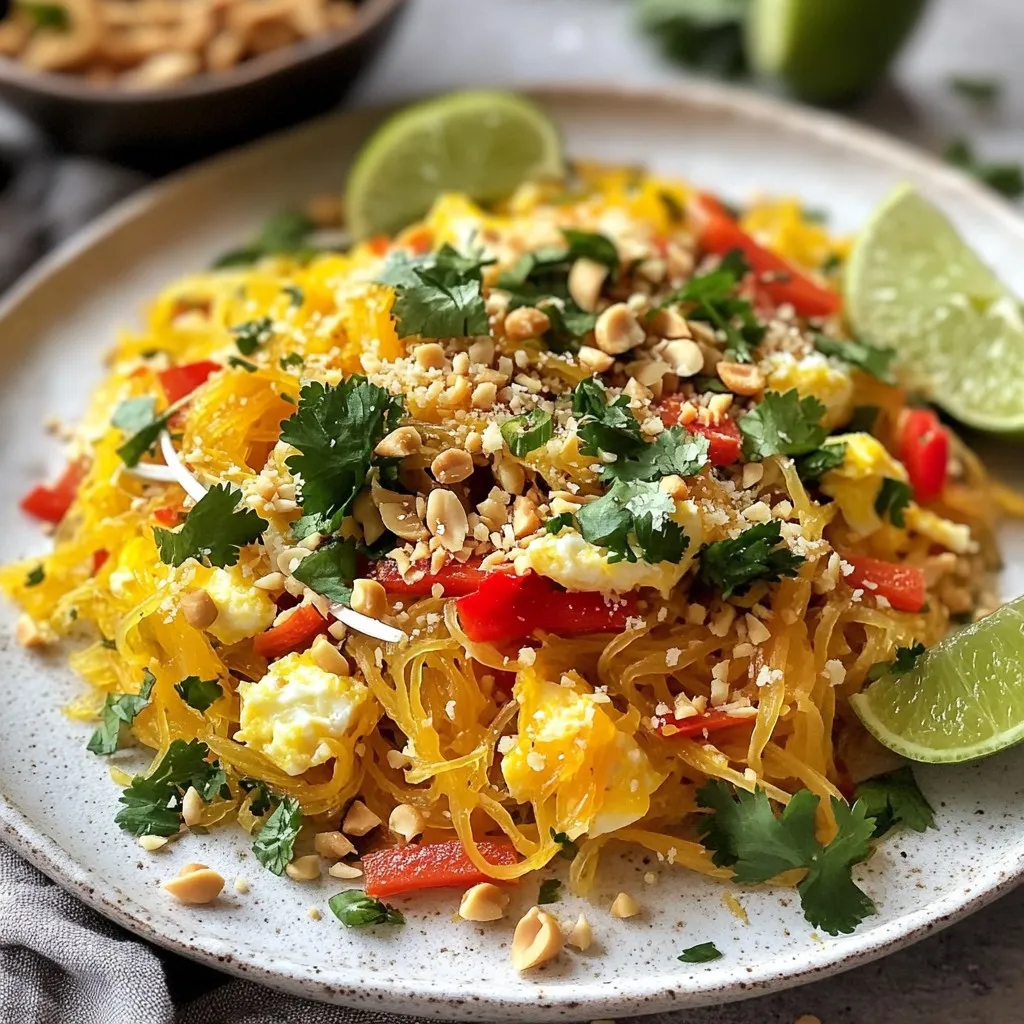
To make your dish pop, sprinkle fresh cilantro and chopped peanuts on top. A wedge of lime on the side makes it look inviting.

Serving suggestions

Twirl the spaghetti strands into a nest on the plate. Let the colorful veggies peek out from the center. This makes for a beautiful and appetizing presentation.

Pro Tips

  1. Choose the Right Squash: Opt for a medium-sized spaghetti squash that feels heavy for its size. This ensures a better yield of spaghetti-like strands.
  2. Customize Your Sauce: Feel free to adjust the soy sauce and tamarind paste according to your taste preferences. A little extra sweetness or acidity can elevate the dish.
  3. Keep It Crisp: To maintain the crunchiness of the vegetables, avoid overcooking them. They should be tender yet retain a slight bite.
  4. Garnish for Flavor: Don’t skip the garnishes! Fresh cilantro, chopped peanuts, and lime wedges add essential flavor and texture to your Pad Thai.

Variations

Protein Alternatives

You can change the protein in this dish easily. Adding shrimp or chicken gives a tasty twist.

Shrimp: Cook shrimp in peanut oil until pink. Toss them in with the veggies.

Chicken: Use cooked chicken. Shred it and mix it in for extra flavor.

Vegetarian options: You can skip meat and add tofu. Firm tofu works best. Cube it and sauté until golden.

Vegetable Swaps

Feel free to swap out the veggies based on what you have.

Different bell peppers: Use yellow or green bell peppers if you like. They add color and taste.

Incorporating other vegetables: Try adding carrots or snap peas. They add crunch and nutrition.

Gluten-Free Options

Making this dish gluten-free is simple.

Ensuring gluten-free sauces: Choose gluten-free soy sauce. This keeps the flavor without the gluten.

Alternative noodles if desired: If you want noodles, try rice noodles. They work well and keep it gluten-free.

Storage Info

Refrigeration

To store leftover Spaghetti Squash Pad Thai, let it cool first. Place it in an airtight container. This keeps out air and moisture. Use glass or plastic containers that seal tightly. I recommend using containers that are microwave-safe for easy reheating.

Freezing

You can freeze Spaghetti Squash Pad Thai for later. Just make sure to cool it down before packing. Place it in freezer-safe bags or containers. Squeeze out excess air to avoid freezer burn. When you’re ready to eat, thaw it overnight in the fridge. To reheat, warm it in a skillet on medium heat. Stir it regularly for even heating.

Shelf Life

In the fridge, Spaghetti Squash Pad Thai lasts about 3 to 5 days. Always check for signs of spoilage. If you see mold or an off smell, it’s best to toss it. Freshness is key!

FAQs

What is the best way to cook spaghetti squash?

The best way to cook spaghetti squash is to roast it. Here’s how:

– Preheat your oven to 400°F (200°C).

– Cut the squash in half lengthwise and remove the seeds.

– Brush the flesh with olive oil and sprinkle with salt and pepper.

– Place it cut-side down on a baking sheet lined with parchment paper.

– Roast for 35-40 minutes, until tender.

This method makes the squash easy to scrape into strands. You can also microwave it for a quicker option, but roasting gives it a fuller flavor.

Can I make Spaghetti Squash Pad Thai in advance?

Yes, you can make Spaghetti Squash Pad Thai in advance. Here are some tips:

– Roast the spaghetti squash and store it in the fridge.

– Cook the sauce and veggies, then keep them separate.

– Mix them together just before serving to keep it fresh.

This way, you can enjoy a quick meal without sacrificing taste. Just reheat everything gently on the stove.

How can I make this recipe vegetarian?

You can easily make this Pad Thai vegetarian with a few swaps:

– Replace the eggs with tofu or chickpeas for protein.

– Use vegetable broth instead of any meat-based sauces.

– Ensure the soy sauce is vegetarian by checking the label.

These simple changes keep all the flavors while making it meat-free.

Is Spaghetti Squash Pad Thai gluten-free?

Yes, Spaghetti Squash Pad Thai can be gluten-free. Consider these points:

– Use gluten-free soy sauce or tamari.

– Avoid any sauces that contain wheat.

– Check all labels for hidden gluten.

These modifications let you enjoy a tasty dish without gluten.

Spaghetti Squash Pad Thai is easy and fun to make. You learn about the best ingredients, from fresh veggies to eggs. I shared tips for cooking squash and mixing flavors. You can switch up proteins and veggies to fit your taste.

Remember to store leftovers right to enjoy them later. With the right methods, this dish is both tasty and healthy. This recipe supports many diets and is full of flavor. Enjoy cooking your unique version of this dis
- 1 medium spaghetti squash - 2 tablespoons peanut oil - 2 cloves garlic, minced - 1 red bell pepper, thinly sliced - 1 cup fresh bean sprouts - 2 green onions, sliced (separating the white and green parts) - 2 large eggs, lightly beaten The main ingredients create the base for our dish. The spaghetti squash acts as our noodle substitute. It has a mild taste and absorbs flavors well. Fresh vegetables add crunch and color. Garlic boosts the flavor, while eggs add richness. - 3 tablespoons soy sauce - 1 tablespoon tamarind paste - 1 tablespoon brown sugar - ½ teaspoon red pepper flakes (or to taste) Seasonings bring everything together. Soy sauce adds saltiness. Tamarind paste gives a tangy flavor. Brown sugar balances the taste. Red pepper flakes add heat, making it exciting. Adjust these to suit your taste. - Fresh cilantro, for garnish - Chopped peanuts, for garnish - Lime wedges, for serving Garnishes elevate the dish visually and in flavor. Fresh cilantro adds a burst of freshness. Chopped peanuts provide crunch. Lime wedges offer a zesty kick. Squeeze lime over the top before eating for extra zest. {{ingredient_image_2}} Roasting method First, preheat your oven to 400°F (200°C). Take your medium spaghetti squash and cut it in half lengthwise. Be careful with the knife! Scoop out the seeds with a spoon. Brush the inside with olive oil and sprinkle some salt and pepper. Place the squash cut-side down on a baking sheet lined with parchment paper. Roast it for 35-40 minutes. The flesh should be tender and easy to scrape. How to scrape strands Once the squash cools slightly, grab a fork. Gently pull the flesh to create long spaghetti-like strands. This is the fun part! Set these strands aside while you cook the other ingredients. Heating oil and sautéing garlic In a large skillet or wok, heat 2 tablespoons of peanut oil over medium-high heat. Add 2 cloves of minced garlic and sauté for about 30 seconds. You want the garlic to be fragrant and just golden. Adding bell pepper and onions Next, toss in the thinly sliced red bell pepper and the white parts of the green onions. Stir-fry these for about 3-4 minutes. Keep stirring until the veggies are tender but still a bit crisp. Scrambling eggs Now, push the cooked vegetables to one side of the skillet. Pour in 2 beaten eggs in the empty space. Scramble them until fully cooked, then mix them with the veggies. Making and adding the sauce In a small bowl, whisk together 3 tablespoons of soy sauce, 1 tablespoon of tamarind paste, 1 tablespoon of brown sugar, and ½ teaspoon of red pepper flakes. Pour this sauce over the veggie and egg mix. Stir everything well to coat it evenly. Incorporating bean sprouts and squash Turn off the heat and fold in 1 cup of fresh bean sprouts. Gently toss until the sprouts are just wilted. Finally, add the spaghetti squash strands to the skillet. Fold everything together until it’s well mixed and heated through. How to choose the perfect spaghetti squash When picking a spaghetti squash, look for one that feels heavy. The skin should be firm and free of soft spots. A bright yellow color is best, as it shows ripeness. Ensuring even cooking Cut the squash in half lengthwise to help it cook evenly. Scoop out the seeds to allow the heat to penetrate. Roasting it cut-side down on parchment paper helps prevent sticking and promotes even cooking. Adjusting spice levels If you like heat, add more red pepper flakes. Start with half a teaspoon and taste as you mix. You can always add more, but it’s hard to take heat away! Additional toppings for extra flavor Consider adding fresh herbs like basil or mint for a fresh twist. Chopped peanuts add crunch, while lime juice brightens the dish. Try sesame seeds for a nutty flavor boost. Garnishing ideas To make your dish pop, sprinkle fresh cilantro and chopped peanuts on top. A wedge of lime on the side makes it look inviting. Serving suggestions Twirl the spaghetti strands into a nest on the plate. Let the colorful veggies peek out from the center. This makes for a beautiful and appetizing presentation. Pro Tips Choose the Right Squash: Opt for a medium-sized spaghetti squash that feels heavy for its size. This ensures a better yield of spaghetti-like strands. Customize Your Sauce: Feel free to adjust the soy sauce and tamarind paste according to your taste preferences. A little extra sweetness or acidity can elevate the dish. Keep It Crisp: To maintain the crunchiness of the vegetables, avoid overcooking them. They should be tender yet retain a slight bite. Garnish for Flavor: Don’t skip the garnishes! Fresh cilantro, chopped peanuts, and lime wedges add essential flavor and texture to your Pad Thai. {{image_4}} You can change the protein in this dish easily. Adding shrimp or chicken gives a tasty twist. - Shrimp: Cook shrimp in peanut oil until pink. Toss them in with the veggies. - Chicken: Use cooked chicken. Shred it and mix it in for extra flavor. - Vegetarian options: You can skip meat and add tofu. Firm tofu works best. Cube it and sauté until golden. Feel free to swap out the veggies based on what you have. - Different bell peppers: Use yellow or green bell peppers if you like. They add color and taste. - Incorporating other vegetables: Try adding carrots or snap peas. They add crunch and nutrition. Making this dish gluten-free is simple. - Ensuring gluten-free sauces: Choose gluten-free soy sauce. This keeps the flavor without the gluten. - Alternative noodles if desired: If you want noodles, try rice noodles. They work well and keep it gluten-free. To store leftover Spaghetti Squash Pad Thai, let it cool first. Place it in an airtight container. This keeps out air and moisture. Use glass or plastic containers that seal tightly. I recommend using containers that are microwave-safe for easy reheating. You can freeze Spaghetti Squash Pad Thai for later. Just make sure to cool it down before packing. Place it in freezer-safe bags or containers. Squeeze out excess air to avoid freezer burn. When you're ready to eat, thaw it overnight in the fridge. To reheat, warm it in a skillet on medium heat. Stir it regularly for even heating. In the fridge, Spaghetti Squash Pad Thai lasts about 3 to 5 days. Always check for signs of spoilage. If you see mold or an off smell, it's best to toss it. Freshness is key! The best way to cook spaghetti squash is to roast it. Here’s how: - Preheat your oven to 400°F (200°C). - Cut the squash in half lengthwise and remove the seeds. - Brush the flesh with olive oil and sprinkle with salt and pepper. - Place it cut-side down on a baking sheet lined with parchment paper. - Roast for 35-40 minutes, until tender. This method makes the squash easy to scrape into strands. You can also microwave it for a quicker option, but roasting gives it a fuller flavor. Yes, you can make Spaghetti Squash Pad Thai in advance. Here are some tips: - Roast the spaghetti squash and store it in the fridge. - Cook the sauce and veggies, then keep them separate. - Mix them together just before serving to keep it fresh. This way, you can enjoy a quick meal without sacrificing taste. Just reheat everything gently on the stove. You can easily make this Pad Thai vegetarian with a few swaps: - Replace the eggs with tofu or chickpeas for protein. - Use vegetable broth instead of any meat-based sauces. - Ensure the soy sauce is vegetarian by checking the label. These simple changes keep all the flavors while making it meat-free. Yes, Spaghetti Squash Pad Thai can be gluten-free. Consider these points: - Use gluten-free soy sauce or tamari. - Avoid any sauces that contain wheat. - Check all labels for hidden gluten. These modifications let you enjoy a tasty dish without gluten. Spaghetti Squash Pad Thai is easy and fun to make. You learn about the best ingredients, from fresh veggies to eggs. I shared tips for cooking squash and mixing flavors. You can switch up proteins and veggies to fit your taste. Remember to store leftovers right to enjoy them later. With the right methods, this dish is both tasty and healthy. This recipe supports many diets and is full of flavor. Enjoy cooking your unique version of this dish!

Spaghetti Squash Pad Thai

A healthy twist on traditional Pad Thai using spaghetti squash instead of noodles.
Prep Time 15 minutes
Cook Time 40 minutes
Total Time 55 minutes
Course Main Course
Cuisine Thai
Servings 4
Calories 300 kcal

Ingredients
  

  • 1 medium spaghetti squash
  • 2 tablespoons peanut oil
  • 2 cloves garlic, minced
  • 1 red bell pepper thinly sliced
  • 1 cup fresh bean sprouts
  • 2 green onions sliced (separating the white and green parts)
  • 2 large eggs, lightly beaten
  • 3 tablespoons soy sauce
  • 1 tablespoon tamarind paste
  • 1 tablespoon brown sugar
  • 0.5 teaspoon red pepper flakes (or to taste)
  • 1 bunch fresh cilantro, for garnish
  • 0.5 cup chopped peanuts, for garnish
  • 1 lime wedges, for serving

Instructions
 

  • Prepare the Spaghetti Squash: Preheat your oven to 400°F (200°C). Carefully cut the spaghetti squash in half lengthwise and scoop out the seeds. Brush the flesh with olive oil and season with salt and pepper. Place the squash cut-side down on a baking sheet lined with parchment paper. Roast in the oven for 35-40 minutes, or until the flesh is tender enough to be scraped into strands with a fork.
  • Cook the Vegetables: While the squash roasts, heat the peanut oil in a large skillet or wok over medium-high heat. Add the minced garlic and sauté for about 30 seconds, or until fragrant and golden.
  • Add Bell Pepper and Onions: Toss in the sliced red bell pepper and the white parts of the green onions to the skillet. Stir-fry for about 3-4 minutes, stirring occasionally, until the vegetables are tender yet still crisp.
  • Scramble the Eggs: Push the sautéed vegetables to one side of the skillet. Pour the beaten eggs into the cleared space and scramble until fully cooked. Once done, mix the scrambled eggs with the vegetables.
  • Make the Sauce: In a small bowl, whisk together the soy sauce, tamarind paste, brown sugar, and red pepper flakes. Pour this flavorful sauce over the mixture in the skillet, stirring thoroughly to evenly coat everything.
  • Add Bean Sprouts: Turn off the heat and add the fresh bean sprouts to the skillet. Gently toss everything together until the sprouts are just wilted from the residual heat.
  • Combine with Spaghetti Squash: When the spaghetti squash is ready, use a fork to scrape its flesh into spaghetti-like strands. Add these strands to the skillet, gently folding and tossing to mix everything together until well combined and heated through.
  • Serve and Garnish: Serve the Spaghetti Squash Pad Thai immediately while hot. Garnish with fresh cilantro and chopped peanuts, alongside lime wedges for an added burst of flavor.

Notes

For an appealing presentation, twirl the spaghetti strands into a nest on the plate and let the colorful vegetable and egg mixture peek out from the center. A wedge of lime on each plate adds a vibrant touch!
Keyword healthy, pad thai, spaghetti squash, vegetarian

WANT TO SAVE THIS RECIPE?

Related Posts