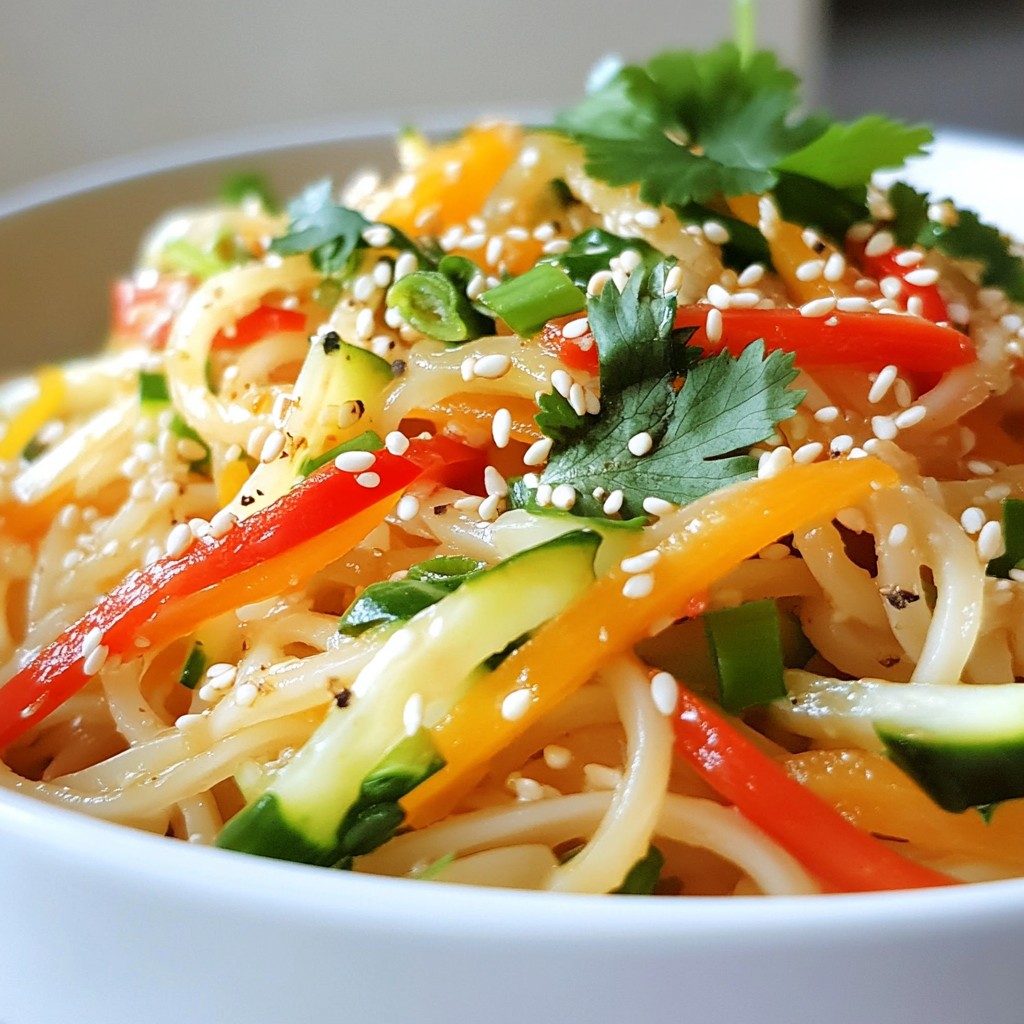
Craving a flavorful yet easy meal? You’ll love this Savory Sesame Ginger Noodle Salad! This quick recipe features fresh rice noodles, vibrant veggies, and a delicious dressing that ties it all together. Perfect for lunch or dinner, this salad is packed with taste and nutrition. Ready to wow your taste buds? Let’s dive into the ingredients and steps to make your new favorite dish!
Why I Love This Recipe
- Fresh and Colorful: This salad is a vibrant mix of fresh vegetables, making it not only pleasing to the eye but also packed with nutrients.
- Quick and Easy:
- Flavorful Dressing: The homemade sesame ginger dressing brings a delightful zing that elevates the entire salad experience.
- Versatile and Adaptable: You can easily customize this salad with your favorite vegetables or protein, making it perfect for any occasion.
Ingredients
Main Ingredients for Sesame Ginger Noodle Salad
- 8 oz rice noodles
- 1 cup shredded carrots
- 1 red bell pepper, thinly sliced
- 1 cucumber, julienned
- 1 cup snow peas, trimmed and halved
- 1/4 cup green onions, finely sliced
- 1/4 cup fresh cilantro leaves, roughly chopped
- 1/4 cup toasted sesame seeds
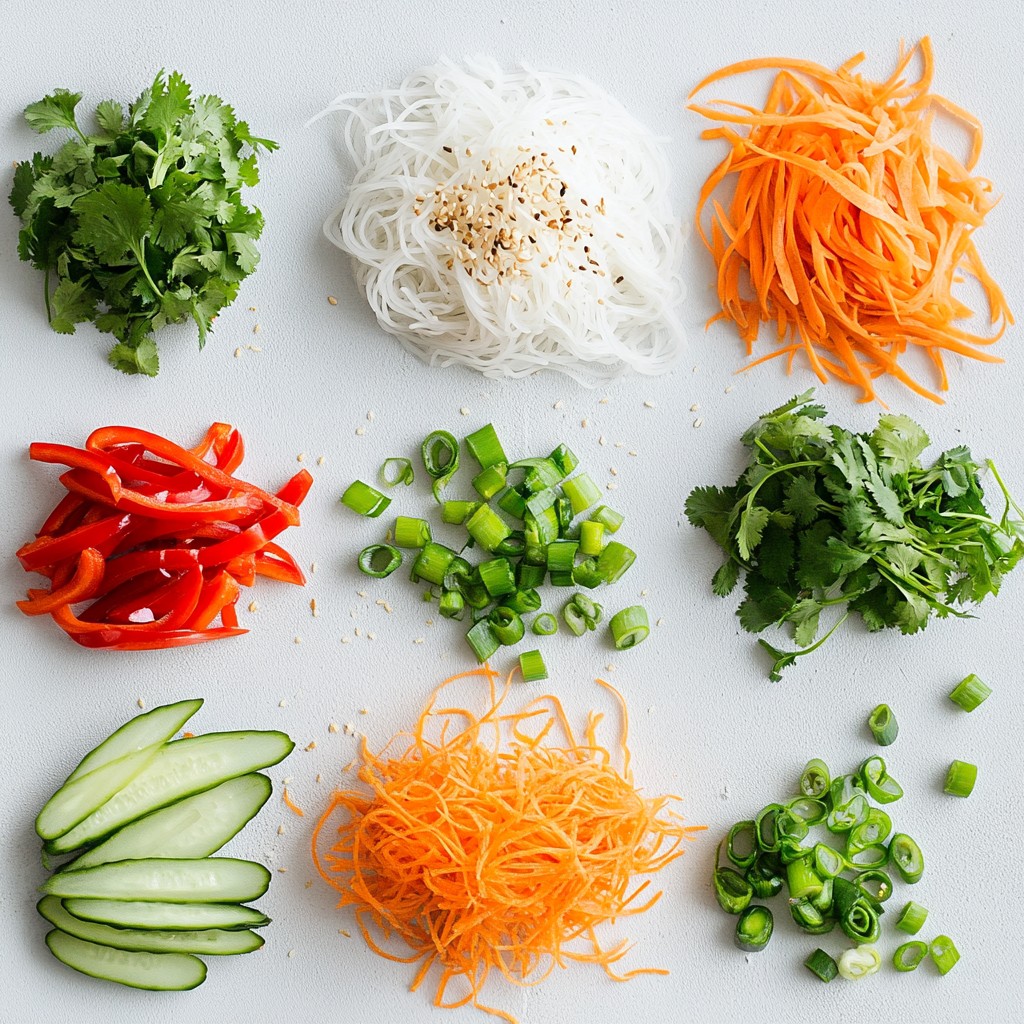
The main ingredients bring vibrant flavors and textures to the salad. Rice noodles are light and chewy, making them a great base. Fresh vegetables add crunch and color. Shredded carrots and sliced bell pepper create a nice contrast. The cucumber gives a refreshing bite. Snow peas add a crisp snap. Green onions and cilantro boost the taste with their fresh notes.
Dressing Ingredients
- 1/4 cup soy sauce
- 2 tablespoons sesame oil
- 1 tablespoon rice vinegar
- 1 tablespoon fresh ginger, grated
- 1 tablespoon honey or agave syrup
- 1 teaspoon chili paste (adjust to taste)
The dressing ties the dish together with its savory and sweet notes. Soy sauce provides umami flavor, while sesame oil adds richness. Rice vinegar gives a touch of acidity that brightens the salad. Fresh ginger adds zing, and honey or agave syrup balances the flavors. If you like heat, chili paste can kick it up a notch. Adjust it to suit your taste!
Step-by-Step Instructions
Cooking the Noodles
To start, fill a large pot with water. Bring the water to a gentle boil over medium heat. Once boiling, add 8 oz of rice noodles. Cook them for 5 to 7 minutes, as the package says. After they are tender, drain the noodles in a colander. Rinse them under cold water. This stops the cooking and keeps the noodles from sticking together.
Preparing the Vegetables
While the noodles cook, it's time to prep your veggies. Use a box grater to shred 1 cup of carrots. For the red bell pepper, thinly slice it into strips. To julienne the cucumber, cut it into matchstick-like pieces. For the snow peas, trim off the ends and cut them in half. This makes them easy to eat. Keep your veggies neat and colorful for a great look in the salad.
Making the Dressing
In a small bowl, mix the dressing ingredients. Combine 1/4 cup soy sauce, 2 tablespoons sesame oil, 1 tablespoon rice vinegar, 1 tablespoon grated fresh ginger, 1 tablespoon honey or agave syrup, and 1 teaspoon chili paste. Whisk these together until smooth. Taste the dressing and adjust it. If you like spice, add more chili paste.
Assembling the Salad
In a large mixing bowl, add the cooled noodles. Then, mix in all your prepped veggies: the shredded carrots, sliced bell pepper, julienned cucumber, halved snow peas, finely sliced green onions, and chopped cilantro. This combination brings texture and color to your salad.
Serving Suggestions
Pour the dressing over the noodle and veggie mix. Use tongs to gently toss everything together. Make sure all the ingredients get coated well. Next, sprinkle 1/4 cup of toasted sesame seeds on top. Give it one last gentle toss. For the best flavor, chill the salad in the fridge for at least 30 minutes. Serve it in a bright bowl. You can also garnish with extra sesame seeds and fresh cilantro. Add lime wedges for a zesty touch!
Tips & Tricks
Perfecting the Noodle Salad
To keep your rice noodles from sticking together, rinse them well after cooking. This cools them down and removes extra starch. Use cold water right after draining. The noodles should feel slippery, not sticky.
Add the dressing at the right time. If you add it too soon, the noodles can absorb it. Wait until just before serving to ensure a fresh taste. This keeps your salad vibrant and crunchy.
Enhancing Flavor
To adjust the spice level, taste the dressing first. If you want more heat, add more chili paste. Start with a little. You can always add more spice later.
For ingredient substitutions, feel free to mix things up. Swap snow peas for snap peas or add bean sprouts for crunch. You can also replace cilantro with parsley if you prefer. This makes the salad your own and adds fun twists to the flavor.
Pro Tips
- Perfectly Cooked Noodles: To ensure your rice noodles are perfectly cooked, keep a close eye on the time and test them a minute before the package suggests. They should be tender but still have a slight bite (al dente).
Variations
Protein Additions
You can boost the protein in your Sesame Ginger Noodle Salad easily. Try adding shrimp, chicken, or tofu.
- Shrimp: Cook shrimp in a pan until pink. Add them to the salad once cooled.
- Chicken: Grill or bake chicken breast. Slice it thin and mix it in.
- Tofu: Sauté cubed tofu until golden. Let it cool and then toss it in.
These proteins give your salad a hearty touch. They also add flavor and texture.
Vegetarian/Vegan Options
To keep your salad plant-based, swap out the sweeteners. Use agave syrup for a vegan-friendly choice.
- Sweeteners: Honey is tasty, but agave makes it vegan.
- Plant-Based Protein: Use chickpeas or edamame for a protein boost. They mix well with the salad and add a nice crunch.
These options cater to all diets while keeping the taste amazing.
Flavor Variations
Feel free to play with flavors in your salad. Adding citrus or fresh herbs can elevate the dish.
- Citrus: Squeeze lime or lemon juice for a zesty kick.
- Herbs: Try adding mint or basil for a fresh twist.
- Flavored Oils: Use chili oil or garlic oil instead of sesame oil for a different taste.
Experimenting with these variations keeps the salad fun and exciting!
Storage Info
Storing Leftovers
To keep your Sesame Ginger Noodle Salad fresh, use airtight containers. Glass or plastic containers work great. Store the salad in the fridge right away. This keeps it crisp and tasty.
Shelf life in the refrigerator:
- The salad lasts about 3 days.
- If you see any signs of spoilage, throw it away.
Reheating Guidelines
Yes, you can reheat leftovers. However, this salad tastes best cold. If you want to warm it up, do so gently.
Maintaining texture and flavor:
- Heat in a skillet over low heat.
- Add a splash of water or extra dressing to keep it moist.
- Avoid high heat, as it can make the noodles mushy.
Enjoy your salad fresh or reheated!
FAQs
Can I make this salad ahead of time?
Yes, you can make this salad ahead of time. I suggest chilling it for at least 30 minutes before serving. This time allows the flavors to mix well. You can even prepare it a few hours early. Just keep it covered in the fridge.
What can I substitute for soy sauce?
If you need a substitute for soy sauce, try using tamari. It's a great gluten-free option. You can also use coconut aminos. It has a slightly sweeter taste. Both options work well in this salad.
Is this recipe suitable for meal prep?
Yes, this salad is perfect for meal prep. Cook the noodles and chop the veggies ahead of time. Store them separately in the fridge. Mix them with the dressing just before you eat. This helps keep everything fresh and crunchy.
Can I use different types of noodles?
Absolutely! You can use other noodles like soba or udon. Just follow the cooking instructions on the package. For rice noodles, soak them in hot water instead of boiling if you prefer a softer texture.
This blog post covered how to make a delicious Sesame Ginger Noodle Salad. We discussed the main ingredients like rice noodles and fresh vegetables, and how to prepare them. I shared tips on cooking the noodles and making the dressing to enhance flavor. You learned how to serve and store your salad, as well as variations for protein and taste.
Try this easy recipe for a fresh meal. Enjoy your cooking!