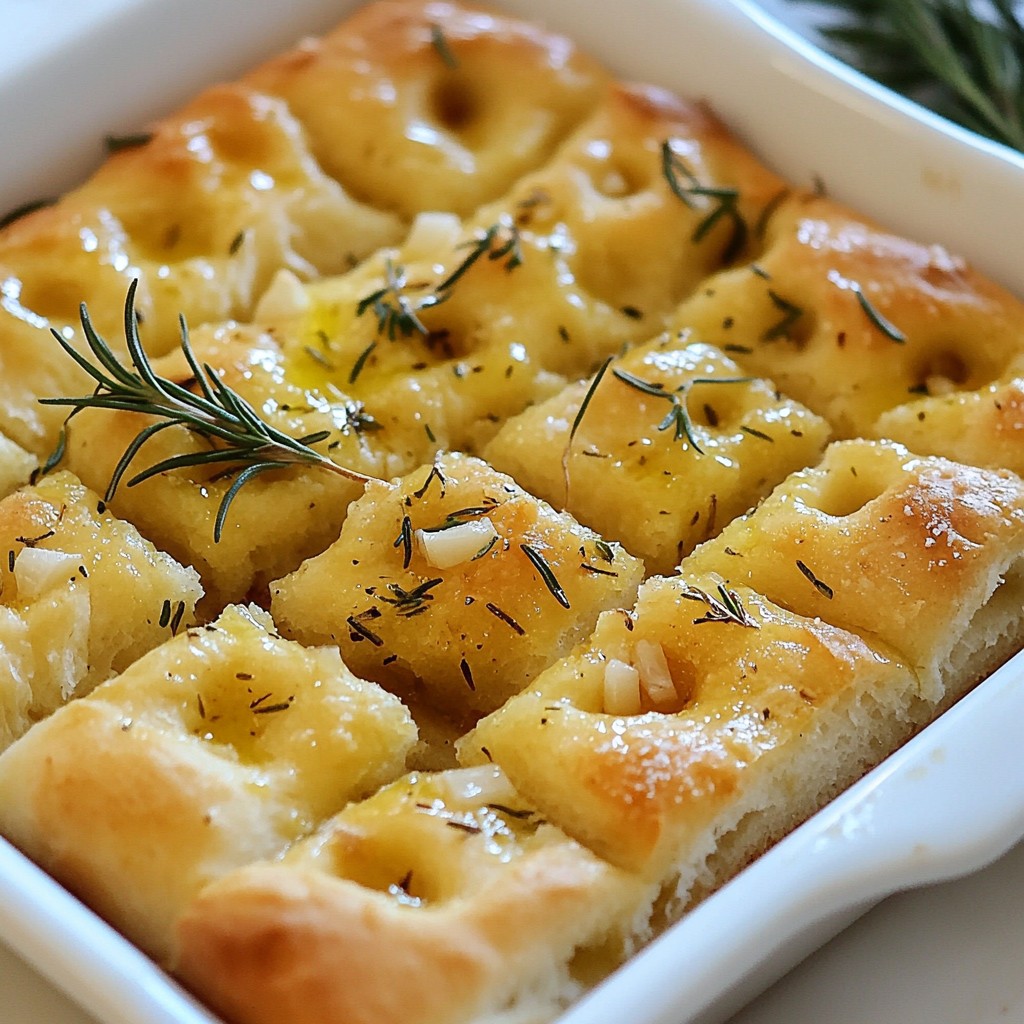
If you crave warm, homemade bread, this Rosemary Garlic Focaccia recipe is perfect for you! With the earthy aroma of rosemary and savory garlic, every bite is pure bliss. I’ll guide you through each simple step to create a perfect, golden loaf, whether you are a baking newbie or a seasoned pro. Let’s dive in and bring some fresh, delicious focaccia to your table!
Why I Love This Recipe
- Fresh Ingredients: This focaccia is bursting with fresh garlic and rosemary, making it aromatic and flavorful.
- Perfect Texture: The result is a beautifully crusty exterior with a soft and airy interior, perfect for dipping.
- Versatile Topping: You can customize it with your favorite toppings like olives and tomatoes, adding a personal touch.
- Great for Sharing: This recipe serves a crowd, making it ideal for gatherings and special occasions.
Ingredients
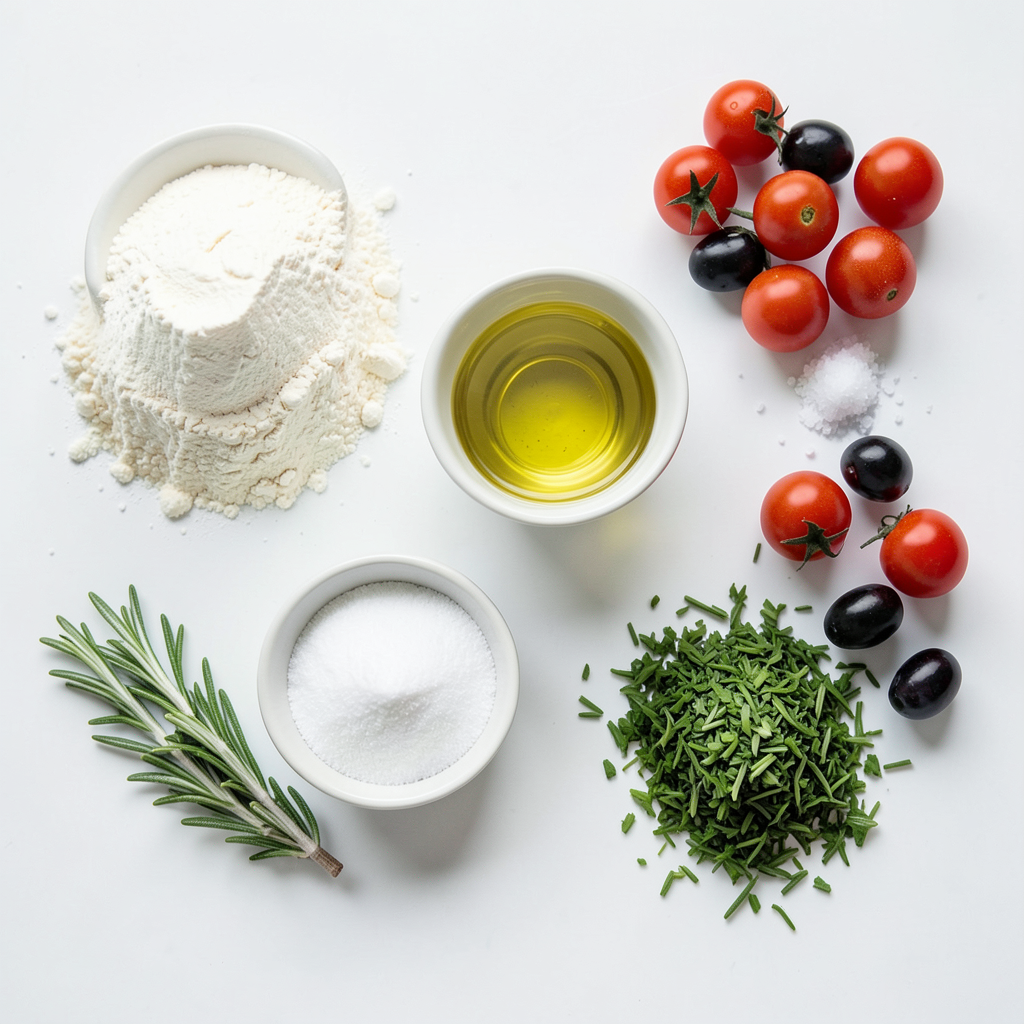
Here are the simple ingredients you need to make Rosemary Garlic Focaccia:
- 4 cups all-purpose flour
- 1 envelope (2 ¼ teaspoons) active dry yeast
- 1 ½ cups warm water
- 2 teaspoons granulated sugar
- 1 teaspoon fine salt
- ¼ cup extra virgin olive oil
- 5 cloves garlic, finely minced
- 2 tablespoons fresh rosemary, finely chopped
- Coarse sea salt for sprinkling
- Optional toppings: cherry tomatoes, olives
Gather these fresh ingredients before you start. Each one plays a key role in creating that soft, flavorful bread. The all-purpose flour gives structure, while the active dry yeast helps it rise. The warm water activates the yeast, and the olive oil adds richness. Garlic and rosemary bring bold flavor, making this focaccia special. Optional toppings like cherry tomatoes or olives can add extra texture and taste. With these ingredients ready, you can create a delicious focaccia that makes any meal feel special.
Step-by-Step Instructions
Activating the Yeast
- Combine warm water, sugar, and yeast.
- Let sit until frothy.
To begin, take a small bowl. Add 1 ½ cups of warm water, 2 teaspoons of sugar, and 1 envelope of active dry yeast. Stir gently. Let it sit for about 5-10 minutes. You will see bubbles forming. This means your yeast is alive and ready to work!
Mixing the Dough
- Combine flour and salt in a bowl.
- Create a well for wet ingredients.
In a large bowl, measure out 4 cups of all-purpose flour. Add 1 teaspoon of fine salt. Mix them well. Next, make a well in the center of the flour. This is where the wet ingredients will go.
Kneading and Rising
- Knead dough until smooth.
- Let dough rise in a greased bowl.
Pour the frothy yeast mixture and ¼ cup of olive oil into the well. Use a wooden spoon to mix. Once combined, transfer the sticky dough to a floured surface. Knead it for about 5-8 minutes. The dough should feel smooth and elastic.
Grease a large bowl with olive oil. Place your kneaded dough in it, turning to coat it. Cover the bowl with a damp cloth. Let it rise in a warm spot for about 1 to 1.5 hours. It should double in size.
Preparing to Bake
- Shape dough and create dimples.
- Add olive oil, garlic, rosemary, and optional toppings.
After the dough has risen, gently punch it down. Transfer it to a greased baking sheet or a cast-iron skillet. Stretch and flatten the dough with your fingers. Create dimples all over its surface.
Drizzle olive oil over the dimples. Sprinkle the minced garlic and chopped rosemary on top. If you want, add cherry tomatoes and olives. Press them gently into the dough.
Baking the Focaccia
- Preheat oven and allow dough to rest.
- Bake until golden brown.
Preheat your oven to 425°F (220°C) while the dough rests for 30 minutes. This helps it rise slightly. When ready, bake for 20-25 minutes. You want it golden brown and crusty. When done, take it out and let it cool for a few minutes. Slice into squares and enjoy!
Tips & Tricks
Ensuring a Perfect Rise
- Ideal temperature for rising: Keep your dough in a warm spot. A good range is about 75°F to 85°F. This helps the yeast grow well.
- Tips on preventing sticking: Use a light dusting of flour on your work surface. If the dough sticks, add a little flour while kneading.
Flavor Enhancements
- Additional herbs and spices: You can add thyme, oregano, or basil for more flavor. Mix and match to find your favorite.
- Suggestions for dips and accompaniments: Serve your focaccia with olive oil and balsamic vinegar. You can also try a garlic herb dip for more taste.
Presentation Ideas
- Serving suggestions: Slice the focaccia into squares and serve warm. It looks great on a wooden board.
- Garnishing options: Add fresh rosemary sprigs on top. You can also sprinkle coarse sea salt for a nice touch.
Pro Tips
- Use Fresh Ingredients: Fresh rosemary and high-quality olive oil will elevate the flavor of your focaccia significantly. Always opt for the freshest herbs you can find.
- Perfect Your Dimpling Technique: When creating dimples in the dough, try to press firmly but gently. This will help retain air pockets and create a light, airy texture.
- Experiment with Toppings: Feel free to get creative with toppings! Roasted garlic, caramelized onions, or different types of olives can add unique flavors to your focaccia.
- Let It Rest: Allow the dough to rest before baking to enhance its flavor and texture. This additional rising time helps develop a better crumb.
Variations
Alternative Flavors
You can change the flavor of your focaccia easily. Use infused oils, like chili or lemon. Add spices for a fun twist, such as smoked paprika. Try mixing different herbs like thyme or oregano. Each herb brings a new taste, making it unique.
Dietary Modifications
If you need gluten-free focaccia, use gluten-free flour blends. These blends often work well with the same recipe. For a vegan version, swap the regular olive oil with a plant-based alternative. You can also skip the garlic for a milder taste.
Unique Toppings
Seasonal vegetables can add great color and flavor. Think about using bell peppers, zucchini, or onions. Try adding cheese like mozzarella or feta for a creamy touch. You can even mix in nuts or seeds for added crunch. Each topping changes the focaccia into something special.
Storage Info
Short-term Storage
To keep your focaccia fresh, store it at room temperature. Use a clean kitchen towel to cover it. This prevents it from drying out. If you have leftovers, place the focaccia in an airtight container. It will stay fresh for up to three days. Avoid the fridge, as it can make the bread stale.
Freezing Instructions
If you want to save your focaccia for later, freezing works well. First, let the focaccia cool completely. Wrap it tightly in plastic wrap. Then, place it in a freezer bag. Make sure to remove as much air as possible. Your focaccia can stay frozen for up to three months. When you’re ready to enjoy it, thaw it overnight in the fridge.
Reheating Tips
To reheat focaccia, use your oven for the best results. Preheat the oven to 350°F (175°C). Place the focaccia directly on the oven rack or on a baking sheet. Heat for about 10-15 minutes until warm. For a softer texture, you can wrap it in foil. Enjoy the fresh, warm bread just like when it was first baked!
FAQs
How long does it take to make Rosemary Garlic Focaccia?
It takes about 2 hours to make Rosemary Garlic Focaccia. Here's the breakdown:
- Prep time: 20 minutes
- Rising time: 1 to 1.5 hours
- Baking time: 20-25 minutes
Can I use instant yeast instead of active dry yeast?
Yes, you can use instant yeast. Use the same amount as active dry yeast. No need to activate instant yeast. Just mix it with the dry ingredients.
What are the best ways to serve focaccia?
Focaccia is best served warm. Cut it into squares or strips. Pair it with olive oil and balsamic vinegar for dipping. You can also top it with cheese or serve it with soups.
How do I know when focaccia is done baking?
Check for a golden brown color. The edges should be crusty. Tap the bottom; it should sound hollow. If it meets these signs, it is done!
This blog post covered how to make delicious Rosemary Garlic Focaccia. We discussed key ingredients like flour, yeast, garlic, and rosemary. Step-by-step instructions guided you through activation, mixing, kneading, and baking. We also explored tips for rising dough and creative variations.
In the end, this recipe is simple and rewarding. You can impress friends and family with your homemade bread. Enjoy making your focaccia, and don't hesitate to get creative!