If you love bold flavors and creamy textures, you’ll adore this roasted garlic hummus. It’s an easy-to-make spread that elevates any snack or meal. I’ll guide you through each simple step, from roasting garlic to blending your perfect mix. You’ll learn tips for making it extra creamy and delicious. Ready to impress your friends and family? Let’s dive into the delightful world of roasted garlic hummus!
Ingredients
List of Essential Ingredients
To make roasted garlic hummus, you need:
– 1 can (15 oz) chickpeas, drained and rinsed
– 1 head of garlic
– 3 tablespoons tahini
– 2 tablespoons olive oil, plus extra for drizzling
– 2 tablespoons freshly squeezed lemon juice
– 1 teaspoon ground cumin
– Salt, to taste
– Water, as needed for desired consistency
Measurement Details
Each ingredient plays a key role. The chickpeas give the hummus its base. Garlic adds a rich, savory taste. Tahini brings creaminess and depth. Olive oil enhances the flavor and smoothness. Lemon juice adds brightness, while cumin gives a hint of warmth. Salt rounds out the taste. If the hummus is too thick, add water little by little until it reaches the right texture.
Optional Toppings
For a finishing touch, consider adding:
– Paprika for a pop of color
– A drizzle of olive oil for richness
– Freshly chopped parsley for a burst of freshness
These toppings not only enhance the look but also add extra flavor to your creamy, savory spread. Enjoy creating this delicious roasted garlic hummus!
Step-by-Step Instructions
Preparation of Roasted Garlic
To start, you need to roast the garlic. First, preheat your oven to 400°F (200°C). This heat brings out the sweet flavor in the garlic. Cut the top off a head of garlic, about ¼ inch down. Drizzle a bit of olive oil on the cut part. Wrap the garlic in aluminum foil to keep it moist. Place it on the oven rack and roast for 30 to 35 minutes. The garlic should be soft and golden brown. After roasting, let it cool a bit. Then, squeeze the base to push out the yummy cloves. Discard the skins.
Blending the Ingredients
Now it’s time to make the hummus! In a food processor, add the roasted garlic cloves, drained chickpeas, tahini, lemon juice, and olive oil. Sprinkle in the ground cumin and a pinch of salt. Blend the mix on high until it’s totally smooth. If it feels too thick, add water, one tablespoon at a time. Keep blending until you reach a creamy texture. Taste your hummus and adjust the salt or lemon juice as you like.
Final Touches and Presentation
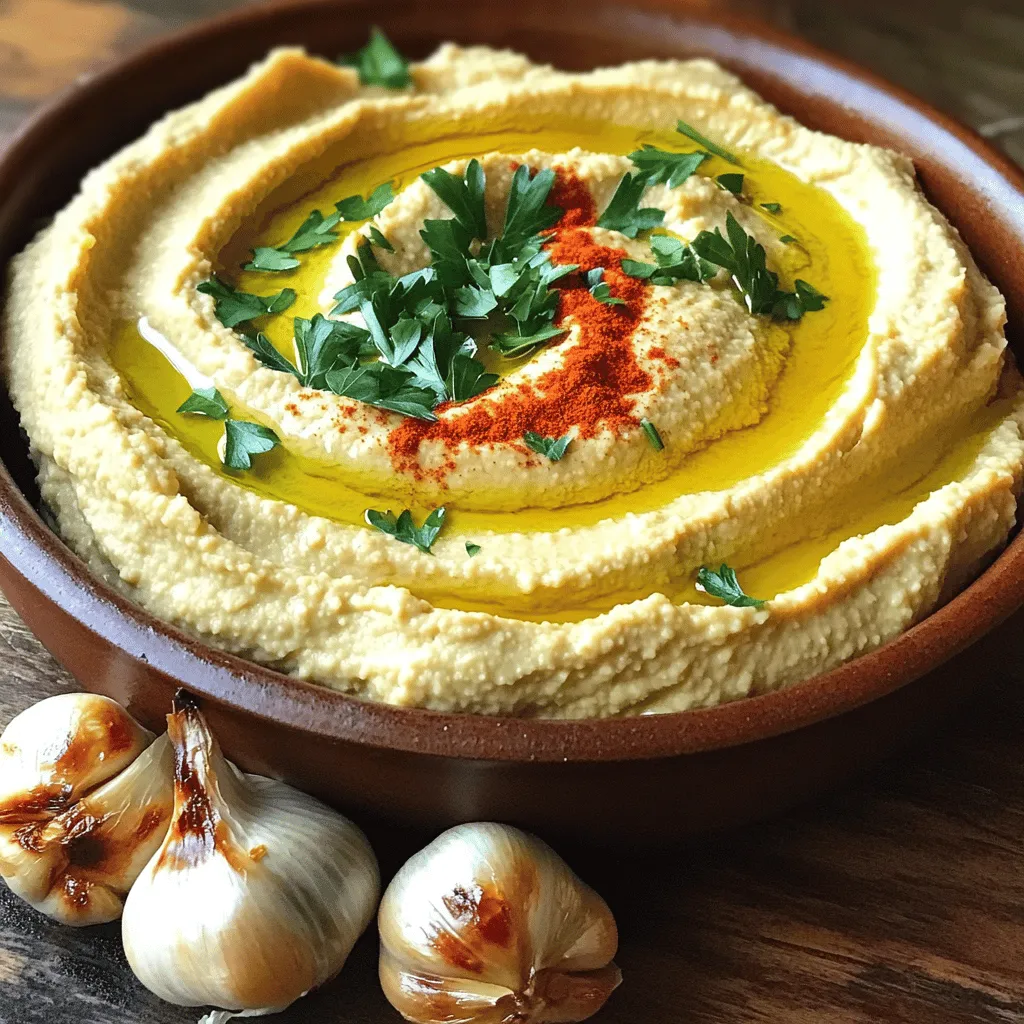
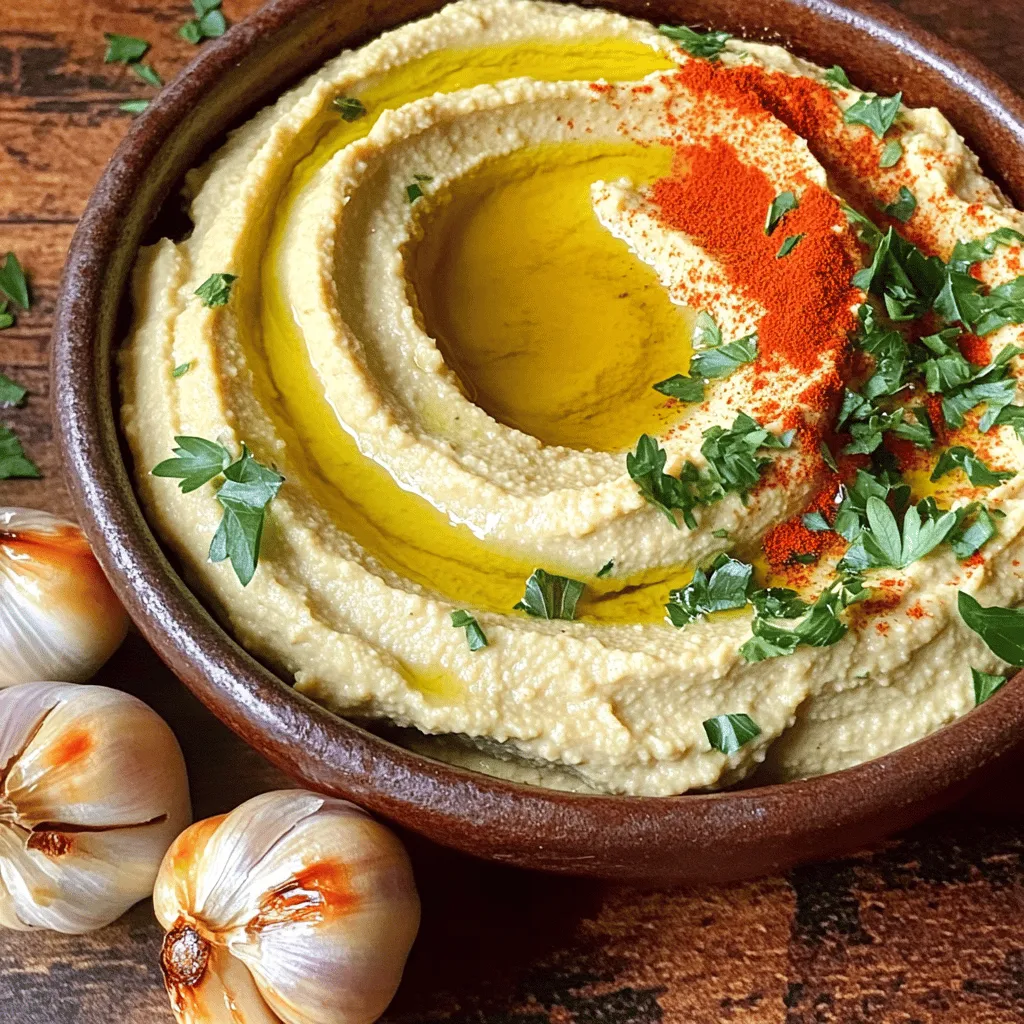
Once your hummus is perfect, transfer it to a bowl. Use a spoon to make a swirl on top for style. Drizzle a little olive oil over it. You can sprinkle paprika and chopped parsley for added color and taste. Serve your roasted garlic hummus with fresh veggies, pita chips, or warm pita bread. Enjoy this creamy and flavorful spread!
Tips & Tricks
How to Achieve Creamy Consistency
To get a smooth and creamy hummus, you need to blend well. Start with well-drained chickpeas. If you want it even creamier, peel the chickpeas. This extra step helps create a silky texture. When blending, add water slowly. Start with one tablespoon at a time. Blend until you reach your desired thickness. If it’s too thick, just keep adding water.
Adjusting Flavors to Your Preference
Taste is key in hummus. After blending, try it and see what it needs. You might want more salt or lemon juice. If you like spice, add a pinch of cayenne pepper or smoked paprika. Feel free to experiment with other spices too. Don’t be afraid to make it your own!
Best Practices for Roasting Garlic
Roasting garlic brings out its sweet flavor. To roast, cut the top off the garlic head. Drizzle it with olive oil. Wrap it in foil to keep it moist. Bake at 400°F (200°C) for 30-35 minutes. The garlic should be soft and golden when done. Let it cool before squeezing the cloves out. This method gives you that rich, roasted taste.Enjoy your cooking!
Variations
Adding Spices for Extra Flavor
You can make your hummus more exciting by adding spices. Try smoked paprika for a warm flavor. A pinch of cayenne adds heat if you like spicy. You can also use ground coriander or turmeric for a unique twist. These spices will enhance the taste and give it a fresh character.
Alternative Beans and Legumes
Chickpeas are great, but you can mix it up! Use black beans for a rich flavor. White beans, like cannellini, create a creamy texture. Lentils work well too. Each bean brings a new taste and color to your hummus. Get creative and pick your favorite!
Creative Serving Suggestions
Think outside the box when serving your hummus. Serve it on a platter with fresh veggies like carrots, cucumbers, and bell peppers. You can also pair it with pita chips or warm pita bread. For a fun touch, spread it on toast and top with avocado slices. These ideas will make your hummus stand out at any meal or party.
Storage Info
Best Ways to Store Leftover Hummus
To keep your hummus fresh, store it in an airtight container. This helps prevent it from drying out. Always cover the hummus with a thin layer of olive oil. This layer acts as a barrier against air. Place the container in the fridge. It will stay tasty for up to one week.
Freezing Instructions for Long-term Storage
If you want to save hummus for later, freezing works well. Use a freezer-safe container or a heavy-duty freezer bag. Leave some space for expansion as it freezes. You can freeze hummus for up to three months. When you’re ready to eat it, thaw it in the fridge overnight. Blend it again if needed for a smooth texture.
Recommended Storage Containers
Choose glass or plastic containers with tight lids. Glass containers are great for flavor preservation. Plastic containers are lightweight and easy to handle. For freezing, use sturdy freezer bags. Remember to label the bags with the date. This way, you know when it was made. For the best results, use these storage options to enjoy your roasted garlic hummus anytime.
FAQs
What can I serve with roasted garlic hummus?
You can enjoy roasted garlic hummus with many tasty items. Fresh vegetables like carrots, cucumbers, and bell peppers make great dippers. Pita chips or warm pita bread also pair well. Crackers add a nice crunch. You can even spread it on sandwiches or wraps for extra flavor.
Can I make hummus without tahini?
Yes, you can make hummus without tahini. If you lack tahini, try using a bit of peanut butter or almond butter. You can also add more olive oil to keep the hummus creamy. The flavor might change, but it will still be delicious.
How long does roasted garlic hummus last?
Roasted garlic hummus lasts about 4 to 5 days in the fridge. Store it in an airtight container to keep it fresh. If you want to keep it longer, you can freeze it. It can last up to 3 months in the freezer. Just thaw it in the fridge before serving.
Is hummus healthy?
Yes, hummus is a healthy choice. It contains chickpeas, which are high in protein and fiber. The olive oil adds healthy fats. Plus, garlic has many health benefits. Hummus can be a great snack or meal addition, especially when served with fresh veggies.
How to make roasted garlic hummus vegan?
Making roasted garlic hummus vegan is easy! The main ingredients are already vegan. Just use olive oil and skip any dairy toppings. Stick to the recipe and enjoy a creamy, tasty spread.
To make roasted garlic hummus, I covered the key ingredients and steps, including measurement details and optional toppings. We explored preparation, blending, and how to serve it well. I shared tips for creamy texture, flavor adjustments, and best garlic roasting. Variations let you add spices or change beans. For storage, I explained how to keep leftovers and freeze your hummus.
Roasted garlic hummus is fun to make and customize. Enjoy your delicious creation and impress your friends!