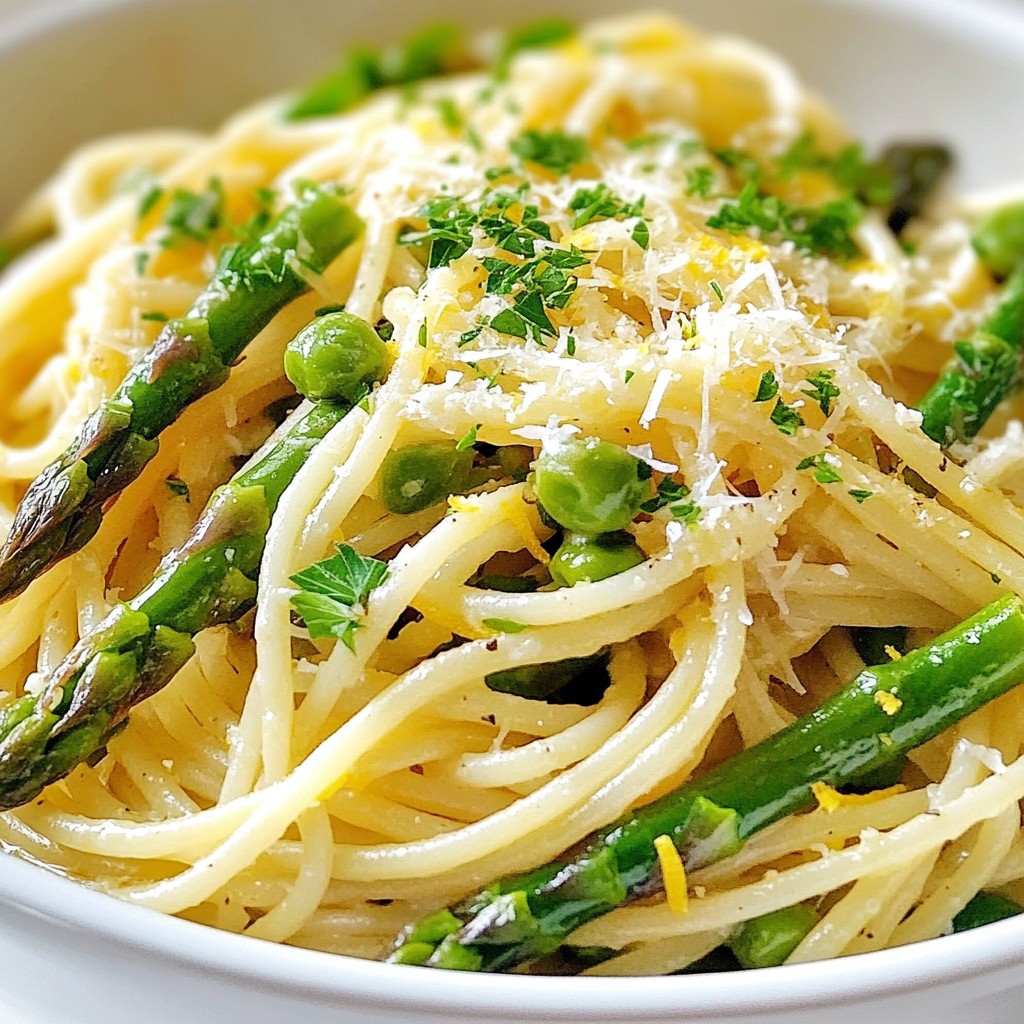
If you crave a dish that’s both simple and bursting with flavor, Lemon Garlic Asparagus Pasta is your answer. This recipe combines fresh, bright ingredients to create a meal that's easy enough for weeknight dinners yet impressive for guests. I’ll guide you through the steps to perfect this dish, and share tips to elevate your cooking. Let’s get started on making a plate of pasta that’s sure to delight!
Why I Love This Recipe
- Fresh and Flavorful: This dish combines the bright flavors of lemon and garlic with tender asparagus, creating a refreshing meal that’s perfect for any occasion.
- Quick and Easy: With a total time of just 25 minutes, this recipe is perfect for busy weeknights when you want something delicious without spending hours in the kitchen.
- Versatile Ingredients: The base ingredients can easily be substituted or added to, making it a flexible dish that can cater to various dietary preferences.
- Visually Appealing: The vibrant colors of green asparagus, bright lemon, and fresh parsley make this pasta dish not only tasty but also beautiful on the plate.
Ingredients
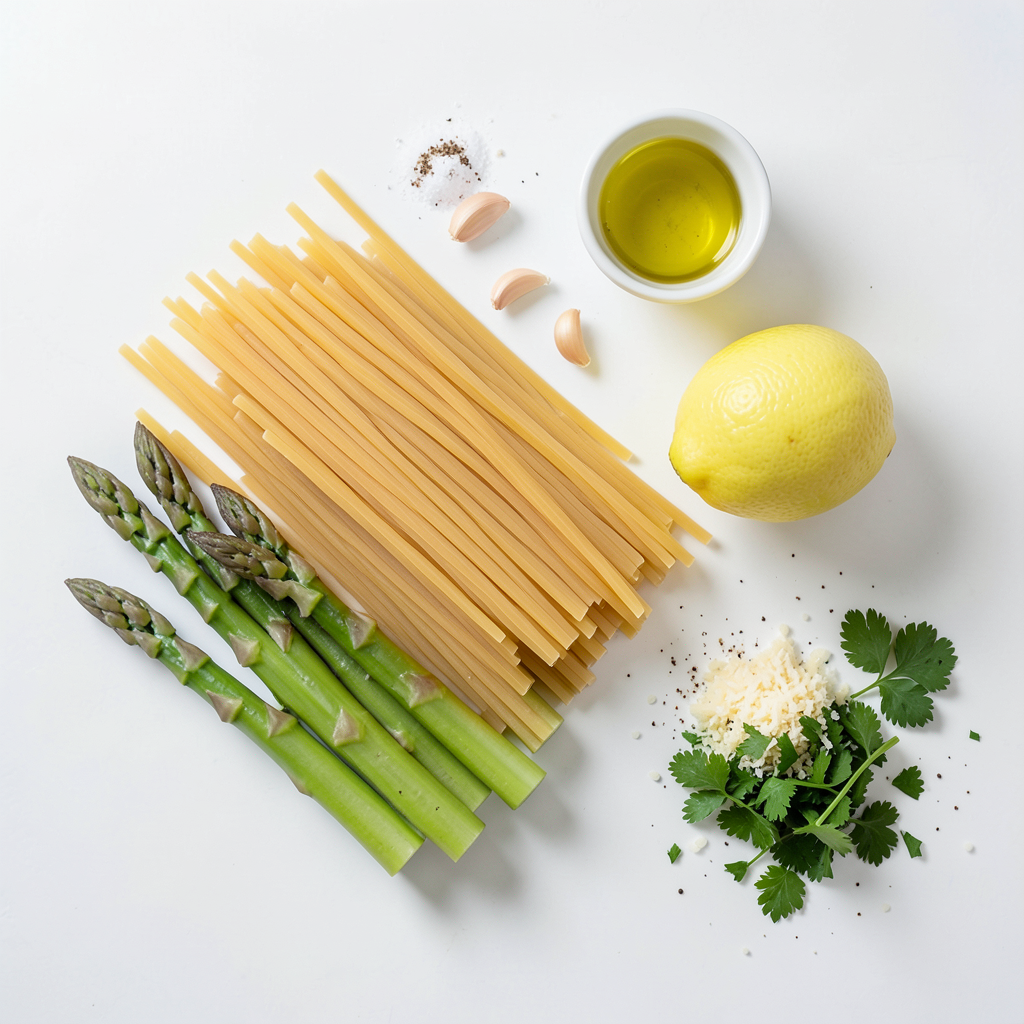
Here are the simple ingredients you need to make Lemon Garlic Asparagus Pasta:
- 8 oz spaghetti or fettuccine pasta
- 1 bunch asparagus, trimmed and cut into segments
- 4 cloves garlic, finely minced
- 1 lemon (for zesting and juicing)
- 3 tablespoons extra virgin olive oil
- Salt and black pepper, to taste
- ½ cup grated Parmesan cheese (optional)
- Fresh parsley, for garnish
Each ingredient plays a key role. The pasta gives the dish its base. Asparagus adds a fresh crunch. Garlic brings a strong flavor. Lemon adds brightness and zest. Olive oil ties everything together. You can skip Parmesan if you want a lighter dish. Fresh parsley makes it look pretty and adds flavor.
Gather these ingredients to create a tasty meal that’s easy to make.
Step-by-Step Instructions
Preparation of Pasta
- Boil water and cook pasta until al dente.
- Reserve pasta cooking water.
- Drain and set aside.
Start by bringing a large pot of water to a strong boil. Add salt for flavor. Once boiling, toss in your spaghetti or fettuccine. Cook it according to the package instructions. You want it to be al dente, which means it should still have a bit of bite. Before draining, save about one cup of the pasta water. This water will help create a nice sauce later. Drain the pasta and set it aside in a big serving bowl.
Sautéing Asparagus and Garlic
- Heat olive oil in the same pot.
- Sauté asparagus until tender.
- Add minced garlic and sauté until aromatic.
Now, let's cook the asparagus. Do not wash the pot; we want all that pasta flavor. Heat two tablespoons of olive oil over medium heat. When it’s hot, add the chopped asparagus. Sauté them for about three to four minutes. You want them tender and bright green. Next, stir in the minced garlic. Cook for one to two more minutes, stirring often. This way, the garlic will be fragrant but not burnt.
Combining Ingredients
- Stir in lemon zest and juice.
- Return pasta to the pot and combine.
- Adjust sauce consistency with reserved water.
After the garlic is ready, it’s time to add some zing. Stir in the lemon zest and juice. This adds a fresh taste that pairs well with the asparagus. Now, return the drained pasta to the pot. Toss everything together gently. If the sauce seems too thick, gradually add some of the reserved pasta water. This helps create a silky sauce that hugs the pasta perfectly. Season with salt and black pepper to taste. For a final touch, drizzle a bit more olive oil over the top. Enjoy your delicious dish!
Tips & Tricks
Perfecting the Sauté
Timing is key when sautéing garlic. Add it after the asparagus. Cook the asparagus for 3-4 minutes first. This keeps the garlic from burning. If garlic burns, it can turn bitter. You want the garlic to be golden, not brown.
For asparagus, check the texture. You want it tender but still crisp. Bright green color shows it's just right. Overcooking makes it mushy and dull.
Achieving a Creamy Sauce
Use the reserved pasta water wisely. Start with a little when mixing it in. This water has starch that helps the sauce cling. Keep adding until you see a silky coat on the pasta.
Adding Parmesan cheese makes the sauce richer. It melts in and adds great flavor. If you want it creamier, stir it in at the end.
Presentation Tips
To make your dish look great, use shallow bowls. It gives a nice surface for the pasta to shine. Top each bowl with extra Parmesan cheese. A twist of lemon zest brightens up the plate.
Don’t forget the fresh parsley! Sprinkle it on top for color and freshness. This makes your dish inviting and fun to eat.
Pro Tips
- Perfect Pasta Texture: Always cook your pasta until it's al dente, as it will continue to cook slightly after being drained, especially when mixed with the hot sauce.
- Asparagus Cooking Tip: To ensure the asparagus retains its vibrant color and crunch, avoid overcooking it. Sauté just until tender.
- Garlic Flavor Control: For a milder garlic flavor, add the garlic after the asparagus has cooked for a minute or two. This will prevent it from burning.
- Cheese Variations: Experiment with different cheeses like pecorino or goat cheese for a unique flavor twist if you want to change up the Parmesan.
Variations
Protein Additions
You can easily add protein to this dish. Chicken, shrimp, or tofu are great choices.
- Chicken: Use grilled or sautéed chicken breast, cut into bite-sized pieces.
- Shrimp: Sauté shrimp in olive oil until pink, then mix with the pasta.
- Tofu: Firm tofu can be cubed and sautéed for a vegan option.
These additions will boost flavor and make your meal more filling.
Vegetable Alternatives
If you want to switch things up, try different veggies. Here are some fun ideas:
- Broccoli: Cut into small florets and sauté them like asparagus.
- Zucchini: Slice zucchini into half-moons and cook until tender.
- Bell Peppers: Add diced bell peppers for a pop of color and sweetness.
Using these veggies can change the dish's flavor and make it more vibrant.
Dietary Adjustments
You can adjust this recipe to fit different diets. Here’s how:
- Gluten-Free: Substitute with gluten-free pasta made from rice or quinoa.
- Vegan: Omit Parmesan cheese and use nutritional yeast for a cheesy flavor.
These tweaks keep the dish tasty while meeting your dietary needs.
Storage Info
Storing Leftovers
To keep your Lemon Garlic Asparagus Pasta fresh, store it in an airtight container. Let the pasta cool before sealing it. Place the container in the fridge. This way, it can last for up to three days. For best taste, consume it within two days.
Reheating Methods
When it’s time to reheat, use a skillet. Add a splash of water or olive oil to the pan. Heat over low to medium heat. Stir gently to avoid sticking. This keeps the pasta moist and flavorful. You can also use the microwave. Cover the pasta with a damp paper towel. Heat it in short bursts, stirring in between.
Freezing Options
If you want to freeze leftovers, let them cool completely first. Transfer the pasta to a freezer-safe container. Leave some space at the top for expansion. Seal tightly and label it with the date. It can stay in the freezer for up to three months. When ready to eat, thaw it overnight in the fridge before reheating.
FAQs
What type of pasta works best for Lemon Garlic Asparagus Pasta?
You can use spaghetti or fettuccine for this dish. Both types hold sauce well. Spaghetti gives a classic feel. Fettuccine adds a nice width to the bite. Choose your favorite or what you have at home.
Can I make this dish vegan?
Yes, making this dish vegan is easy! Simply skip the Parmesan cheese. You can use nutritional yeast to add a cheesy flavor. Use olive oil in place of butter for richness. This keeps the dish light and fresh.
How can I make it spicier?
To add spice, try red pepper flakes. Just sprinkle them in when sautéing garlic. You can also add sliced fresh chili peppers for more heat. For a smoky kick, use smoked paprika. Adjust to your taste for the perfect heat level.
What are some side dishes that pair well with this pasta?
A simple green salad goes great with this pasta. You can also serve garlic bread for a tasty crunch. Roasted vegetables add color and flavor, too. Pair with a light white wine for a nice drink option.
This article covered how to make Lemon Garlic Asparagus Pasta from start to finish. We discussed key ingredients, the step-by-step cooking process, and helpful tips. I shared options for variations and storage methods. With this recipe, you can create a tasty meal that's fresh and easy to make. Try it today, adjust it to your taste, and enjoy a delicious dish that fits your needs. Happy cooking!