
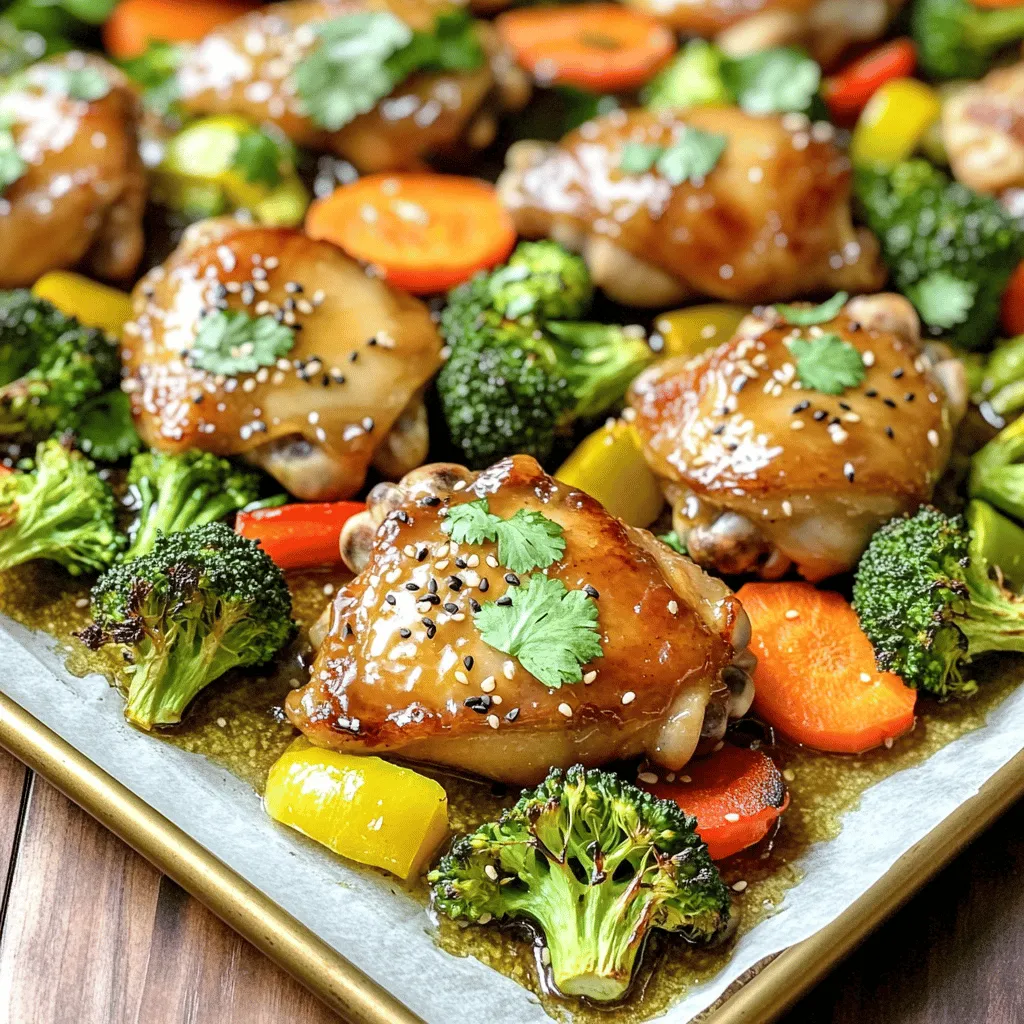
Honey Garlic Sheet Pan Chicken Flavorful Family Meal

Get ready for a delicious dinner with my Honey Garlic Sheet Pan Chicken! This easy recipe combines tender chicken thighs, fresh veggies, and a sweet garlic glaze all on one pan. Perfect for busy nights, this meal is packed with flavor and will have your family asking for seconds. Let’s dive into the ingredients and I’ll show you how to create this tasty family favorite!
Ingredients
Main Ingredients
– 4 boneless, skinless chicken thighs
– 1/4 cup honey
– 1/4 cup soy sauce or tamari
– 4 cloves garlic, minced
Additional Ingredients
– 1 tablespoon freshly grated ginger
– 2 tablespoons olive oil
– 1 teaspoon sesame oil
– 1 teaspoon black sesame seeds (optional)
– 2 cups broccoli florets
– 1 bell pepper, thinly sliced
– 1 cup carrots, thinly sliced
– Salt and pepper, to taste
– Fresh cilantro, chopped, for garnish
Gathering fresh ingredients is key for this honey garlic sheet pan chicken. Use high-quality honey for a rich flavor. You can choose soy sauce or tamari based on your dietary needs. I love using fresh garlic and ginger for the best taste.
For the veggies, I always pick vibrant colors like red or yellow bell peppers. They add sweetness and crunch. Broccoli and carrots not only bring color but also nutrients.
Be sure to have salt and pepper on hand. They help bring out all the flavors in this dish. Fresh cilantro adds a nice touch at the end. It brightens up the meal and makes it look pretty.Enjoy making this dish!
Step-by-Step Instructions
Preparation Steps
– Preheat the oven to 400°F (200°C).
– Line a large baking sheet with parchment paper.
Sauce Preparation
– Whisk together honey, soy sauce, garlic, ginger, olive oil, and sesame oil.
Assembling the Dish
– Lay chicken on the baking sheet and coat with sauce.
– Add vegetables and season with olive oil, salt, and pepper.
Cooking Process
– Bake for 25-30 minutes and brush with remaining sauce for a glossy finish.
The steps are simple and fun. You start by preheating your oven to 400°F. This heat gives the chicken a nice, crispy finish. While the oven warms, line a large baking sheet with parchment paper. This makes cleanup easy later.
Next, let’s make the sauce. In a bowl, whisk together honey, soy sauce, minced garlic, ginger, olive oil, and sesame oil. The mix should be smooth. This sauce is what makes the chicken and veggies shine.
Now, place the chicken thighs on the baking sheet. Pour half of the sauce over the chicken. Make sure it’s well coated. Set the rest aside for later.
Add your chopped veggies around the chicken. Toss them in olive oil, salt, and pepper. This step adds flavor and helps them roast nicely.
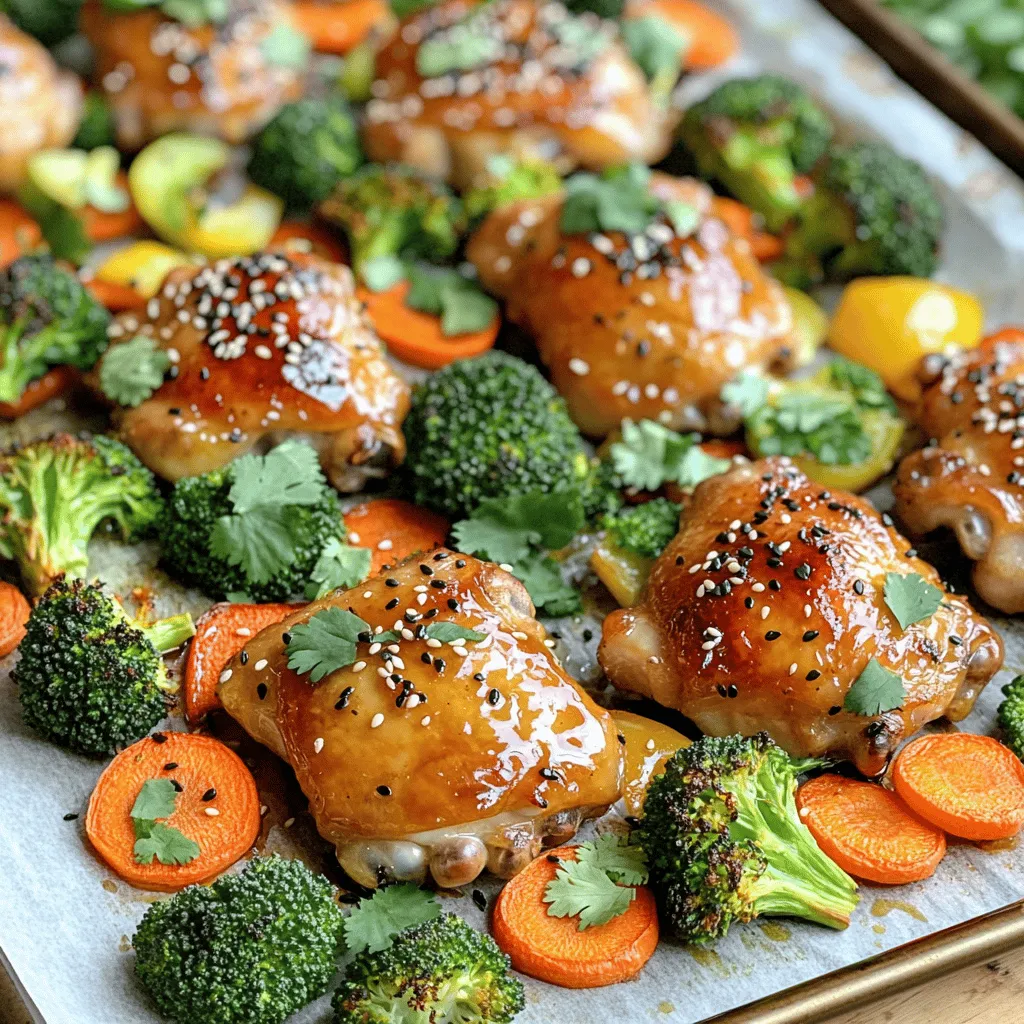
Time to bake! Put the sheet pan in the oven and bake for 25-30 minutes. The chicken should reach 165°F inside. In the last five minutes, brush the chicken with the reserved sauce. This gives it a shiny, inviting look.
Once you take it out, let it rest for a few minutes. This allows the flavors to come together. Now you are ready to enjoy a delicious meal!
Tips & Tricks
Cooking Tips
– Ensure chicken reaches an internal temperature of 165°F (75°C).
– Use parchment paper for easier cleanup and helps with even cooking.
Getting the chicken cooked just right is key. I always use a meat thermometer. This tool gives me peace of mind that my chicken is safe to eat. Parchment paper is my best friend in the kitchen. It makes cleaning up a breeze and helps the food cook evenly. No sticking means no mess!
Flavor Enhancements
– Experiment with additional spices such as chili flakes for heat.
– Marinate chicken for an hour for enhanced flavor absorption.
Want a kick? Try adding chili flakes. Just a pinch can make a big difference. Marinating the chicken in the sauce for an hour helps the flavors soak in. It makes the dish taste richer and more delicious.
Presentation Tips
– Arrange chicken and vegetables beautifully on a platter.
– Drizzle leftover glaze for visual appeal and enhanced flavor.
When serving, I like to present my dish nicely. Place the chicken in the center of a big platter and surround it with the colorful veggies. Drizzling the leftover glaze on top not only looks nice but also adds more flavor. Your family will love the taste and the look of this meal!
Variations
Vegetable Alternatives
You can easily change the veggies in this dish. Substitute broccoli with green beans or asparagus. Both add a fresh taste. You can also add sliced onions or zucchini. These choices bring extra flavor and texture to your meal.
Protein Substitutes
If you want to change the protein, use chicken breasts instead of thighs. Chicken breasts cook quickly and remain juicy. For a plant-based option, try tofu. It absorbs the honey garlic sauce well and adds a nice texture.
Gluten-Free Options
If you need a gluten-free option, use tamari. It works just like soy sauce. Tamari has a rich flavor and keeps your dish safe for gluten-free diets. Always check the label to be sure.
Storage Info
Refrigeration Tips
Store leftovers in an airtight container in the refrigerator for up to 4 days. This helps keep the chicken and veggies fresh. When you need a quick meal, just pull it out and enjoy.
Freezing Instructions
You can freeze cooked chicken and vegetables for up to 3 months. Make sure they cool first. Place them in freezer bags or containers. Label them with the date for easy tracking.
Reheating Recommendations
Reheat in the oven or microwave until heated through. If using the oven, set it to 350°F (175°C). This helps keep the chicken juicy. For the microwave, use a microwave-safe dish and cover it. Heat in short bursts to avoid drying it out.
FAQs
How do I know when the chicken is fully cooked?
To check if the chicken is fully cooked, use a meat thermometer. You want the internal temperature to reach 165°F (75°C). This ensures the chicken is safe to eat. If you don’t have a thermometer, cut into the thickest part of the chicken. The meat should be white and the juices should run clear.
Can I make this recipe ahead of time?
Yes, you can make this dish ahead of time. Prepare the honey garlic sauce and marinate the chicken in it for a few hours or overnight. This helps the flavors seep in. You can also chop the vegetables early and store them in the fridge. When you are ready, just bake everything together.
What can I serve with Honey Garlic Sheet Pan Chicken?
You can serve this chicken with rice, quinoa, or a fresh green salad. These sides balance the flavors and add texture to your meal. Rice absorbs the sauce well, while quinoa adds a nutty taste. A salad adds freshness and crunch, making your meal more complete.
This blog post covered a simple and tasty recipe for Honey Garlic Sheet Pan Chicken. You learned about the main ingredients, preparation steps, cooking tips, and ways to customize the dish.
Remember, cooking is fun. Use fresh veggies and your favorite spices to make it yours. Enjoy your meal with friends or family, and share your creations. Happy cooking!
![To make vegan creamy pesto pasta, gather these fresh and simple ingredients. - 12 oz pasta (penne, spaghetti, or your favorite variety) - 2 cups fresh basil leaves, tightly packed - 1/2 cup raw cashews (soaked in water for at least 2 hours) - 1/4 cup nutritional yeast (for a cheesy flavor) - 3 cloves garlic, minced - 1/4 cup extra virgin olive oil - 1 tablespoon fresh lemon juice - Sea salt and freshly ground black pepper, to taste - 1 cup cherry tomatoes, halved (for topping) - Extra fresh basil leaves (for garnish) Each ingredient plays a vital role. The pasta is the base, while basil brings freshness. Cashews create a rich, creamy texture. Nutritional yeast adds a cheesy taste, perfect for vegan dishes. Garlic gives depth, while olive oil provides smoothness. Lemon juice brightens the flavors. Salt and pepper enhance everything. Cherry tomatoes add color and sweetness. Extra basil leaves make the dish look beautiful. For the full recipe, check out the link to ensure a delicious meal! First, fill a large pot with water and add a generous amount of salt. Bring the water to a rapid boil. This step is key; the salt helps flavor the pasta. Once boiling, add 12 ounces of your favorite pasta, like penne or spaghetti. Cook according to the package instructions. You want the pasta to be al dente, which means it should be tender but still firm to bite. Usually, this takes about 8 to 12 minutes. When the pasta is ready, drain it well and set it aside. Next, it’s time to make the vegan pesto. Grab your blender or food processor. Add 2 cups of fresh basil leaves, 1/2 cup of soaked raw cashews, and 1/4 cup of nutritional yeast. Also, include 3 cloves of minced garlic and 1 tablespoon of fresh lemon juice. Season with a pinch of sea salt and freshly ground black pepper. Blend this mixture until it becomes smooth and creamy. If it doesn't blend well, scrape down the sides of the blender and blend again until you get a silky texture. Now, combine the drained pasta with the creamy pesto sauce. Use a large mixing bowl for this. Pour the pesto over the pasta. With a pair of tongs or a spatula, toss everything together. Ensure that each piece of pasta gets coated with the vibrant pesto. If the sauce looks too thick, add a little water, one teaspoon at a time, until it reaches the desired consistency. Don't forget to taste! Adjust the seasoning with more salt, pepper, or lemon juice if needed. Finally, gently fold in 1 cup of halved cherry tomatoes for a fresh burst of flavor. Serve this delicious dish warm, garnished with extra basil leaves. Enjoy your vegan creamy pesto pasta! For the complete recipe, check the [Full Recipe]. Soaked cashews are the secret to a smooth and creamy sauce. They soften and blend well, making the pesto rich. Soak them in water for at least two hours before use. This step is key for a silky texture. If your pesto is too thick, don’t worry. Just add water! Start with a teaspoon at a time. Blend until you reach your desired creaminess. This helps the sauce hug the pasta perfectly. Don’t stop at just basil! You can spice it up with some red pepper flakes for heat. A pinch of black pepper adds depth. Try adding a bit of garlic powder for more flavor. Lemon juice adds freshness, but balance is key. If it’s too tangy, add a pinch of sugar or more cashews. This helps round out the flavors and brings the dish to life. Pair this pasta with roasted vegetables for a colorful plate. A side salad adds crunch and freshness. For a drink, consider a light white wine, like Sauvignon Blanc. As for portion sizes, aim for about one and a half cups per person. This ensures everyone leaves satisfied. Enjoy this dish warm for the best flavor experience! {{image_4}} You can change nuts or seeds in your pesto. Try using almonds or sunflower seeds. Each option brings a unique taste. For those avoiding gluten, select gluten-free pasta. Options like brown rice or chickpea pasta work well. Both choices give a nice texture and flavor. To mix up the flavor, add different herbs like parsley or spinach. These herbs bring extra freshness to your dish. You can also incorporate various vegan cheeses. Options like cashew cheese or nutritional yeast can enhance the creamy taste. This helps create layers of flavor in your pesto. Make your dish fresh by using seasonal veggies. For example, zucchini or asparagus can add crunch and color. You can also try different tomatoes. Roasted tomatoes can bring a sweet touch, while cherry tomatoes add a pop of freshness. Finish with garnishes like pine nuts or extra basil for a lovely look. For the complete recipe, check the Full Recipe. After enjoying your vegan creamy pesto pasta, store any leftovers in an airtight container. This keeps the pasta fresh and tasty. Place it in the fridge right away. The best storage time is up to 3 days. Beyond that, the pasta may lose its flavor and texture. To reheat your pasta, the best method is using a stovetop. Heat a pan over medium heat. Add a splash of water or olive oil to keep it moist. Stir gently to warm it up. When reheating, avoid high heat, as this can dry out the sauce. You want to keep that creamy goodness intact. Enjoy your delicious meal again! To make vegan creamy pesto pasta, follow these simple steps: 1. Cook the Pasta: Bring salted water to a boil. Add 12 oz of your pasta and cook until tender. This usually takes about 8-12 minutes. Drain and set aside. 2. Prepare the Pesto: In a blender, add 2 cups of fresh basil leaves, 1/2 cup of soaked raw cashews, and 3 minced garlic cloves. Pour in 1/4 cup of nutritional yeast and 1 tablespoon of lemon juice. Add a pinch of sea salt and black pepper. Blend until smooth. 3. Emulsify with Olive Oil: While blending, slowly add 1/4 cup of extra virgin olive oil. Keep blending until creamy. If it’s too thick, add water, one teaspoon at a time. 4. Combine Pasta and Pesto: In a large bowl, mix the drained pasta with your creamy pesto. Toss gently to coat the pasta well. 5. Final Touches: Taste the mix and adjust the seasoning. Fold in 1 cup of halved cherry tomatoes for a fresh touch. 6. Serve: Serve warm with extra basil leaves on top. Enjoy your delicious vegan creamy pesto pasta! Yes, you can freeze vegan creamy pesto pasta. Here are some tips to keep it tasty: - Cool Before Freezing: Let the pasta cool down before packing it. - Use Airtight Containers: Store the pasta in airtight containers or freezer bags. - Leave Space: Leave some room in the container for the pasta to expand. - Label and Date: Always label your containers with the date. Use within 2-3 months for best quality. When ready to eat, thaw in the fridge overnight. Reheat gently on the stove or in the microwave. Add a splash of water if it seems dry. If you don’t have nutritional yeast, try these alternatives: - Grated Vegan Cheese: Use a dairy-free cheese for a similar flavor. - Ground Flaxseed: This can add a nutty taste, though it won't mimic the cheese flavor. - T nutritional yeast: You can use this if you want a similar profile. - Parmesan Substitute: Some brands offer vegan parmesan that works well in pesto. Each substitute will change the flavor a bit, so adjust to your taste! This blog post covered how to make vegan creamy pesto pasta. You learned about ingredients, cooking pasta, and blending the pesto. We explored tips for smooth texture and flavor. I shared variations to keep things fresh, plus storage and reheating advice. In the end, making this dish is quick and fun. Enjoy experimenting with flavors and textures. This pasta will please vegans and non-vegans alike!](https://goldendishy.com/wp-content/uploads/2025/07/928f57b2-1357-48f3-b20e-4d7b01e4c937-768x768.webp)


![To make a Spicy Chickpea Buddha Bowl, you need the following main ingredients: - 1 can (15 oz) chickpeas, drained and rinsed - 2 tablespoons olive oil - 1 tablespoon smoked paprika - 1 teaspoon ground cumin - 1/2 teaspoon cayenne pepper (adjust for spiciness) - Salt and black pepper, to taste - 1 medium sweet potato, peeled and diced - 1 cup quinoa, rinsed - 2 cups vegetable broth (or water) - 1 cup fresh spinach, roughly chopped - 1/2 cup cherry tomatoes, halved - 1 ripe avocado, sliced - 1/4 cup tahini - 2 tablespoons fresh lemon juice - Fresh cilantro leaves for garnish These ingredients blend well to give you a burst of flavor. The chickpeas add protein, while the sweet potato brings sweetness. Quinoa provides a hearty base, and the veggies add freshness. You can enhance your bowl with these optional toppings: - Feta cheese, crumbled - Pumpkin seeds or sunflower seeds - Fresh herbs like parsley or basil - Sliced radishes for crunch - Hot sauce for extra heat These toppings let you customize each bowl. They add flavor, texture, and nutrition. This Buddha bowl offers great health perks: - Chickpeas are high in protein and fiber. - Sweet potatoes are rich in vitamins A and C. - Quinoa is a complete protein and gluten-free. - Spinach packs iron and antioxidants. - Avocado provides healthy fats for heart health. Together, these ingredients create a balanced meal. You get energy, nutrients, and delicious flavors. For the full recipe, click here: [Full Recipe]. Start by preheating your oven to 400°F (200°C). In a bowl, mix the drained chickpeas with olive oil, smoked paprika, ground cumin, cayenne pepper, salt, and black pepper. Toss until every chickpea gets the spice mix. Spread them out on a baking sheet in a single layer. Roast them for 20-25 minutes. Shake the pan halfway through to make sure they cook evenly. While the chickpeas roast, take a separate baking sheet for the sweet potatoes. Toss the diced sweet potato in olive oil. Season with salt and black pepper. Place the sweet potatoes in the oven alongside the chickpeas. Roast for about 25-30 minutes. Stir them once to help them caramelize and soften. Next, rinse the quinoa under cold water. In a medium pot, combine the rinsed quinoa with vegetable broth or water. Bring it to a boil on high heat. Once it boils, lower the heat, cover the pot, and let it simmer for 15 minutes. When done, the quinoa should be fluffy and all the liquid absorbed. Remove it from heat and let it sit for 5 minutes. Fluff it gently with a fork. For the tahini dressing, whisk together tahini, fresh lemon juice, and a few tablespoons of water in a small bowl. Keep whisking until smooth. Adjust the water to make it drizzle easily. Season with salt to taste. To assemble, take a serving bowl and add a generous scoop of fluffy quinoa as the base. Next, layer on the roasted sweet potatoes, crispy chickpeas, chopped spinach, halved cherry tomatoes, and slices of avocado. Make it colorful for a beautiful presentation! Drizzle your tahini dressing over the assembled bowls. Let it cascade down the ingredients for a lovely effect. Top it off with fresh cilantro leaves. Serve right away and enjoy the vibrant flavors of this wholesome meal! For the full recipe, check out the detailed instructions above. You can make this bowl your own. Try different grains like brown rice or farro. Add more veggies like bell peppers or carrots for color and crunch. If you love heat, add jalapeños or chili flakes. You can swap chickpeas for black beans for a different taste. Enjoy your personal twist on this spicy chickpea Buddha bowl. The cooking time can change based on your oven. If your oven runs hot, check the chickpeas and sweet potatoes early. You want them crispy but not burnt. If you prefer softer veggies, roast them longer. Just keep an eye on them to avoid overcooking. Adjusting the time helps you get the best texture. Serve this bowl warm for the best taste. Pair it with a crisp green salad for balance. You can also add a dollop of yogurt or a sprinkle of feta cheese for creaminess. This bowl is perfect for meal prep. Just store each element separately. When ready to eat, combine them for a quick, healthy meal. You can find the full recipe here: [Full Recipe]. {{image_4}} This dish is naturally vegan and gluten-free. Chickpeas, quinoa, and veggies make it great for all. You don’t need to change the recipe to fit these diets. Just enjoy! You can switch out chickpeas for black beans or lentils. Try brown rice instead of quinoa. Sweet potatoes can be replaced with butternut squash. Each swap brings a new flavor. Use seasonal veggies for freshness. In spring, add asparagus or peas. In summer, use zucchini or bell peppers. In fall, try roasted Brussels sprouts or pumpkin. In winter, root veggies shine. These changes keep your Buddha bowl exciting. Check the full recipe for more ideas. To keep your Spicy Chickpea Buddha Bowl fresh, place leftovers in an airtight container. Make sure it cools to room temperature before sealing. Store it in the fridge for up to three days. The flavors will meld, making it even tastier the next day! When you're ready to enjoy your leftovers, you can reheat them in a few ways. The microwave works well for quick meals. Heat in short bursts, stirring in between. If you prefer, you can also use a skillet over medium heat. Add a splash of water to keep it moist while you warm it up. If you want to save some for later, freezing is a great option. Place the chickpeas and sweet potatoes in a freezer-safe bag. Keep the quinoa and fresh veggies separate. They freeze best when stored this way. You can freeze the chickpeas and sweet potatoes for up to three months. Just thaw in the fridge overnight before reheating. Enjoy your meal anytime, even when you're busy! For the full recipe, check out [Full Recipe]. Chickpeas are packed with protein and fiber. They help you feel full longer. They also contain essential vitamins and minerals. Eating chickpeas can boost heart health and aid digestion. They may help regulate blood sugar levels too. Plus, they are versatile and fit in many dishes. Yes, you can make parts of the Spicy Chickpea Buddha Bowl ahead of time. You can roast the chickpeas and sweet potatoes a day before. Store them in airtight containers in the fridge. You can also cook the quinoa in advance. Just reheat it when you are ready to assemble the bowl. If you don’t have tahini, try using almond butter or sunflower seed butter. You can also make a quick dressing with yogurt or avocado. Each option brings a unique flavor to the bowl. Feel free to experiment and find what you like best! To change the spice level, adjust the cayenne pepper amount in the recipe. If you prefer it milder, use less or skip it entirely. For more heat, add extra cayenne or some hot sauce. Taste as you go to find your perfect balance. Absolutely! You can include any veggies you love. Roasted broccoli, bell peppers, or zucchini work well. Fresh ingredients like cucumber or radishes add crunch. Mix and match to create your ideal bowl. The more colors, the better it looks and tastes! The Spicy Chickpea Buddha Bowl packs flavor and nutrition. We explored key ingredients, step-by-step prep, and tips for easy customizations. You can adjust the heat, swap ingredients, or even try new seasonal veggies. In the end, this meal is fun to make and eat. It supports your health and keeps well, too. Dive into your own bowl and enjoy the amazing taste and benefits!](https://goldendishy.com/wp-content/uploads/2025/06/fbd17ced-051b-409f-8c76-69a7b070695a-768x768.webp)

