
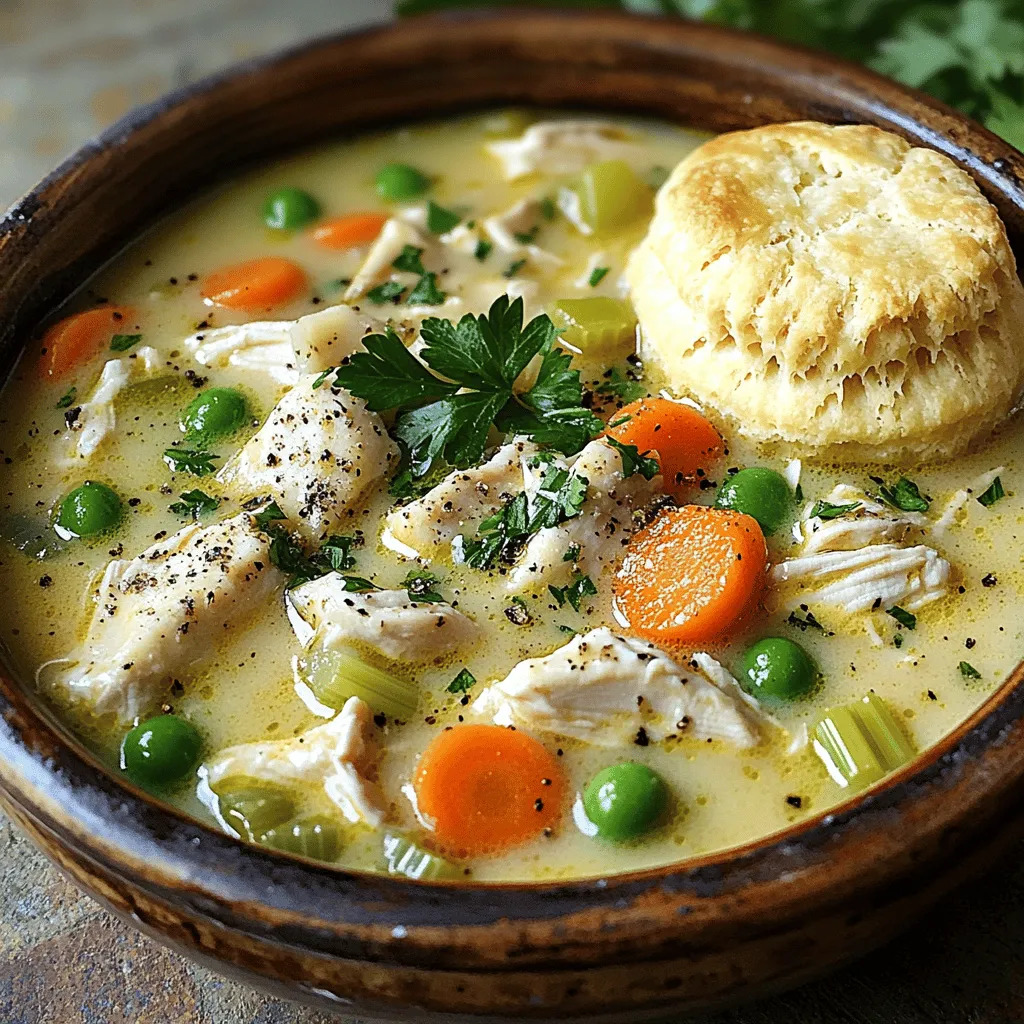
Creamy Chicken Pot Pie Soup Comforting and Hearty Meal

If you crave a warm, hearty meal, I have just the thing for you. My Creamy Chicken Pot Pie Soup blends tender chicken and fresh veggies in a rich, creamy broth. This dish captures all the flavors of a classic pot pie while being quick and easy to make. Join me on this delicious journey, and let’s create a comforting bowl of soup that will satisfy your taste buds and warm your soul.
Ingredients
Here’s what you need to make a tasty creamy chicken pot pie soup. Each ingredient adds flavor and heartiness to this dish.
– 1 lb (450g) boneless, skinless chicken breasts, diced into bite-sized pieces
– 2 tablespoons extra virgin olive oil
– 1 medium onion, finely diced
– 2 cloves garlic, minced
– 3 medium carrots, peeled and diced
– 2 celery stalks, diced
– 1 cup frozen green peas
– 4 cups low-sodium chicken broth
– 1 cup heavy cream
– 1 teaspoon dried thyme
– 1 teaspoon dried parsley
– 1 teaspoon salt (or to taste)
– 1/2 teaspoon freshly ground black pepper (or to taste)
– 1/4 cup all-purpose flour
– 1 tablespoon freshly squeezed lemon juice
– Fresh parsley, chopped, for garnish (optional)
– Warm biscuits or pie crusts, for serving (optional)
Each of these ingredients plays a role in creating a rich and creamy soup. The chicken is the star, providing protein. The veggies add texture and color. The broth and cream make it cozy and filling. Seasonings bring everything together, ensuring every bite is delicious. You can even add biscuits or pie crusts for a fun twist!
Step-by-Step Instructions
Preparing the Chicken
Start by heating two tablespoons of olive oil in a large pot over medium heat. Add one pound of diced chicken breasts. Cook for about six to eight minutes. Stir the chicken often until it turns golden brown and cooks through. Once done, remove the chicken from the pot and place it on a plate. This step adds flavor to the soup.
Sautéing the Vegetables
In the same pot, add one finely diced onion, two minced garlic cloves, three diced carrots, and two diced celery stalks. Sauté these vegetables for about five to seven minutes. Cook until they soften and the onion becomes clear. This step helps build a solid flavor base for your soup.
Making the Soup Base
Next, sprinkle a quarter cup of all-purpose flour over the soft vegetables. Stir well to coat them evenly. Cook this mixture for an extra two minutes. This helps to toast the flour, enhancing its taste. Then, gradually pour in four cups of low-sodium chicken broth while stirring. Keep stirring to avoid lumps. Bring this mixture to a gentle boil.
Combining Ingredients
Now, return the cooked chicken to the pot. Add one cup of frozen peas, one cup of heavy cream, one teaspoon of dried thyme, one teaspoon of dried parsley, one teaspoon of salt, and half a teaspoon of black pepper. Stir everything together. Reduce the heat and let the soup simmer. This will blend the flavors nicely.
Finishing Touches
Before serving, add one tablespoon of freshly squeezed lemon juice to the pot. This brightens the soup’s flavors. Let the soup simmer for about ten to fifteen minutes. Stir occasionally until it reaches your desired thickness. Taste and adjust the seasoning if needed.
Garnish with fresh parsley for color. Enjoy this comforting and hearty meal with warm biscuits or pie crusts!
Tips & Tricks
Best Practices for Flavor
Seasoning makes or breaks a dish. Always season at each step. Start with salt and pepper when cooking the chicken. Add more salt when sautéing vegetables. A pinch of salt brings out the flavors.
Using fresh ingredients gives the best taste. Fresh veggies add crunch and flavor. I prefer fresh chicken over frozen for juiciness. Frozen peas work well since they are sweet and thaw quickly.
Customizing the Recipe
You can easily adapt this soup to fit diets. For a lighter version, swap heavy cream with milk or a non-dairy option. If you want more fiber, add beans or lentils.
Feel free to toss in more vegetables. Sweet corn, green beans, or potatoes add variety. You can also add proteins like cooked turkey or tofu for a twist.
Enhancing Presentation
Garnishing makes the soup look fancy. Sprinkle fresh parsley on top before serving. It adds color and freshness.
Serve the soup in large bowls for a hearty meal. Pair it with warm biscuits or flaky pie crusts. This combo makes every bite even more comforting. Enjoy the warmth and flavor!

Variations
Healthier Alternatives
You can make this creamy chicken pot pie soup lighter. Try substituting the heavy cream with half-and-half or coconut milk. These options cut calories while keeping a creamy texture. Another healthy twist is to add quinoa or brown rice. They add bulk and nutrition, making the meal heartier and more filling. This way, you can enjoy comfort without the guilt.
Flavor Boosts
Add fresh herbs to enhance the flavor. Rosemary or basil can give your soup a fresh taste. You can also add spices like paprika or cayenne pepper for a gentle kick. This little change can turn a comforting soup into a vibrant dish. Just a pinch can make a big difference. Play around with spices and herbs to find what you love.
International Twists
Get creative by drawing inspiration from global cuisines. For example, consider adding some curry powder for an Indian flair. You could also incorporate some soy sauce and ginger for a taste of Asia. Unique ingredients like corn or beans can give your soup an exciting twist. Don’t be afraid to experiment. Each variation can lead to a new favorite recipe!
Storage Info
How to Store Leftovers
To keep your soup fresh, let it cool completely before storing. Use airtight containers to keep out air and moisture. Glass or BPA-free plastic containers work great for this. If you plan to freeze the soup, leave some space at the top of the container. This allows for expansion as the soup freezes.
Reheating Tips
When reheating your soup, do it slowly over low heat. Stir it often to keep it from sticking. If the soup seems too thick, add a splash of chicken broth or water. This helps restore its creamy texture. Taste as you heat, and adjust the seasoning if needed.
Shelf Life
In the refrigerator, this soup lasts about 3 to 4 days. Always check for signs of spoilage. If you see mold or smell something off, it’s best to throw it away. When stored in the freezer, it can last up to 3 months. Just thaw it in the fridge before reheating.
FAQs
Can I make Creamy Chicken Pot Pie Soup in advance?
Yes, you can make this soup ahead of time. It stores well in the fridge for about three days. To meal prep, cool the soup completely before transferring it to an airtight container. When ready to eat, just reheat on the stove. You may want to add a splash of broth if it thickens too much in the fridge.
Can I substitute the chicken for something else?
Absolutely! You can use canned chickpeas or tofu for a vegetarian option. If you prefer other proteins, try turkey or even shrimp. Both options will work well and keep the soup hearty and satisfying.
What can I serve with this soup?
Serve this soup with warm biscuits or flaky pie crusts. They add a nice touch and are perfect for dipping. A simple side salad can also add freshness. A green salad with a light vinaigrette pairs well to balance the richness of the soup.
How can I thicken my soup if it’s too thin?
If your soup is too thin, there are quick fixes. You can mix a tablespoon of cornstarch with cold water and stir it into the soup. Let it simmer for a few minutes until it thickens. Another option is to mash some of the vegetables against the pot’s side to create a thicker texture.
Is this recipe gluten-free?
The original recipe contains all-purpose flour, which is not gluten-free. To make the soup gluten-free, you can use a gluten-free flour blend instead. Also, ensure your chicken broth is gluten-free to keep the entire dish safe for those with gluten sensitivities.
This blog post covered how to make a delicious Creamy Chicken Pot Pie Soup. You learned the key ingredients and detailed steps for making it at home. We also discussed tips for flavor, variations, and storage. You can customize it to fit your needs and impress your diners. Enjoy your cooking adventure, and remember, the best part is sharing your soup with family and friends!
. Start by gathering all your ingredients. You will need chicken, garlic, lemon juice, and spices. If you use wooden skewers, soak them in water for at least 30 minutes. This step helps keep them from burning on the grill. In a large bowl, mix the minced garlic, lemon juice, lemon zest, olive oil, smoked paprika, cayenne pepper, ground cumin, salt, and pepper. Whisk these together until they blend well. Then add the chicken cubes. Make sure each piece is coated in the marinade. Cover the bowl and place it in the fridge. Let it marinate for at least 1 hour, or longer if you have time. This will add great flavor to the chicken. Preheat your grill to medium-high heat. If you use a grill pan, heat it over medium on the stove. Once your chicken has marinated, thread the pieces onto the skewers. Leave a small space between each piece. This helps the chicken cook evenly. Grill the skewers for about 10 to 12 minutes. Turn them often to get nice grill marks. Check that the chicken reaches an internal temperature of 165°F (75°C). After grilling, let the skewers rest for a few minutes. This keeps the juices inside. Finally, garnish with fresh parsley before serving. This adds a nice touch to your dish. For the full recipe, check the instructions above. To get the best flavor, use fresh ingredients. Fresh garlic and lemon juice give a bright taste. When mixing the marinade, let the spices blend well. They create a rich flavor. Don't rush the marinating. Allow at least one hour, or better yet, overnight. This soaking time lets the chicken absorb all those tasty flavors. Adjust the cayenne pepper based on your spice level. This way, you can make the dish mild or fiery to fit your taste. One common mistake is not soaking wooden skewers. If you skip this step, they can burn on the grill. Always soak them for at least thirty minutes. Another mistake is overcrowding the skewers. Leave some space between the chicken pieces. This helps them cook evenly. Also, don't rush the resting time after grilling. Letting them rest keeps the juices inside, making the chicken juicy. To make your skewers look great, use a large serving platter. Arrange the skewers neatly. Add fresh lemon wedges around them for color. A sprinkle of chopped parsley on top makes it more inviting. For an extra treat, serve with a yogurt dip or tzatziki. This adds creaminess and coolness to the spicy flavors. These simple steps can elevate your dish and impress your guests. For the complete guide on making these skewers, check the Full Recipe. {{image_4}} You can swap chicken for other proteins. Try shrimp for a quick cook. Beef or pork also works well. Just adjust your cooking time to avoid overcooking. Fish, like salmon, can add a rich flavor. Each protein brings its own taste. For a vegetarian version, use firm tofu. It soaks up flavors well. You can also try mushrooms for a meaty texture. Bell peppers, zucchini, and cherry tomatoes make colorful additions. For a vegan option, skip the chicken and keep the marinade. Mix things up with different marinades. Try adding soy sauce or ginger for an Asian twist. A spicy chili paste can add heat. For a Mediterranean flair, use herbs like oregano and thyme. Experiment with what you like for new tastes. For the full recipe, check out the details above. After enjoying your spicy lemon garlic chicken skewers, let any leftovers cool down. Place them in an airtight container. Store them in the fridge for up to three days. This keeps the chicken fresh and tasty for later meals. To reheat the chicken skewers, preheat your oven to 350°F (175°C). Place the skewers on a baking sheet. Heat for about 10-15 minutes or until they are warm. You can also use a microwave. Heat them on medium power for 1-2 minutes. This way, the chicken stays juicy and delicious. If you want to save the skewers for later, freezing is a great option! Wrap each skewer in plastic wrap or aluminum foil. Place them in a freezer-safe bag. They can last up to three months in the freezer. When you are ready to eat them, thaw them in the fridge overnight. Then, reheat as mentioned above for a tasty meal. For the full recipe, check out the link! You should marinate chicken for at least 1 hour. For the best taste, let it sit overnight. This longer time allows the flavors to soak in well. The garlic and lemon will really shine through. Just remember, the longer the chicken sits in the marinade, the more flavorful it becomes. Yes, you can cook these skewers in the oven. Preheat your oven to 400°F (200°C). Line a baking sheet with foil for easy cleanup. Place the skewers on the sheet and bake for about 15-20 minutes. Make sure to turn them halfway through for even cooking. Check that the chicken reaches 165°F (75°C) inside. These skewers go great with many side dishes. Here are some tasty options: - Grilled vegetables like bell peppers and zucchini - A fresh green salad with lemon vinaigrette - Rice or quinoa to soak up the juices - Garlic bread for a crunchy contrast Each of these sides will add a nice balance to the meal. To change the spice level, simply adjust the cayenne pepper. For less heat, use half a teaspoon or skip it. If you want more spice, add an extra teaspoon. You can also use spicy marinades or hot sauce for extra kick. Always taste as you go, so you can find your perfect level of heat. For the full recipe, check the earlier section. Enjoy cooking! You learned how to make Spicy Lemon Garlic Chicken Skewers. We covered the main ingredients, marinade, and garnishes. I provided step-by-step instructions for grilling. You also got tips for perfect flavor and common mistakes to avoid. There are variations, like using different proteins and marinades. Lastly, I shared storage info and answered key FAQs. Try these skewers for your next cookout. Enjoy the bold flavors and easy prep!](https://goldendishy.com/wp-content/uploads/2025/06/b1f94ef8-81fb-4621-8ae2-1513b5b656e4-768x768.webp)
![- 12 oz fettuccine or pappardelle pasta - 2 cups butternut squash, peeled and cubed - 1 tablespoon olive oil The base of this dish is fettuccine or pappardelle pasta. I love these shapes as they hold the creamy sauce well. You will also need fresh butternut squash. It gives the dish a warm color and sweet flavor. Using olive oil helps with roasting and adds richness to the pasta. - 1 small onion, diced - 2 cloves garlic, minced - 1 teaspoon freshly grated nutmeg Onions and garlic add depth to the sauce. Dicing the onion makes it cook evenly. Minced garlic gives a punch of flavor. Nutmeg brings warmth and a hint of spice, making the dish cozy and inviting. - 1 cup vegetable broth - 1 cup coconut milk (or heavy cream for a non-vegan option) - ½ cup grated Parmesan cheese (optional) For the sauce, you need vegetable broth for a savory base. Coconut milk adds creaminess and a hint of sweetness. If you prefer, heavy cream works too. Adding Parmesan cheese can enhance the flavor, but it's optional. - Salt and freshly cracked pepper to taste - Fresh sage leaves for garnish Season with salt and cracked pepper to bring everything together. Fresh sage leaves add a lovely touch. They not only look nice but also add an aromatic flavor that complements the dish well. These ingredients create a lovely balance of flavors in the creamy butternut squash pasta. For the full recipe, check out the detailed instructions to make this delicious meal. - Preheat your oven to 400°F (200°C). - Toss the cubed butternut squash in olive oil, salt, and pepper. - Spread the squash on a baking sheet. Roast for 20-25 minutes. The squash should be tender and have a light caramel color. - Bring a large pot of salted water to a boil. - Add the pasta and cook it as per package instructions. - Before draining, reserve 1 cup of the pasta water. This helps adjust your sauce later. - Heat olive oil in a large skillet over medium heat. - Add diced onion and sauté until soft, about 5 minutes. - Stir in minced garlic and cook for about 1 minute. - Blend the roasted squash with the sautéed onion, garlic, vegetable broth, and coconut milk. Use an immersion blender or a regular blender. - Return the blended sauce to the skillet and heat on low. - Add the cooked pasta and gradually mix in the reserved pasta water. - Stir well until the pasta is coated with the sauce. - If you like, stir in the Parmesan cheese. - Taste and adjust seasoning with salt and pepper as needed. - Plate the pasta in shallow bowls for a nice look. - Garnish with fresh sage leaves and drizzle a little olive oil on top. For a detailed guide, check out the Full Recipe. Enjoy your creamy butternut squash pasta! To get a creamy consistency, blend the roasted butternut squash well. You want it smooth. Use an immersion blender for easy mixing. If it’s too thick, add a splash of pasta water. This helps the sauce cling to the noodles. Want to add more flavor? Try spices like cinnamon or a pinch of chili powder. Fresh herbs, such as thyme or rosemary, can boost taste too. You can also add veggies like spinach or kale for added nutrition. They cook quickly and blend well with the sauce. Pair creamy butternut squash pasta with a simple salad. A mix of greens with a light vinaigrette works well. For drinks, a glass of white wine like Sauvignon Blanc complements the dish nicely. If you prefer non-alcoholic options, try sparkling water with a slice of lemon. These sides enhance the meal and make it even more enjoyable. For the full recipe, check out [Full Recipe]. {{image_4}} You can easily adjust creamy butternut squash pasta to fit different diets. For a vegan option, swap heavy cream with coconut milk and skip the cheese. This change still gives you a creamy sauce that tastes great. If you need gluten-free pasta, use rice or corn-based noodles. These options keep the dish light and tasty. Experimenting with different ingredients can make this dish exciting. Instead of butternut squash, try using acorn or delicata squash. Each type has its unique flavor and texture. For cheese, you can use feta for a tangy twist or goat cheese for a creamy finish. These swaps let you create new flavor combinations that keep things fresh. To make this dish more seasonal, add roasted vegetables like Brussels sprouts or carrots. This not only enhances the flavor but also adds color. Making creamy butternut squash pasta in fall is perfect. You can enjoy the warmth of the season with every bite. Try using spices like cinnamon or cloves for a cozy feel. For the full recipe, check out the complete guide and enjoy the rich flavors! To store leftover creamy butternut squash pasta, let it cool first. Then, place it in an airtight container. Glass or BPA-free plastic containers work best. Make sure to seal them tightly to keep the air out. This helps keep the pasta fresh and tasty. Store the container in the fridge for up to four days. Yes, you can freeze this dish! To do this, use a freezer-safe container. Leave some space at the top for expansion. It is best to freeze the pasta without the cheese added. This helps keep the texture right. When you are ready to eat, move the container to the fridge to thaw overnight. To reheat, use a skillet over low heat. Add a splash of vegetable broth or water to help it warm up evenly. In the fridge, creamy butternut squash pasta lasts for about four days. After that, the taste and quality may drop. Always check for signs of spoilage. If the pasta smells sour or has a strange texture, it’s best to throw it away. Enjoy your creamy butternut squash pasta fresh! For the full recipe, visit [Full Recipe]. It takes about 40 minutes to make creamy butternut squash pasta. The prep time is 10 minutes. Cooking the dish takes about 30 minutes. You will spend 20-25 minutes roasting the squash. Boiling the pasta adds another 10-12 minutes. This dish is quick and easy for a weeknight meal! Yes, you can use many types of pasta. Fettuccine and pappardelle work well for this sauce. You can also try penne or rigatoni for a fun twist. Each shape holds the sauce differently, so feel free to experiment! Absolutely! To make it nut-free, use coconut milk instead of cream. If you want a non-vegan option, use heavy cream instead. You can skip any nuts in the garnish. This keeps the dish creamy and delicious without nuts. You can serve this dish with many sides. A crisp green salad pairs well. Try a side of garlic bread for extra comfort. For dessert, pumpkin pie or apple crisp can be great choices. These options enhance the cozy vibe of the meal. To reheat, use a skillet over low heat. Add a splash of water or broth to the pasta. This helps keep the sauce creamy. Stir until heated through. You can also use the microwave, but stir halfway for even heating. Enjoy your leftovers just as much! This creamy butternut squash pasta combines hearty flavors and texture. We roasted the squash and blended it with garlic and onion to create a rich sauce. You learned how to make it creamy, adjust seasoning, and even swap ingredients. In the end, this dish is versatile and perfect for any meal. Enjoy experimenting with flavors and sharing this delightful recipe with friends and family.](https://goldendishy.com/wp-content/uploads/2025/07/000431ad-92db-4f90-88d6-bb841745a08c-768x768.webp)


