
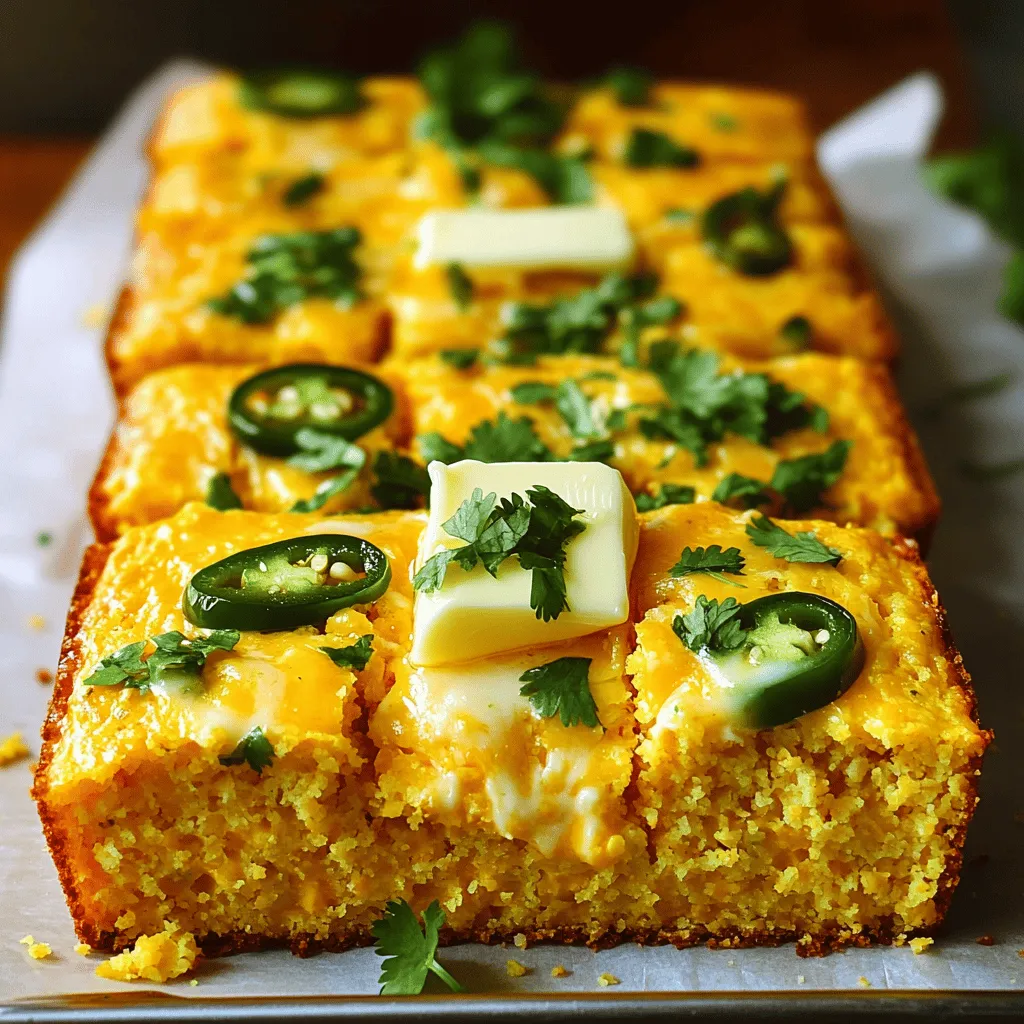
Cheesy Jalapeño Cornbread Tasty and Simple Recipe

Are you ready to spice up your meals? This Cheesy Jalapeño Cornbread is both tasty and easy to make. With its warm, cheesy goodness and a kick of spice, it’s perfect for any occasion. I’ll guide you through simple steps to get this cornbread to your table in no time. Trust me; once you try it, you won’t want to share! Let’s dive into the ingredients and get cooking!
Ingredients
Main Ingredients for Cheesy Jalapeño Cornbread
To make Cheesy Jalapeño Cornbread, gather these key ingredients:
– 1 cup cornmeal
– 1 cup all-purpose flour
– 1 tablespoon baking powder
– 1/2 teaspoon salt
– 1/4 teaspoon baking soda
– 1 cup buttermilk
– 1/4 cup vegetable oil
– 2 large eggs
– 1 cup shredded sharp cheddar cheese
– 1/2 cup jalapeños, finely chopped (fresh or pickled)
These ingredients create a soft, cheesy bread with a spicy kick.
Optional Ingredients for Flavor Enhancement
You can add honey for a touch of sweetness. This balances the heat from the jalapeños. A quarter cup of honey works well. You can also sprinkle in herbs like cilantro or parsley for extra flavor.
Substitutions and Dietary Considerations
For gluten-free cornbread, use gluten-free flour instead of all-purpose flour. If you’re lactose intolerant, try almond milk or oat milk in place of buttermilk. You can also use a dairy-free cheese to keep it vegan.
For those who want a milder flavor, use fewer jalapeños. You can also swap them for mild peppers or bell peppers. Each choice gives a unique twist to your cornbread.
This recipe is simple and fun.
Step-by-Step Instructions
Prepping the Oven and Baking Dish
First, set your oven to 400°F (200°C). This heat will give your cornbread a nice crust. Next, grease an 8-inch square baking dish or a cast-iron skillet. Use a bit of oil or non-stick spray. This step helps the cornbread come out easily.
Mixing Dry Ingredients
In a big mixing bowl, whisk together the cornmeal, flour, baking powder, salt, and baking soda. Make sure to mix them well. This ensures the cornbread will rise evenly and taste great.
Combining Wet Ingredients and Honey (Optional)
In another bowl, mix the buttermilk, vegetable oil, and eggs until smooth. If you like a hint of sweetness, add honey now. Whisk it well into the mixture. This adds a nice flavor to the cornbread.
Folding in Cheese and Jalapeños
Pour the wet mixture into the dry ingredients. Gently stir with a spatula or wooden spoon until just combined. Be careful not to overmix. The batter should still have lumps. Now, fold in the shredded sharp cheddar cheese and chopped jalapeños. This step gives your cornbread a cheesy, spicy kick.
Baking and Cooling Process
Transfer the batter to your greased baking dish. Smooth the top with a spatula for even baking. Place it in the oven and bake for 20-25 minutes. When done, the top should be golden brown. A toothpick inserted in the center should come out clean. After baking, let it cool for a few minutes. Then, slice it into squares or wedges. Enjoy!
Tips & Tricks
Achieving the Perfect Texture
To get the best texture in your cornbread, do not overmix the batter. Mix the wet and dry ingredients until just combined. This keeps the cornbread light and airy. When you fold in the cheese and jalapeños, be gentle. This way, you keep those lovely lumps that create a soft, fluffy bite.
Serving Suggestions and Pairings
Cheesy Jalapeño Cornbread shines when served warm. I love to add a pat of butter on top. It melts nicely and makes every bite rich. Pair it with chili or soup for a hearty meal. You can also enjoy it alone for a tasty snack. Fresh herbs, like cilantro or parsley, add a great touch and color.
Common Mistakes to Avoid
One common mistake is not measuring ingredients correctly. Use dry measuring cups for flour and cornmeal. Another error is baking too long. Check for doneness with a toothpick around the 20-minute mark. If it comes out clean, your cornbread is ready. Lastly, don’t skip greasing the baking dish. This prevents sticking and makes serving easy.

Variations
Different Cheese Options
You can switch up the cheese in your cornbread. Sharp cheddar gives a nice tang, but other cheeses work too. Try using pepper jack for extra heat or mozzarella for a milder taste. You might also mix cheeses for a more complex flavor. Blend cheddar with feta for a unique twist.
Adding Additional Ingredients
You can enhance your cornbread by adding corn or herbs. Sweet corn adds a nice texture and sweetness. Fresh herbs like cilantro or chives brighten the flavor. You can even try adding cooked bacon for a savory crunch. Just chop and fold them into the batter before baking.
Customizing the Spice Level
Adjust the spice level to suit your taste. If you want it hotter, add more jalapeños or use fresh ones. For a milder version, remove the seeds from the jalapeños. You can also add spices like cayenne or chili powder for extra warmth. Just remember, a little goes a long way!
Feel free to explore these variations to make your cornbread truly your own.
Storage Info
Best Practices for Storing Leftovers
To keep your cornbread fresh, store it in an airtight container. You can also wrap it in plastic wrap. This helps keep moisture in and prevents it from drying out. Place the container in the fridge if you plan to eat it within a few days. It can last up to five days this way. For longer storage, consider freezing it.
Reheating Instructions
When you’re ready to enjoy your leftover cornbread, you can reheat it easily. Preheat your oven to 350°F (175°C). Place the cornbread on a baking sheet. Cover it with aluminum foil to keep it moist. Heat for about 10-15 minutes until warm. You can also microwave individual pieces for about 20-30 seconds. Just be careful not to overheat as it can become tough.
Freezing for Longer Storage
If you want to save cornbread for later, freezing is a great option. First, let it cool completely. Then, wrap each piece tightly in plastic wrap. Next, put the wrapped pieces in a freezer bag or container. Label it with the date. Cornbread can last in the freezer for up to three months. When you’re ready to eat it, thaw it in the fridge overnight before reheating. This way, you can enjoy your Cheesy Jalapeño Cornbread anytime!
FAQs
How do you make Cheesy Jalapeño Cornbread from scratch?
To make Cheesy Jalapeño Cornbread from scratch, gather your ingredients first. You need:
– 1 cup cornmeal
– 1 cup all-purpose flour
– 1 tablespoon baking powder
– 1/2 teaspoon salt
– 1/4 teaspoon baking soda
– 1 cup buttermilk
– 1/4 cup vegetable oil
– 2 large eggs
– 1 cup shredded sharp cheddar cheese
– 1/2 cup jalapeños, finely chopped
– 1/4 cup honey (optional)
Start by preheating your oven to 400°F (200°C). Grease your baking dish to prevent sticking. In one bowl, mix the dry ingredients. In another bowl, whisk together the wet ingredients. Combine both mixtures gently. Then fold in your cheese and jalapeños. Bake for 20-25 minutes until golden brown.
Can I substitute non-dairy ingredients?
Yes, you can substitute non-dairy ingredients in this recipe. Use almond milk or oat milk instead of buttermilk. For the eggs, use a flaxseed or chia seed mixture. For butter, you can use coconut oil or a non-dairy butter. These swaps keep the cornbread tasty and suitable for many diets.
What do I serve with Cheesy Jalapeño Cornbread?
Cheesy Jalapeño Cornbread pairs well with many dishes. Enjoy it with chili, soup, or a hearty stew. It also makes a great side for barbecued meats. If you want a lighter meal, serve it with a fresh salad. You can even eat it on its own with butter for a tasty snack.
How long does Cheesy Jalapeño Cornbread last in the fridge?
Cheesy Jalapeño Cornbread lasts about 3-5 days in the fridge. Store it in an airtight container to keep it fresh. If you want to enjoy it later, you can freeze it. Just wrap it tightly and store it in the freezer for up to 3 months. This way, you can enjoy this delicious cornbread anytime!
Cheesy jalapeño cornbread is easy to make and full of flavor. We covered the key ingredients, step-by-step instructions, and helpful tips. You can adjust the spices and cheese to match your taste. Proper storage keeps it fresh, so it’s ready when you want it. Experiment with different ingredients to make it your own. Enjoy this dish as a tasty side or snack. It’s a delightful addition to any meal!
![- 2 boneless, skinless chicken breasts - 8 oz fettuccine pasta - 2 cups fresh spinach, roughly chopped - 1 cup heavy cream - 1 cup finely grated Parmesan cheese - 2 tablespoons olive oil - 2 cloves garlic, minced - Salt and freshly ground black pepper, to taste - Fresh basil leaves, for garnish (optional) - Red pepper flakes, for a spicy kick (optional) When I cook Chicken and Spinach Alfredo, I gather these key ingredients first. The chicken breasts are a must because they add protein and flavor. I prefer fettuccine pasta for its wide shape, which holds the creamy sauce well. Fresh spinach adds a pop of green and nutrients, making the dish feel lighter. Next, I grab heavy cream. It’s the star of the sauce, bringing that rich, smooth texture. Of course, Parmesan cheese can't be skipped. It gives depth and a savory taste that blends perfectly with the cream. In the additional ingredients, olive oil is essential for cooking. It adds a nice flavor base. Minced garlic brings a wonderful aroma and a bit of zing. I always keep salt and pepper handy to season the dish just right. Lastly, I suggest garnishing with fresh basil for that extra flair. A sprinkle of red pepper flakes can bring heat if you like a spicy bite. For the full list of ingredients, check out the Full Recipe. First, I boil a large pot of salted water. Once it bubbles, I add the fettuccine. I cook it until it's al dente, which takes about 8-10 minutes. After cooking, I drain the pasta but keep a small cup of the pasta water for later. While the pasta cooks, I heat olive oil in a skillet over medium heat. I take the chicken breasts and season them with salt and pepper on both sides. I place the chicken in the hot skillet and cook for about 6-7 minutes on each side. When they turn golden brown and are fully cooked, I remove them from the skillet. I let them rest for a few minutes before slicing them into thin strips. In the same skillet, I lower the heat and add minced garlic. I sauté it for about 30 seconds until it smells amazing. Then, I slowly pour in heavy cream while stirring. I let it simmer gently, making sure it doesn’t boil. Next, I whisk in grated Parmesan cheese until the sauce is smooth and creamy. I add the chopped spinach and let it cook for 1-2 minutes until it wilts. Now, I carefully fold the cooked fettuccine into the creamy sauce. I mix it well so each strand is coated. If the sauce is too thick, I add a bit of the reserved pasta water to get the right consistency. Finally, I arrange the sliced chicken on top of the pasta. If I want a spicy touch, I sprinkle some red pepper flakes over everything. For the full recipe, check out the earlier section. - Adjusting seasoning: Start by tasting your sauce as you cook. Add more salt or pepper if needed. A pinch of nutmeg can also enhance the flavor. This small touch makes a big difference. - Whisking technique for smooth sauce: When you add the cream and cheese, whisk constantly. This helps to blend everything smoothly. It prevents lumps and ensures a creamy texture. - Presentation tips: Serve the Chicken and Spinach Alfredo in shallow bowls. Drizzle extra sauce on top for a rich look. Finish with freshly grated Parmesan and a basil sprig. This adds color and makes the dish pop. - Best accompaniments: Garlic bread or a fresh salad pairs perfectly. The crunch of the salad balances the creaminess of the dish. A glass of white wine complements the flavors well too. - Multitasking during prep: While the pasta cooks, focus on the chicken. Season it and cook it in the same skillet. This saves time and adds flavor to the sauce. Always keep an eye on the pasta so it doesn’t overcook. By using these tips, you can make your Chicken and Spinach Alfredo even better. Each step adds to the dish's overall experience, making it truly enjoyable. Enjoy the process and get creative! {{image_4}} You can switch out the chicken for other proteins. Shrimp works great in this dish. It adds a nice flavor and cooks quickly. Tofu is a good option for a vegetarian meal. Just make sure to season it well before cooking. For pasta, fettuccine is classic, but you can try penne or whole wheat. Penne holds the sauce well due to its shape. Whole wheat adds a nutty flavor and more fiber. Want to boost nutrition? Add seasonal vegetables. Broccoli brings crunch and color. You can steam it lightly before adding. Bell peppers add sweetness and vibrancy. Slice them thinly to mix in easily. Feel free to experiment! Seasonal vegetables can change the dish each time. Enhancing flavor is simple. You can add herbs like Italian seasoning for a savory kick. A sprinkle of lemon zest brightens the dish and adds freshness. For a bit of heat, red pepper flakes are great. Just a pinch goes a long way. These variations keep your Chicken and Spinach Alfredo fun and fresh. Check out the Full Recipe to get started! After you enjoy your Chicken and Spinach Alfredo, store any leftovers in the fridge. Use an airtight container to keep it fresh. You can keep it for about 3 to 4 days. To reheat, put the pasta in a pan over low heat. Add a splash of water or cream to help it warm evenly. Stir often to keep it creamy and avoid burning. If you want to keep it longer, you can freeze Chicken and Spinach Alfredo. Place it in a freezer-safe container or bag. Make sure to remove as much air as possible. It can last in the freezer for up to 2 months. When you are ready to eat it, take it out and thaw it in the fridge overnight. To reheat, warm it in a pan over low heat, adding a bit of water or cream to restore its creaminess. For the complete recipe, check the [Full Recipe]. Chicken and Spinach Alfredo lasts about 3 to 4 days in the fridge. Store it in an airtight container to keep it fresh. Make sure to cool it down before placing it in the fridge. This helps prevent condensation, which can make the dish soggy. Yes, you can make this recipe ahead of time. Cook the pasta and chicken in advance. Store them separately from the sauce. When you’re ready to eat, just heat everything together. This keeps the pasta from getting mushy. For the best taste, try to eat it within a few days. You can use half-and-half for a lighter option. If you want a dairy-free choice, try coconut cream or cashew cream. Both options give a nice creamy texture. You may need to adjust the seasonings to match your taste. Yes, you can make this dish gluten-free. Use gluten-free pasta such as rice or corn pasta. For the sauce, just check the labels on your cream and cheese. Most are gluten-free, but it’s good to be sure. This way, everyone can enjoy your Chicken and Spinach Alfredo. For the full recipe, check the details above! This blog post covered the key ingredients and steps for making Chicken and Spinach Alfredo. We discussed how to prepare the pasta, cook the chicken, and create a creamy sauce. Plus, I shared tips for enhancing flavors and serving. Remember, you can mix it up with different proteins and veggies. Also, I provided storage advice to keep your meal fresh. Embrace your creativity in the kitchen. Enjoy a tasty meal and share it with friends or family!](https://goldendishy.com/wp-content/uploads/2025/06/ee4d0533-23fd-4fc4-b715-1820a1e3e494-768x768.webp)


![To make vegan creamy pesto pasta, gather these fresh and simple ingredients. - 12 oz pasta (penne, spaghetti, or your favorite variety) - 2 cups fresh basil leaves, tightly packed - 1/2 cup raw cashews (soaked in water for at least 2 hours) - 1/4 cup nutritional yeast (for a cheesy flavor) - 3 cloves garlic, minced - 1/4 cup extra virgin olive oil - 1 tablespoon fresh lemon juice - Sea salt and freshly ground black pepper, to taste - 1 cup cherry tomatoes, halved (for topping) - Extra fresh basil leaves (for garnish) Each ingredient plays a vital role. The pasta is the base, while basil brings freshness. Cashews create a rich, creamy texture. Nutritional yeast adds a cheesy taste, perfect for vegan dishes. Garlic gives depth, while olive oil provides smoothness. Lemon juice brightens the flavors. Salt and pepper enhance everything. Cherry tomatoes add color and sweetness. Extra basil leaves make the dish look beautiful. For the full recipe, check out the link to ensure a delicious meal! First, fill a large pot with water and add a generous amount of salt. Bring the water to a rapid boil. This step is key; the salt helps flavor the pasta. Once boiling, add 12 ounces of your favorite pasta, like penne or spaghetti. Cook according to the package instructions. You want the pasta to be al dente, which means it should be tender but still firm to bite. Usually, this takes about 8 to 12 minutes. When the pasta is ready, drain it well and set it aside. Next, it’s time to make the vegan pesto. Grab your blender or food processor. Add 2 cups of fresh basil leaves, 1/2 cup of soaked raw cashews, and 1/4 cup of nutritional yeast. Also, include 3 cloves of minced garlic and 1 tablespoon of fresh lemon juice. Season with a pinch of sea salt and freshly ground black pepper. Blend this mixture until it becomes smooth and creamy. If it doesn't blend well, scrape down the sides of the blender and blend again until you get a silky texture. Now, combine the drained pasta with the creamy pesto sauce. Use a large mixing bowl for this. Pour the pesto over the pasta. With a pair of tongs or a spatula, toss everything together. Ensure that each piece of pasta gets coated with the vibrant pesto. If the sauce looks too thick, add a little water, one teaspoon at a time, until it reaches the desired consistency. Don't forget to taste! Adjust the seasoning with more salt, pepper, or lemon juice if needed. Finally, gently fold in 1 cup of halved cherry tomatoes for a fresh burst of flavor. Serve this delicious dish warm, garnished with extra basil leaves. Enjoy your vegan creamy pesto pasta! For the complete recipe, check the [Full Recipe]. Soaked cashews are the secret to a smooth and creamy sauce. They soften and blend well, making the pesto rich. Soak them in water for at least two hours before use. This step is key for a silky texture. If your pesto is too thick, don’t worry. Just add water! Start with a teaspoon at a time. Blend until you reach your desired creaminess. This helps the sauce hug the pasta perfectly. Don’t stop at just basil! You can spice it up with some red pepper flakes for heat. A pinch of black pepper adds depth. Try adding a bit of garlic powder for more flavor. Lemon juice adds freshness, but balance is key. If it’s too tangy, add a pinch of sugar or more cashews. This helps round out the flavors and brings the dish to life. Pair this pasta with roasted vegetables for a colorful plate. A side salad adds crunch and freshness. For a drink, consider a light white wine, like Sauvignon Blanc. As for portion sizes, aim for about one and a half cups per person. This ensures everyone leaves satisfied. Enjoy this dish warm for the best flavor experience! {{image_4}} You can change nuts or seeds in your pesto. Try using almonds or sunflower seeds. Each option brings a unique taste. For those avoiding gluten, select gluten-free pasta. Options like brown rice or chickpea pasta work well. Both choices give a nice texture and flavor. To mix up the flavor, add different herbs like parsley or spinach. These herbs bring extra freshness to your dish. You can also incorporate various vegan cheeses. Options like cashew cheese or nutritional yeast can enhance the creamy taste. This helps create layers of flavor in your pesto. Make your dish fresh by using seasonal veggies. For example, zucchini or asparagus can add crunch and color. You can also try different tomatoes. Roasted tomatoes can bring a sweet touch, while cherry tomatoes add a pop of freshness. Finish with garnishes like pine nuts or extra basil for a lovely look. For the complete recipe, check the Full Recipe. After enjoying your vegan creamy pesto pasta, store any leftovers in an airtight container. This keeps the pasta fresh and tasty. Place it in the fridge right away. The best storage time is up to 3 days. Beyond that, the pasta may lose its flavor and texture. To reheat your pasta, the best method is using a stovetop. Heat a pan over medium heat. Add a splash of water or olive oil to keep it moist. Stir gently to warm it up. When reheating, avoid high heat, as this can dry out the sauce. You want to keep that creamy goodness intact. Enjoy your delicious meal again! To make vegan creamy pesto pasta, follow these simple steps: 1. Cook the Pasta: Bring salted water to a boil. Add 12 oz of your pasta and cook until tender. This usually takes about 8-12 minutes. Drain and set aside. 2. Prepare the Pesto: In a blender, add 2 cups of fresh basil leaves, 1/2 cup of soaked raw cashews, and 3 minced garlic cloves. Pour in 1/4 cup of nutritional yeast and 1 tablespoon of lemon juice. Add a pinch of sea salt and black pepper. Blend until smooth. 3. Emulsify with Olive Oil: While blending, slowly add 1/4 cup of extra virgin olive oil. Keep blending until creamy. If it’s too thick, add water, one teaspoon at a time. 4. Combine Pasta and Pesto: In a large bowl, mix the drained pasta with your creamy pesto. Toss gently to coat the pasta well. 5. Final Touches: Taste the mix and adjust the seasoning. Fold in 1 cup of halved cherry tomatoes for a fresh touch. 6. Serve: Serve warm with extra basil leaves on top. Enjoy your delicious vegan creamy pesto pasta! Yes, you can freeze vegan creamy pesto pasta. Here are some tips to keep it tasty: - Cool Before Freezing: Let the pasta cool down before packing it. - Use Airtight Containers: Store the pasta in airtight containers or freezer bags. - Leave Space: Leave some room in the container for the pasta to expand. - Label and Date: Always label your containers with the date. Use within 2-3 months for best quality. When ready to eat, thaw in the fridge overnight. Reheat gently on the stove or in the microwave. Add a splash of water if it seems dry. If you don’t have nutritional yeast, try these alternatives: - Grated Vegan Cheese: Use a dairy-free cheese for a similar flavor. - Ground Flaxseed: This can add a nutty taste, though it won't mimic the cheese flavor. - T nutritional yeast: You can use this if you want a similar profile. - Parmesan Substitute: Some brands offer vegan parmesan that works well in pesto. Each substitute will change the flavor a bit, so adjust to your taste! This blog post covered how to make vegan creamy pesto pasta. You learned about ingredients, cooking pasta, and blending the pesto. We explored tips for smooth texture and flavor. I shared variations to keep things fresh, plus storage and reheating advice. In the end, making this dish is quick and fun. Enjoy experimenting with flavors and textures. This pasta will please vegans and non-vegans alike!](https://goldendishy.com/wp-content/uploads/2025/07/928f57b2-1357-48f3-b20e-4d7b01e4c937-768x768.webp)
