
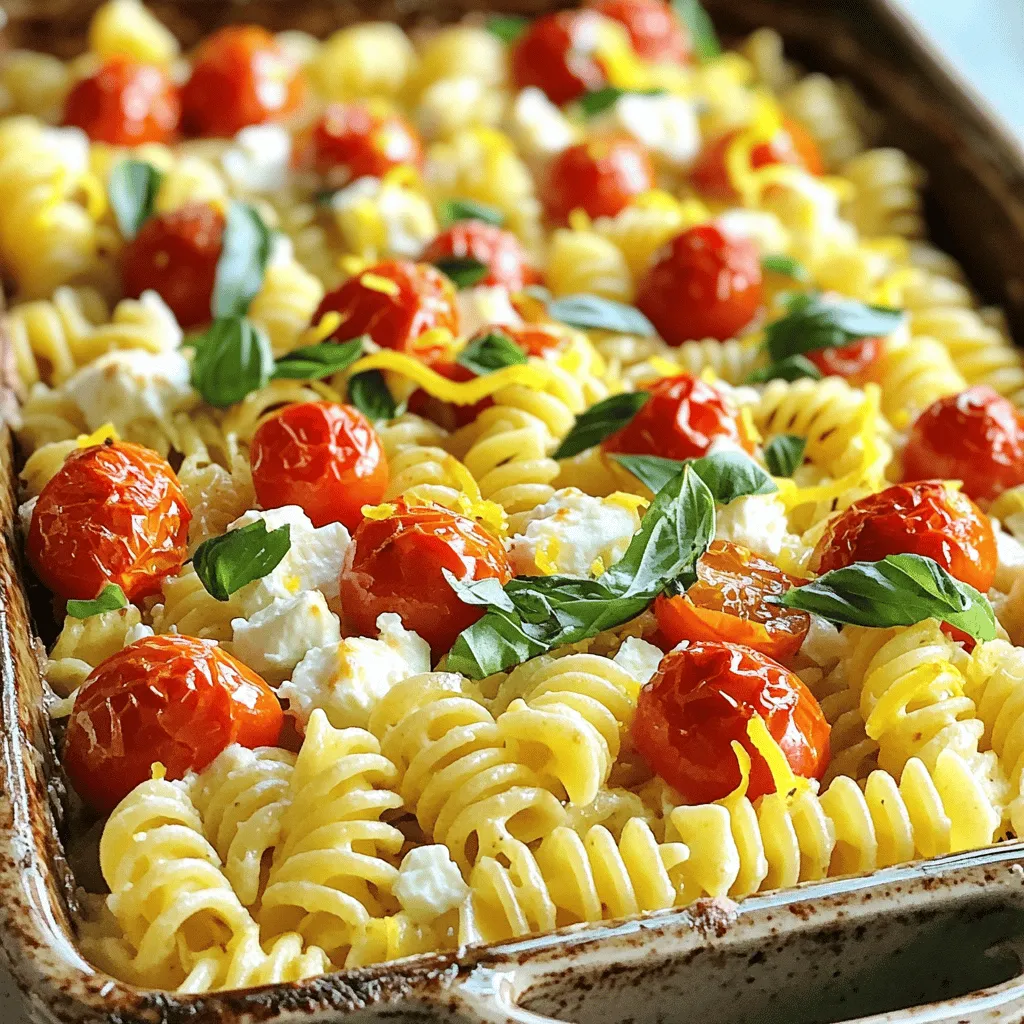
Baked Feta Pasta with Tomatoes Easy and Flavorful Dish

Are you ready to dig into a tasty Baked Feta Pasta with Tomatoes? This dish is easy, fun, and packed with flavor. You only need a few simple ingredients like feta cheese, fresh tomatoes, and pasta. Plus, it comes together in one dish! Join me as I guide you through this simple recipe that’s sure to wow your family and friends. Let’s turn these ingredients into a meal you’ll love!
Ingredients
List of Ingredients
– 200g (7 oz) block of feta cheese
– 300g (10.5 oz) pasta (fusilli or penne recommended)
– 300g (10.5 oz) cherry tomatoes, halved
– 4 cloves garlic, minced
– 1 teaspoon red pepper flakes (adjust according to your spice preference)
– 1/4 cup extra virgin olive oil
– Salt and freshly ground black pepper to taste
– Fresh basil leaves, for garnish
– Grated lemon zest, for finishing touch
Every ingredient plays a key role in creating the magic of baked feta pasta. The feta cheese is the star. It becomes creamy and rich when baked. The cherry tomatoes burst with flavor, adding sweetness. The pasta serves as a perfect base to soak up all the goodness.
Garlic gives depth and aroma to the dish. Red pepper flakes add a nice kick that you can adjust. Extra virgin olive oil brings richness and ties all the flavors together. Don’t forget salt and black pepper to enhance everything.
Fresh basil leaves brighten the dish and add a pop of color. A sprinkle of lemon zest at the end adds a fresh finish.
Step-by-Step Instructions
Preheating and Preparation
First, preheat your oven to 400°F (200°C). This helps create a warm space for the dish. Next, grab a large baking dish. Pour in 300g of halved cherry tomatoes. Add 4 cloves of minced garlic and 1 teaspoon of red pepper flakes. Pour in 1/4 cup of extra virgin olive oil. Season with salt and freshly ground black pepper. Mix everything well until the tomatoes are coated.
Baking the Feta and Tomatoes
Now, nestle a block of 200g feta cheese right in the middle of the tomatoes. Drizzle a bit more olive oil on the feta for added flavor. Place the dish in your preheated oven and bake for 30-35 minutes. You want the tomatoes to blister and the feta to soften and turn golden.
Cooking the Pasta
While the feta and tomatoes bake, fill a large pot with salted water. Bring the water to a boil. Once boiling, add 300g of pasta, either fusilli or penne. Cook it according to the package instructions until it’s al dente. This means it should be firm but not hard. Drain the pasta and set it aside for later.
Combining Ingredients
When the feta and tomatoes are done, take the dish out of the oven. Using a fork, gently mash the softened feta and blistered tomatoes. This creates a creamy mixture. Next, fold the drained pasta into the dish. Make sure every piece is coated in the feta-tomato blend. Taste it and adjust the seasoning if needed. Enjoy!
Tips & Tricks
Perfecting Texture and Flavor
To make your baked feta pasta shine, adjust the seasoning to suit your taste. Start with salt and pepper, then add more if needed. If you like a little heat, sprinkle more red pepper flakes. Each bite should sing with flavor.
To ensure a creamy consistency, blend the feta and tomatoes well. Use a fork to mash them up after baking. This step creates a smooth sauce that clings to the pasta. It should have a velvety feel, making every forkful delightful.
Visual Presentation
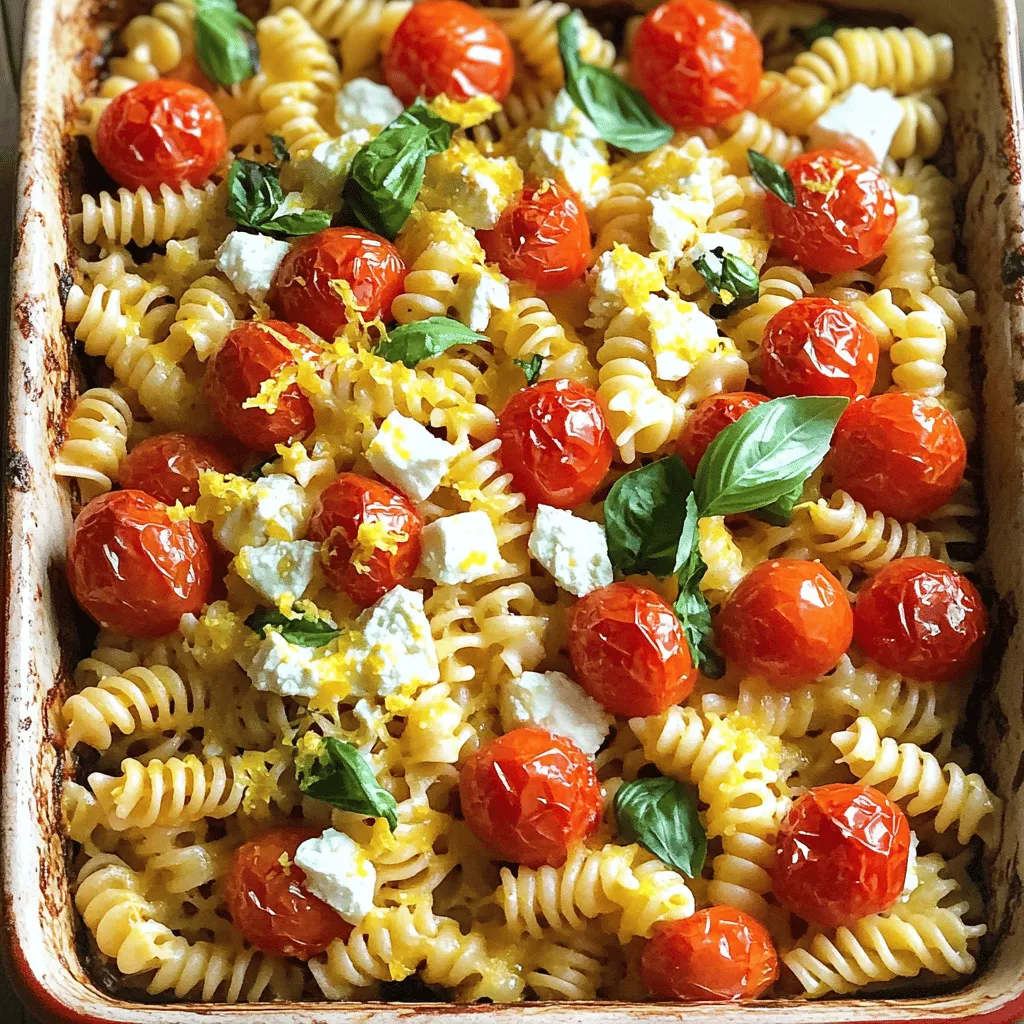
Serving your baked feta pasta in stylish bowls makes it look fancy. Try individual servings for a special touch. You can even layer it with fresh basil and a hint of lemon zest on top. This not only adds color but also gives a fresh flavor boost.
For garnishes, fresh basil leaves work perfectly. They add a pop of green and a lovely aroma. A sprinkle of lemon zest brightens the dish, making it eye-catching and appetizing. Enjoy your beautiful meal!
Variations
Different Pasta Shapes
You can switch the pasta shape from fusilli or penne. Try farfalle or rigatoni for fun shapes. They hold sauce well, giving each bite flavor. If you need gluten-free options, use rice or chickpea pasta. Both types work great and taste delicious.
Additional Ingredients
Feel free to add more veggies. Spinach or zucchini blends well with the tomatoes. You can also mix in proteins like chicken or shrimp. For spice lovers, adjust the red pepper flakes. Add more for heat or skip it for a milder taste. These changes make the dish your own.
Storage Info
Refrigeration Guidelines
After you enjoy your Baked Feta Pasta, store leftovers in airtight containers. This keeps the pasta fresh and tasty. Make sure to let the dish cool down before sealing it. When stored properly, your dish can last for 3 to 5 days in the fridge. If you notice any change in smell or appearance, it’s best to toss it out.
Reheating Suggestions
To reheat your Baked Feta Pasta, the oven works best. Preheat it to 350°F (175°C). Place your pasta in an oven-safe dish and cover it with foil. This keeps the moisture in and helps maintain the creamy texture. Heat for about 15 minutes or until warm. You can also use the microwave if you’re in a hurry. Just make sure to stir it halfway through to warm it evenly. If it feels dry, add a splash of olive oil or a bit of water to restore creaminess. Enjoy your dish just like it was fresh!
FAQs
Can I use a different type of cheese?
Yes, you can! If you want to switch it up, try using goat cheese or cream cheese. Both add a nice creaminess. Goat cheese gives a tangy taste, while cream cheese offers a rich, smooth feel. You can also use ricotta for a lighter option. Just remember, each cheese changes the flavor a bit. Feel free to experiment!
Is this recipe suitable for meal prep?
Absolutely! Baked Feta Pasta is perfect for meal prep. You can make it ahead and store it in the fridge. It keeps well for 3-5 days in an airtight container. Just heat it up when you’re ready to eat. This saves time on busy days and lets you enjoy a tasty meal without extra fuss.
Can I freeze Baked Feta Pasta?
Yes, you can freeze it! To freeze, let the dish cool completely. Then, place it in a freezer-safe container. It can last for about 2-3 months. When you’re ready to eat, thaw it in the fridge overnight. Reheat it in the oven or microwave until warm. Just keep an eye on the texture; it may change a little.
What can I pair with Baked Feta Pasta?
Baked Feta Pasta goes well with many sides. A simple green salad with a light vinaigrette is a great choice. You could also serve some garlic bread for a cozy touch. For drinks, a crisp white wine, like Sauvignon Blanc, complements the dish nicely. Enjoying these pairings enhances the meal experience!
This recipe for Baked Feta Pasta combines fresh flavors for a delicious dish. You learned about key ingredients, step-by-step baking, and tips to enhance texture. Try different pasta shapes or add veggies for variety. Store leftovers properly to enjoy later, and reheat without losing creaminess. This meal is great for any occasion. Enjoy making it and sharing with friends!

![To make these crispy fish tacos, gather these key items: - 1 lb white fish fillets (cod or tilapia work great) - 1 cup all-purpose flour - 1 cup cornmeal - 1 teaspoon paprika - 1/2 teaspoon cayenne pepper - 1/2 teaspoon garlic powder - 1/2 teaspoon salt - 1/4 teaspoon black pepper - 2 large eggs, beaten - Vegetable oil, for frying - 8 small corn tortillas The toppings add flavor and texture to your tacos. Here are my favorites: - 1/2 cup red cabbage, thinly sliced - 1 avocado, sliced - Fresh cilantro leaves, for garnish - Lime wedges, for serving To round out your meal, consider these sides: - Fresh salsa for a zesty kick - A drizzle of spicy crema for creaminess - Mexican rice for a hearty addition These ingredients make crispy fish tacos a fun and tasty weeknight meal. For the full recipe, be sure to check out the details above! Start by drying the fish fillets with paper towels. This step helps the coating stick better. Cut the fish into strips that are about 1 inch wide. This size cooks evenly and fits nicely in the tacos. In a medium bowl, mix the flour, cornmeal, paprika, cayenne pepper, garlic powder, salt, and black pepper. Stir until well combined. In another bowl, beat the eggs until smooth. This egg wash will help the coating stick. Heat about 1 inch of vegetable oil in a large skillet over medium-high heat. Check if the oil is hot by dropping in a pinch of the flour mix; if it sizzles, it's ready. Dip each fish strip into the egg wash, letting excess drip off. Then coat it in the flour mixture, pressing lightly to ensure it sticks. Place the coated fish in the hot oil, frying in batches to prevent overcrowding. Cook for 3-4 minutes on each side until golden brown. Transfer the fried fish to a plate lined with paper towels to absorb extra oil. Warm each corn tortilla in a dry skillet for about 30 seconds on each side. This makes them soft and easy to fold. For each tortilla, place 2-3 pieces of crispy fish. Top with sliced red cabbage, avocado, and fresh cilantro. Don’t forget to serve the tacos with lime wedges. A squeeze of lime adds a bright, fresh flavor. For the full recipe, you can check the complete details above. To get that perfect crunch, follow these steps: - Dry the Fish: Start by patting the fish fillets with paper towels. This removes moisture and helps them get crispy. - Use Cornmeal: Mixing cornmeal with flour gives extra texture and crunch. It makes the coating thicker and crispier. - Hot Oil: Make sure the oil is hot enough before frying. If it’s too cool, the fish will absorb oil and turn soggy. - Don’t Overcrowd: Fry the fish in batches. Too many pieces at once cools the oil and affects crispiness. Here are some common mistakes you should steer clear of: - Skipping the Egg Wash: The egg wash helps the coating stick. Don’t skip this step! - Not Heating the Oil Properly: Always test the oil. If it’s not hot, you’ll end up with greasy fish. - Using Wet Fish: Wet fish won’t fry well. Always dry them before coating. - Flipping Too Soon: Let the fish cook fully on one side before flipping. This helps it stay intact and crispy. Enhance your tacos with these tasty garnishes: - Fresh Cilantro: Adds a burst of freshness and color. - Avocado: Creamy avocado pairs well with crispy fish. - Lime Wedges: A squeeze of lime brightens up the flavors. - Salsa or Crema: A drizzle of spicy crema or your favorite salsa adds flavor and moisture. For the full recipe, check out [Full Recipe]. {{image_4}} If you want to try a different protein, shrimp works great. Just peel and devein before cooking. You can also use chicken strips. They need a bit more time to cook, so adjust frying time. Another option is tofu for a different texture. Press it to remove water and cut into strips. For a vegetarian twist, use cauliflower. Cut it into small florets, coat, and fry. It gets nice and crispy. If you want a vegan option, tempeh is fantastic. Slice it thin and marinate for flavor before frying. Just make sure to use a plant-based egg wash or a mixture of flour and water. To boost flavor, add lime zest to the coating mix. It brightens each bite. For spice, increase the cayenne pepper in the coating. You can also create a spicy sauce for drizzling on top. Mix yogurt or mayo with hot sauce for a creamy kick. Fresh herbs like cilantro or parsley can add freshness too. These variations keep the dish exciting, ensuring you can enjoy crispy fish tacos in many ways! Try out the full recipe to explore these options. To keep your crispy fish tacos fresh, store leftovers in an airtight container. Place the fish in one container and the toppings in another. This keeps the fish crispy and the toppings fresh. You can also wrap the tortillas in foil for better storage. To reheat, use the oven or an air fryer for best results. Preheat your oven to 350°F (175°C). Place the fish on a baking sheet and bake for about 10 minutes. If using an air fryer, heat it to 350°F (175°C) and fry for 5 minutes. This way, the fish stays crispy. Cooked fish lasts about 2-3 days in the fridge. Fresh toppings, like cabbage and avocado, can last 1-2 days. Store each item separately. If you have leftover tortillas, they can stay fresh in a sealed bag for up to a week. Always check for signs of spoilage before using any of the ingredients. For the full recipe, check the complete list of ingredients. I recommend using white fish like cod or tilapia. These fish have a mild flavor and cook well. They stay tender inside while getting crispy on the outside. Other good options include haddock or snapper. Yes, you can prepare the fish ahead of time. Cut the fish into strips and coat them. Keep the coated fish in the fridge for up to an hour. This helps the coating stick better when you fry them. If you can't find corn tortillas, flour tortillas are a good choice. You can also use lettuce leaves for a low-carb option. They add a nice crunch and freshness to your tacos. Crispy fish tacos can be gluten-free if you use gluten-free flour. Make sure to check the labels on your ingredients. Corn tortillas are naturally gluten-free, so they work well for this dish. For the best results, use gluten-free breadcrumbs or a gluten-free flour blend for coating the fish. Crispy fish tacos are a fun dish to make at home. We discussed key ingredients, topped it with tasty options, and paired it with sides. The steps from preparing the fish to frying it were simple and clear. Use my tips for crispy results and avoid common mistakes. You can also explore variations for flavors and dietary choices. Proper storage will keep your tacos fresh. Now, enjoy making and sharing your crispy fish tacos! They’re sure to impress.](https://goldendishy.com/wp-content/uploads/2025/06/e15c4a6f-d152-43b4-ae39-d2f9004115b6-768x768.webp)
![Zesty Spaghetti Aglio e Olio Ingredients: - 400g spaghetti - 6 cloves garlic, thinly sliced - ½ cup extra virgin olive oil - 1 teaspoon red pepper flakes (or to taste) - Zest of 1 lemon - Juice of 1 lemon - ¼ cup fresh parsley, finely chopped - Salt, to taste - Freshly grated Parmesan cheese (optional, for garnish) Spaghetti Aglio e Olio shines with simple, fresh ingredients. Each plays a vital role. - Spaghetti: This serves as the base of the dish. Choose high-quality pasta for the best texture. - Garlic: Fresh garlic gives a rich flavor. Use thin slices for even cooking. - Olive Oil: Extra virgin olive oil adds depth. It also helps infuse the garlic flavor. - Red Pepper Flakes: These provide heat. Adjust the amount to match your spice level. - Lemon: Zest and juice add brightness. They balance the richness of the oil. - Parsley: Fresh parsley adds color and freshness. It complements the garlic. Sometimes, you may need to swap ingredients. Here are some great options: - Pasta: Use any long pasta, like linguine or fettuccine. - Garlic: Garlic powder can work in a pinch, but fresh is best. - Olive Oil: Avocado oil is a good alternative. It has a similar flavor. - Red Pepper Flakes: Fresh chili or hot sauce can replace flakes for heat. - Lemon: Lime juice can work if you’re out of lemons. - Parsley: Basil or chives can add a different yet tasty note. This dish is all about the balance of flavors. Each ingredient enhances the others. Enjoy your cooking journey with Spaghetti Aglio e Olio! Start by filling a large pot with water. Add a lot of salt to the water. This step helps to flavor the spaghetti. Bring the water to a rolling boil. Add the spaghetti and cook it according to the package instructions. Usually, this takes about 8-10 minutes for 'al dente' pasta. Once it is cooked, save 1 cup of the pasta water. Drain the spaghetti in a colander. In a large skillet, heat the extra virgin olive oil over medium heat. When the oil is warm, add the thinly sliced garlic and red pepper flakes. Sauté the garlic gently, stirring often for about 2-3 minutes. Watch the garlic closely; you want it golden brown and fragrant, not burnt. Burnt garlic can turn the dish bitter, which is not what we want! Once the garlic is ready, carefully add the drained spaghetti to the skillet. Use tongs or a pasta fork to toss the spaghetti. Make sure each strand is coated in the garlic oil. If the pasta looks dry, add some reserved pasta water, one tablespoon at a time. Keep tossing until you reach the sauciness you like. Now, remove the skillet from the heat. Add the lemon zest and juice to the pasta. Toss everything well to mix. Season with salt according to your taste. Then, gently fold in the finely chopped parsley. This adds color and flavor to your dish. To get the best spaghetti, cook it until it is 'al dente.' This means it should still have a little bite. Fill a large pot with water and add a good amount of salt. Bring the water to a boil. Add the spaghetti and follow the package instructions. Usually, this takes about 8 to 10 minutes. Before draining, save a cup of the cooking water. This water helps to moisten the pasta later. Garlic is key in Spaghetti Aglio e Olio. Use fresh cloves and slice them thinly. Heat the olive oil in a skillet on medium heat. Add the sliced garlic and red pepper flakes. Stir gently for 2 to 3 minutes until the garlic turns golden. Be careful not to burn it! After mixing in lemon zest and juice, you add a bright taste. The lemon cuts through the richness and lifts the dish. Serving matters! Use warm bowls to keep your pasta hot. After plating, drizzle some of the leftover garlic oil over the spaghetti. This adds flavor and shine. Garnish with fresh parsley for color. A lemon wedge on the side adds a fun touch. When your guests squeeze it over their pasta, the dish becomes even more zesty. For a special finish, you can sprinkle on some grated Parmesan cheese. This makes the dish look gourmet, even though it’s simple to make. Enjoy your flavorful garlic pasta dish! For the complete recipe, check out the full recipe. {{image_4}} You can easily make Spaghetti Aglio e Olio heartier by adding proteins like shrimp or chicken. For shrimp, use raw, peeled shrimp. Sauté them in the garlic oil for about 3-4 minutes until they are pink and cooked through. If you prefer chicken, use diced chicken breast. Cook it in the oil until it's no longer pink. This adds great flavor and makes the dish more filling. If you want a vegetarian twist, consider adding greens. Spinach or kale works great. Add them to the skillet after the garlic has cooked. Stir until the greens wilt and mix well with the garlic oil. This not only adds color but also boosts the nutrition of your meal. You can also use peas for a pop of sweetness. For those who love heat, you can adjust the red pepper flakes to your taste. Start with the recommended amount, then add more if you want it spicier. If you want a unique twist, try adding sliced fresh chili peppers or a dash of hot sauce. This will give your dish a vibrant kick and enhance the overall flavor profile. Experimenting with these variations makes Spaghetti Aglio e Olio fun and exciting. You can enjoy it just the way you like! For the full recipe, check out the details above. To keep your leftover spaghetti aglio e olio fresh, follow these steps: - Let the pasta cool down to room temperature. - Place it in an airtight container. - Store it in the fridge for up to three days. This method helps maintain the flavors and texture of your dish. When reheating spaghetti aglio e olio, I recommend these tips: - Use a skillet over medium heat. - Add a splash of olive oil for moisture. - Stir frequently to prevent sticking. You can also microwave it. Just cover it and add a little water. Heat in short bursts, stirring in between. If you want to freeze spaghetti aglio e olio, do this: - Place cooled pasta in a freezer-safe bag. - Remove excess air and seal tightly. - Store in the freezer for up to two months. When ready to eat, thaw in the fridge overnight. Reheat on the stove for the best taste. Enjoy your flavorful garlic pasta dish again! For the full recipe, check out the [Full Recipe]. Spaghetti Aglio e Olio is a simple pasta dish from Italy. It features spaghetti tossed with garlic and olive oil. The dish gets a kick from red pepper flakes. It’s quick to make and uses few ingredients. This makes it perfect for a weeknight meal. You can find the full recipe [here](#). Yes, you can easily make this dish vegan. Just skip the Parmesan cheese that some people use. The rest of the recipe is naturally vegan. The garlic oil and pasta create a rich flavor on their own. You won’t miss the cheese at all! To make Spaghetti Aglio e Olio less spicy, reduce the red pepper flakes. Start with half a teaspoon instead of a full teaspoon. You can also omit them if you prefer no heat. The garlic and olive oil will still give great flavor. Adjusting the spice level allows everyone to enjoy this dish. You’ve learned how to make Spaghetti Aglio e Olio. We covered essential ingredients and tasty substitutes. The step-by-step guide helped simplify cooking and mixing. Tips showed how to perfect texture and flavor. The variations let you customize your dish, making it unique. Lastly, we talked about storing and reheating leftovers. Now, you can enjoy this dish any time. With simple steps, you’ll impress family and friends. Dive into your kitchen and try it out today!](https://goldendishy.com/wp-content/uploads/2025/06/d19134da-6fc7-4b27-a706-dd24852a29ee-768x768.webp)
![- Bell peppers: Choose bright colors like red, yellow, or orange. These colors not only look great but also add natural sweetness. Each pepper holds the filling nicely and provides a tasty bite. - Quinoa: Rinse the quinoa well under cold water. This step removes the bitter coating called saponin. Rinsing ensures your quinoa has a clean, nutty flavor that shines in the dish. - Vegetable broth: Use low-sodium broth for better control of the flavor. It enhances the taste of quinoa and adds depth to the dish. You can also try homemade broth for a fresher taste. - Ground spices: Cumin, smoked paprika, and chili powder are key. Cumin gives an earthy flavor, while paprika adds a hint of smokiness. Chili powder can amp up the heat level, making your dish exciting. - Beans and corn: Black beans add protein and fiber, making the meal hearty. Corn brings sweetness and crunch, creating a balanced texture. Both ingredients make the filling more nutritious and filling. - Cheese alternatives: Depending on your diet, choose cheddar for a classic taste or opt for a dairy-free cheese. Both melt well and enhance the flavors, giving a creamy finish to each stuffed pepper. For the full list of ingredients, check the Full Recipe. Start by preheating your oven to 375°F (190°C). This step matters because the right heat cooks the peppers evenly and makes them tender. While the oven warms up, you can prepare the bell peppers. Cut the tops off and scoop out the seeds and membranes inside. Stand the peppers upright in a baking dish. This helps them stay stable while they bake. Next, it’s time to cook the quinoa. In a medium saucepan, add 1 cup of rinsed quinoa and 2 cups of vegetable broth. Bring it to a boil, then lower the heat. Cover and let it simmer for about 15 minutes. You want the quinoa to be fluffy and all the liquid should be gone. While the quinoa cooks, you can mix the filling. In a large bowl, combine the fluffy quinoa, black beans, corn, diced tomatoes, cumin, smoked paprika, and chili powder. Add salt and pepper to taste. Make sure everything is mixed well to ensure a consistent flavor in every bite. Now comes the fun part—stuffing the peppers! Use a spoon to fill each bell pepper with your quinoa mixture. Pack it down gently to fit as much filling as possible. Once filled, sprinkle a good amount of cheese on top of each pepper. Cover the baking dish with aluminum foil and place it in the oven. Bake for 25 minutes. After that, remove the foil and bake for another 10 minutes. This helps the cheese melt and become bubbly. The peppers should be tender but still hold their shape. Once done, take the dish out and let it cool for a few minutes. Right before serving, add fresh cilantro or parsley on top for a nice touch. For the full recipe, check out the details provided earlier. To achieve fluffy quinoa, rinse it well before cooking. Rinsing removes the bitter coating called saponin. Use a fine mesh strainer for this step. Then, cook the quinoa in the right ratio of water to quinoa. I recommend 2 cups of vegetable broth for every 1 cup of quinoa. Bring it to a boil, then simmer for 15 minutes. This way, the quinoa will be light and fluffy. When baking your stuffed peppers, timing is key. Start by covering the dish with foil for the first 25 minutes. This keeps the moisture in, helping the peppers cook evenly. After that, remove the foil and bake for an extra 10 minutes. This will make the cheese melt perfectly and the peppers tender but not mushy. For presentation, serve your stuffed peppers on a large platter. Sprinkle extra herbs like cilantro or parsley around for a fresh look. A drizzle of olive oil or a squeeze of lime juice adds brightness and flavor. As for side dishes, consider a simple green salad or some roasted vegetables. These pair well with the peppers and add color to your meal. A light white wine or sparkling water complements the dish nicely, enhancing your dining experience. For the full recipe, check out [Full Recipe]. {{image_4}} What can I use instead of black beans? You can swap in other legumes like chickpeas or kidney beans. Each offers unique flavors and textures. Chickpeas add a nutty taste, while kidney beans bring a soft bite. Both boost protein and fiber, making your meal heartier. Can I add meat to my stuffed peppers? Yes! Chicken or turkey works great. Use cooked ground meat for easy mixing. This adds a savory depth to your dish. Just remember to season the meat well for the best flavor. How can I change the spices? Explore with different spices to create new flavors. Try adding oregano for a Mediterranean twist or curry powder for a bold kick. Each spice changes the overall taste, making your stuffed peppers exciting. Can I use different veggies? Absolutely! Seasonal vegetables like zucchini, spinach, or mushrooms can enhance your filling. They add more nutrients and variety. Just chop them finely and mix them in with your quinoa and beans. For the full recipe, check out the details above. After enjoying your quinoa stuffed bell peppers, store leftovers in the fridge. Place them in an airtight container. This keeps them fresh for up to four days. If you plan to eat them later, consider freezing them. To freeze, wrap each pepper in plastic wrap. Then place them in a freezer-safe bag or container. Make sure to remove as much air as possible. Properly stored, they can last for up to three months in the freezer. When it’s time to enjoy your stuffed peppers again, you can reheat them in several ways. The oven is my favorite method. Preheat it to 350°F (175°C). Place the peppers in a baking dish and cover with foil. Bake for about 20 minutes, or until heated through. You can also use the microwave for quick reheating. Simply place a pepper on a microwave-safe plate. Cover it with a paper towel to keep moisture in. Heat it for about 2-3 minutes, checking to avoid overheating. If you prefer the stovetop, heat a skillet over medium heat and add a little water. Place the peppers in the skillet and cover. Heat for about 5-7 minutes, turning occasionally. To keep the texture nice, avoid sogginess. When reheating, do not add extra moisture or cover too tightly. This will help maintain that delightful crunch of the peppers. For the full recipe, visit the [Full Recipe]. How long do quinoa stuffed peppers last in the fridge? Quinoa stuffed peppers can last about 3 to 5 days in the fridge. Store them in an airtight container to keep them fresh. If you want to enjoy them later, just heat them up in the oven or microwave. Can I make quinoa stuffed peppers ahead of time? Yes, you can prepare quinoa stuffed peppers ahead of time. Stuff the bell peppers and store them in the fridge. Bake them when you’re ready to eat. This makes meal prep easy and convenient. What can I substitute for quinoa in this recipe? If you want to swap out quinoa, try using brown rice or couscous. Both options provide a nice texture. Just remember to adjust cooking times as needed for these ingredients. Are quinoa stuffed peppers healthy? Yes, quinoa stuffed peppers are healthy. They’re packed with protein, fiber, and vitamins. Quinoa is a complete protein, making this dish a great choice for a balanced meal. Gluten-free options: Ensuring a safe meal for all Quinoa is naturally gluten-free, so this dish is safe for gluten-sensitive people. Just check your labels for any added ingredients that might contain gluten. Vegetarian vs. vegan: Key differences in ingredients Vegetarian quinoa stuffed peppers include cheese, while vegan ones use dairy-free cheese. Both versions are delicious. Choose based on your dietary needs. Quinoa stuffed bell peppers use fresh ingredients and bold flavors for a tasty meal. First, choose colorful bell peppers and rinse the quinoa for the best taste. Use ground spices and beans to boost nutrition. Follow the steps closely for perfect results, and don’t forget to try different flavors and proteins. Store leftovers well to enjoy later. Healthy and easy, this dish fits any dinner. You can impress friends and family while eating well! So, get cooking and enjoy every bite of your delicious creation.](https://goldendishy.com/wp-content/uploads/2025/06/de4f4195-310c-4430-9b68-8374d14e079c-768x768.webp)
