
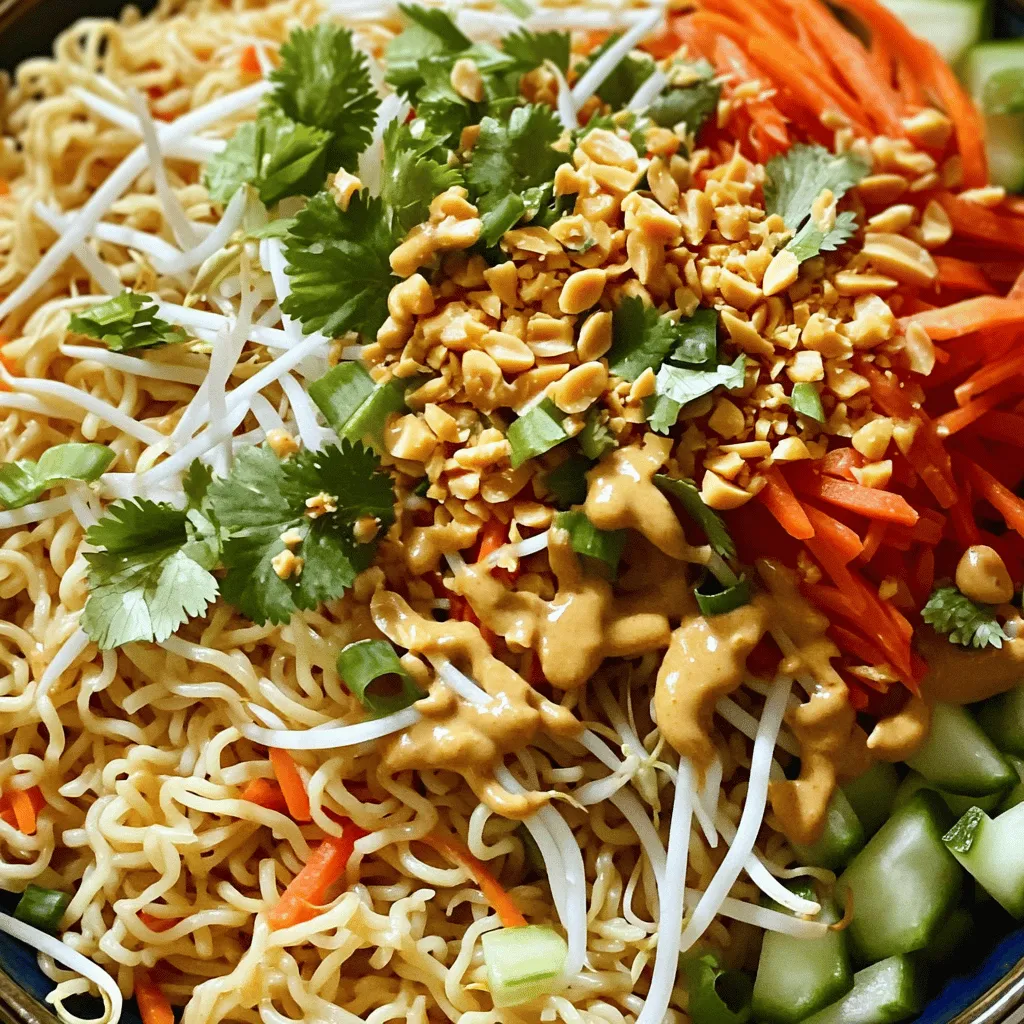
Thai Peanut Noodles Flavorful and Simple Recipe Guide

Are you ready to savor a dish that’s both tasty and easy to make? In this guide, I’ll show you how to whip up Thai Peanut Noodles. With just a handful of fresh ingredients and simple steps, you’ll create a mouthwatering meal in no time. Whether you’re cooking for yourself or impressing friends, this recipe is perfect for everyone. Let’s dive in and bring some Thai flavors to your kitchen!
Ingredients
List of Main Ingredients
– 8 oz rice noodles
– 1 cup shredded carrots
– 1 red bell pepper, thinly sliced
– 1 cucumber, julienned
– 1 cup bean sprouts
– 1/4 cup chopped green onions
– 1/4 cup crushed peanuts, for garnish
– Fresh cilantro leaves, for garnish
Peanut Sauce Ingredients
– 1/2 cup creamy peanut butter
– 2 tablespoons soy sauce
– 2 tablespoons freshly squeezed lime juice
– 1 tablespoon sesame oil
– 1 tablespoon maple syrup (or honey)
– 1 teaspoon sriracha (adjust based on your spice preference)
– 1-2 tablespoons warm water (to adjust the sauce consistency)
Kitchen Tools Needed
– Pot for boiling noodles
– Mixing bowl
– Whisk
The ingredients for Thai peanut noodles are simple yet full of flavor. Start with rice noodles, which are the base of the dish. They cook quickly and soak up the sauce well. Next, add colorful veggies like carrots and red bell pepper for crunch and sweetness. Cucumbers give a fresh taste, while bean sprouts add a nice bite.
For the peanut sauce, creamy peanut butter makes it rich. Soy sauce adds saltiness, and lime juice brings acidity. Sesame oil gives a nutty flavor, while maple syrup (or honey) adds a hint of sweetness. Don’t forget the sriracha for spice! You can adjust the heat to your liking.
To mix everything, a pot for boiling noodles is essential. A mixing bowl helps when you combine the peanut sauce and other ingredients. A whisk is handy for blending the sauce smoothly.
This dish is not just tasty; it’s also vibrant and fun! You can easily make it at home using these ingredients.
Step-by-Step Instructions
Preparing the Rice Noodles
First, boil water in a large pot. When it bubbles, add 8 oz of rice noodles. Cook them as the package says, usually around 3-5 minutes. You want them tender but still firm, called al dente. After cooking, drain the noodles and rinse them under cold water. This stops the cooking. Set them aside to cool completely.
Making the Peanut Sauce
While the noodles cool, let’s make the peanut sauce. In a medium bowl, add:
– 1/2 cup creamy peanut butter
– 2 tablespoons soy sauce
– 2 tablespoons freshly squeezed lime juice
– 1 tablespoon sesame oil
– 1 tablespoon maple syrup (or honey)
– 1 teaspoon sriracha
Whisk everything together until smooth. If it’s too thick, add 1-2 tablespoons of warm water. Keep adding until you like the texture.
Combining the Ingredients
In a large bowl, take your cooled noodles. Add:
– 1 cup shredded carrots
– 1 red bell pepper, thinly sliced
– 1 cucumber, julienned
– 1 cup bean sprouts
Drizzle your peanut sauce over the noodles and veggies. Toss gently with your hands. Make sure everything is well coated. For a tasty crunch, sprinkle on:
– 1/4 cup chopped green onions
– 1/4 cup crushed peanuts
Finally, add some fresh cilantro leaves for a burst of color and flavor. Enjoy your Thai Peanut Noodles!
Tips & Tricks
Perfecting the Peanut Sauce
To make the peanut sauce just right, start with creamy peanut butter. If the sauce is too thick, add warm water slowly. Stir in one tablespoon at a time. This helps you reach a perfect pourable consistency. For spice, adjust the sriracha to your taste. Start with one teaspoon if you prefer milder flavors. You can always add more heat later.
Noodle Preparation Tips
Cook the rice noodles until they are al dente. This means they should be firm to the bite. After cooking, drain the noodles right away. Rinse them under cold water to stop the cooking. This step keeps them from getting mushy. Let the noodles cool completely before mixing them with the other ingredients.
Presentation Tips
Serve the Thai Peanut Noodles in individual bowls or on a large platter. This makes for a beautiful display. For garnish, sprinkle crushed peanuts and green onions on top. Add fresh cilantro leaves for a pop of color. This not only makes the dish look good but also adds fresh flavor. Don’t forget to drizzle a bit more peanut sauce on top for an inviting finish. Enjoy the vibrant look and taste!

Variations
Vegan Options
You can easily make this dish vegan. The peanut butter is already vegan-friendly. If you’d like a different flavor, try almond or sunflower seed butter. For sweeteners, use agave syrup instead of honey. You can also swap soy sauce for tamari for a gluten-free option.
Protein Additions
Adding protein can make your meal heartier. For chicken, use grilled or sautéed pieces. Shrimp works well too; just cook them until they’re pink and tender. If you prefer plant-based options, try cubed tofu. Simply sauté it until golden brown for the best texture.
Flavor Enhancements
Want to elevate the taste? Fresh herbs are a great way. Add basil for a sweet note or mint for a fresh twist. You can sprinkle in some chili flakes for heat or grated ginger for zest. A splash of sesame seeds can also add a nice crunch. These little changes can make your Thai Peanut Noodles even more special.
Storage Info
Storing Leftovers
To keep your Thai Peanut Noodles fresh, store leftovers in an airtight container. This helps prevent drying out. Place the container in the fridge. They will stay good for about 3 to 4 days. Make sure to separate the sauce from the noodles if possible. This keeps the noodles from getting soggy.
Freezing Options
You can freeze Thai Peanut Noodles for later use. Start by letting the noodles cool completely. Then, place them in a freezer-safe bag or container. Squeeze out as much air as possible to avoid freezer burn. You can freeze them for up to 2 months. Don’t freeze the peanut sauce. It won’t keep well.
Reheating Tips
To reheat the noodles, use the stovetop or microwave. If using the stovetop, add a splash of water to a pan and heat gently. Stir often to ensure even heating. If using the microwave, put the noodles in a bowl with a little water. Heat in short bursts, stirring in between. This keeps the noodles soft and tasty.
FAQs
What can I substitute for rice noodles?
If you can’t find rice noodles, don’t worry! You can use other noodles. Here are some great options:
– Egg noodles: These add a nice flavor and texture.
– Soba noodles: Made from buckwheat, these are healthy and tasty.
– Zoodles: These are spiralized zucchini, great for a low-carb meal.
– Shirataki noodles: These are low-calorie and gluten-free.
If you need gluten-free options, try rice vermicelli or gluten-free pasta. Always check the package for cooking times.
How spicy is Thai Peanut Sauce?
Thai peanut sauce can vary in spice. It depends on how much sriracha you add. If you like it mild, start with less. You can always add more later. Here’s how to adjust the spice:
– Mild: Use no sriracha or a pinch.
– Medium: Add one teaspoon of sriracha.
– Spicy: Use two teaspoons or more.
Taste as you go to find what you enjoy!
Can I make the recipe in advance?
Yes, you can make this recipe ahead of time! Here’s how to prepare components in advance:
– Noodles: Cook and store them in the fridge.
– Peanut sauce: Make it up to three days ahead. Just stir before using.
– Veggies: Cut and store them in airtight containers.
Assemble everything just before serving for the best taste. Enjoy your delicious meal!
You learned how to make Thai Peanut Noodles with easy steps and tasty ingredients. From cooking rice noodles to making a creamy peanut sauce, each part is simple. You can play with flavors by adding proteins or herbs. Storing leftovers is easy, and you can make this dish in advance for busy days. Keep these tips in mind to create a delicious meal anytime. Enjoy your cooking and sharing this dish!
![- 8 oz fettuccine pasta - 1 lb large shrimp, peeled and deveined - 2 tablespoons Cajun seasoning - 2 tablespoons olive oil - 3 cloves of garlic, minced - 1 cup heavy cream - 1 cup grated Parmesan cheese - 1/2 cup cream cheese, softened - Salt and pepper to taste - 2 tablespoons chopped fresh parsley (for garnish) - Zest of 1 lemon (for brightness) When I make Cajun Shrimp Alfredo, I love how rich and creamy it is. The fettuccine pasta serves as a perfect base for the dish. You can choose any pasta you like, but fettuccine offers a great texture that holds the sauce well. The shrimp is the star of this recipe. I always prefer large shrimp because they have a great bite and flavor. Make sure to peel and devein them for the best experience. The Cajun seasoning adds a warm kick that makes this dish pop. For the sauce, I use both heavy cream and cream cheese. They blend together to create a smooth and thick sauce. Parmesan cheese adds that salty, nutty flavor that ties everything together. Fresh garlic enhances the aroma, making your kitchen smell divine while cooking. I finish the dish with fresh parsley and lemon zest. The parsley brings a bright color, while the lemon zest adds a hint of freshness. This combination makes every bite a flavorful delight. You can find the Full Recipe to guide you through the cooking process. Enjoy creating this scrumptious meal! Start by bringing a large pot of salted water to a boil. The salt helps flavor the pasta. Once the water is boiling, add 8 ounces of fettuccine. Cook the pasta until it is al dente, which usually takes about 8 to 10 minutes. You want it firm, not mushy. After cooking, drain the pasta but save 1/2 cup of the water for later. Next, take 1 pound of large shrimp, peeled and deveined. In a bowl, sprinkle 2 tablespoons of Cajun seasoning over the shrimp. Toss them well so every piece is coated. This gives the shrimp a nice, bold taste. Heat 2 tablespoons of olive oil in a large skillet over medium-high heat. When hot, add the shrimp and sauté for 2 to 3 minutes per side. Cook until they turn pink and opaque. Once done, remove them from the skillet and set aside. In the same skillet, lower the heat a bit. Add 3 cloves of minced garlic to the skillet. Sauté the garlic for about 30 seconds. You want it fragrant but not burnt. Then, pour in 1 cup of heavy cream. Stir gently and let it come to a gentle simmer. Add in 1/2 cup of softened cream cheese, stirring until it melts. Now, gradually mix in 1 cup of grated Parmesan cheese. Stir vigorously to make the sauce creamy. If it’s too thick, add some of the reserved pasta water until you reach the right consistency. Now it’s time to bring everything together. Return the sautéed shrimp to the skillet with the creamy sauce. Add the cooked fettuccine next. Toss all the ingredients gently so the pasta and shrimp are well-coated. Taste and season with salt and pepper as needed. For a bright touch, add the zest of 1 lemon, mixing it in for extra flavor. Enjoy this flavorful creamy delight! For a complete recipe, check out the [Full Recipe]. - Avoid overcooking shrimp: Cook shrimp for only 2-3 minutes per side. They should be pink and opaque. Overcooked shrimp can turn rubbery. Keep a close eye on them as they cook. - How to achieve a silky sauce: To make a smooth sauce, stir the heavy cream gently as it heats. Add cream cheese and Parmesan slowly. If the sauce is too thick, use reserved pasta water to thin it out. - Suggesting additional spices: Try adding a pinch of cayenne for extra heat. Smoked paprika can add a nice depth. Experiment with flavors that excite your taste buds. - Importance of fresh herbs for garnishing: Fresh parsley adds color and brightness to the dish. You can also use basil or chives for a different twist. Fresh herbs make every plate look and taste better. - Pairing with a side salad or garlic bread: A crisp side salad balances the rich flavors of the Alfredo. Garlic bread is a perfect complement too. It helps soak up the creamy sauce. - Creative plating ideas: Swirl the fettuccine into a nest on the plate. Top it with shrimp and a sprinkle of parsley. Adding lemon zest on top gives it a fresh look and flavor. For added flair, drizzle some sauce around the plate. For the complete process of making this dish, check out the Full Recipe. {{image_4}} For those with dietary needs, there are great options. You can use gluten-free pasta. Many brands offer tasty versions made from rice or corn. These options cook well and hold sauce nicely. If you need a dairy-free choice, try cashew cream or almond milk. These alternatives give a creamy texture that works well in Alfredo. Both options keep your dish rich and full of flavor. Cajun seasoning can be adjusted to fit your taste. If you love spice, add more seasoning. For a milder dish, use less. You can also mix in smoked paprika for a smoky flavor. Adding vegetables can boost nutrition. Bell peppers, spinach, or zucchini blend well into the sauce. They add color, taste, and extra vitamins. Just sauté them with the shrimp for a quick mix. If you prefer a different protein, chicken works great. Simply swap shrimp for diced chicken breast. Cook it the same way until golden and cooked through. Tofu is another excellent option for a vegetarian twist. Firm tofu absorbs flavors well. Just cube it and sauté until crispy. For a seafood twist, try adding fish. Salmon or scallops can add rich flavor. Cook them gently to keep them tender. These variations keep the dish fun and tasty while catering to different diets. Enjoy mixing it up! For the full recipe, check out Cajun Shrimp Alfredo Delight. To keep your Cajun Shrimp Alfredo fresh, store leftovers in the fridge. Use airtight containers to avoid moisture loss. It’s best to cool the dish before sealing it. This helps maintain the creamy texture. Try to eat the leftovers within 2 to 3 days for the best taste. When reheating, use low heat on the stove or microwave. Stir the dish gently to avoid breaking the creamy sauce. Add a splash of milk or cream to refresh the texture. This will help revive the dish and keep it smooth. Remember to heat just until warm, so you don’t overcook the shrimp. If you want to freeze Cajun Shrimp Alfredo, cool it completely first. Use freezer-safe containers and leave some space for expansion. The dish will last about 2 to 3 months in the freezer. When you’re ready to eat, thaw it in the fridge overnight. Reheat slowly on the stove, adding a bit of cream if needed for a creamy finish. Cajun Shrimp Alfredo is a creamy pasta dish with bold flavors. It features fettuccine pasta and shrimp coated in a rich Alfredo sauce. The Cajun seasoning adds warmth and a bit of spice. This dish balances creamy texture with savory notes from garlic and cheese. You will taste hints of lemon zest, which brighten the flavors. It's a perfect mix of comfort food and exciting cuisine that can impress anyone. To add extra heat to your Cajun Shrimp Alfredo, try these options: - Use more Cajun seasoning than the recipe calls for. - Add a pinch of cayenne pepper or crushed red pepper flakes. - Incorporate diced jalapeños or fresh chili peppers into the shrimp. - Serve with a drizzle of hot sauce on top for a spicy kick. Yes, you can use frozen shrimp. Here are some best practices: - Thaw the shrimp in cold water for about 15-20 minutes before cooking. - Pat them dry with a paper towel to remove excess moisture. - Ensure you sauté them until fully cooked, which usually takes 2-3 minutes per side. Using frozen shrimp can save time and still give you great flavor. To keep your Alfredo sauce smooth and creamy: - Use low heat when making the sauce. - Stir continuously to help the cheese melt evenly. - Gradually add the cream and cheese, mixing well each time. - If the sauce gets too thick, slowly add reserved pasta water until it reaches the desired texture. Following these tips will help maintain a silky sauce that clings perfectly to your pasta. Cajun Shrimp Alfredo is a rich and tasty dish that you can easily make at home. You learned about key ingredients, cooking steps, and helpful tips. Variations allow you to adapt this dish to your diet or taste. Proper storage ensures your leftovers stay delicious. Remember, you can always customize flavors and ingredients to suit your needs. Enjoy creating this meal and impressing your family or friends. It’s all about the simple joys of cooking and sharing great food.](https://goldendishy.com/wp-content/uploads/2025/07/5d1dc84f-c815-4e1a-a64f-ea492bbf0a6c-768x768.webp)
![- 1 pound boneless, skinless chicken breasts, cut into 1-inch cubes - 1/4 cup fresh basil leaves, finely chopped - Zest from 2 lemons (about 2 tablespoons) - 3 tablespoons freshly squeezed lemon juice The chicken breast serves as a great base. It’s lean, tender, and perfect for grilling. Fresh basil adds a bright, herbal note. The lemon zest and juice provide a refreshing tang that makes this dish stand out. - 2 tablespoons extra virgin olive oil - 2 cloves garlic, finely minced - 1 teaspoon honey (optional, for a touch of sweetness) Olive oil keeps the chicken moist and helps the flavors blend. Garlic adds depth and aroma, while honey can balance the tart lemon if you want a hint of sweetness. - Salt and freshly ground black pepper to taste - Wooden or metal skewers Salt and pepper are essential for enhancing flavors. If you use wooden skewers, soak them in water for 30 minutes. This prevents burning during grilling. For the Full Recipe, check the detailed instructions along with cooking tips. You’ll need these ingredients to create a fantastic summer delight. To start, mix the marinade ingredients in a bowl. Combine: - 1/4 cup fresh basil leaves, finely chopped - Zest from 2 lemons (about 2 tablespoons) - 3 tablespoons freshly squeezed lemon juice - 2 tablespoons extra virgin olive oil - 2 cloves garlic, finely minced - 1 teaspoon honey (optional) - Salt and pepper to taste Whisk these together until they blend well. This step builds flavor. The lemon and basil create a bright, fresh taste that makes the chicken sing. Marination is key for juicy chicken. It helps the meat soak up the marinade's flavors. Once you prepare the marinade, add the cubed chicken to the bowl. Make sure each piece is coated. Cover the bowl tightly with plastic wrap. Let the chicken marinate in the fridge for at least 30 minutes. For best results, aim for 1-2 hours. This allows the chicken to become tender and flavorful. While the chicken marinates, preheat your grill or grill pan over medium-high heat. A hot grill helps create a nice sear on the chicken. Once the chicken is ready, thread the cubes onto skewers. Leave small gaps between pieces for even cooking. Place the skewers on the grill. Cook them for about 10-12 minutes, turning them often. To ensure the chicken is done, use a meat thermometer. The internal temperature should reach 165°F. After grilling, let the skewers rest for a few minutes. This helps keep the chicken moist. For the full recipe, check the section above. Enjoy making your lemon basil chicken skewers! To get juicy chicken, monitor the grill's temperature. Aim for medium-high heat. This helps cook the chicken quickly while keeping it tender. Use a meat thermometer to check the inside. The chicken should reach 165°F. Avoid over-charring by turning the skewers. Rotate them every few minutes for even cooking. If you see dark spots, move the skewers to a cooler part of the grill. This way, the chicken cooks well without burning. You can add more spices and herbs to the marinade. Consider using oregano or thyme for extra zest. A pinch of red pepper flakes can give it a nice kick. Just be careful not to overpower the lemon and basil. For marinating, let the chicken soak for at least 30 minutes. If you have time, marinate it for a few hours. The longer it sits, the more flavor it absorbs. This step makes a big difference in taste. For plating, arrange the skewers on a wooden board or a nice platter. Adding fresh basil leaves and lemon wedges makes it look vibrant. This adds a pop of color and gives a hint of what’s inside. Pair the skewers with side dishes like grilled vegetables or a fresh salad. You can also serve them with rice or quinoa for a filling meal. These sides enhance the overall experience of your lemon basil chicken skewers. Check the Full Recipe for more ideas! {{image_4}} You can change things up with lemon basil chicken skewers. Try adding vegetable skewers. Bell peppers, zucchini, and cherry tomatoes make great choices. They add color and crunch. If you want to swap proteins, shrimp is a tasty option. Shrimp cooks fast and absorbs flavors well. Just marinate them the same way as chicken. Dipping sauces can take your skewers to new heights. A simple garlic aioli pairs well with the fresh flavors. You can also try tzatziki for a cool and creamy contrast. For a spicy kick, sriracha or a sweet chili sauce is perfect. These sauces work with the lemon and basil, enhancing each bite. If you need gluten-free options, check your sauces and marinades. Most of the ingredients are safe, but read labels. For vegan alternatives, use tofu or tempeh instead of chicken. Marinate them just like the chicken for the best taste. You can still enjoy the bright lemon and basil flavors in a plant-based version. For the full recipe, check the [Full Recipe]. Refrigeration Guidelines After cooking, allow the chicken skewers to cool. Place them in an airtight container. Refrigerate within two hours. The chicken can stay fresh for up to four days. Always check for any signs of spoilage before eating. Freezing Tips If you want to keep them longer, freezing is a great option. Wrap the skewers tightly in plastic wrap. Then, place them in a freezer bag. They can last for up to three months in the freezer. When ready to use, thaw them in the fridge overnight before reheating. Best Methods The best way to reheat your skewers is in the oven. Preheat it to 350°F (175°C). Place the skewers on a baking tray for about 10 to 15 minutes. This method helps keep the chicken juicy. You can also reheat them on the grill for a nice char. Maintaining Flavor and Texture To maintain the flavor, add a splash of water or broth while reheating. Cover the skewers with foil to keep moisture in. This prevents the chicken from drying out and keeps it tasty. How Long Can They Last? When stored properly, cooked lemon basil chicken skewers can last for about four days in the fridge. If frozen, they can last up to three months without losing quality. Signs of Spoilage Always check for signs of spoilage. If the chicken smells off or has a slimy texture, it's best to toss it. Color change can also indicate spoilage. Trust your senses; when in doubt, throw it out. If you want to swap chicken, many tasty options exist. You can use: - Turkey breast: It has a mild flavor like chicken. - Tofu: Great for a plant-based option. - Shrimp: Cooks fast and absorbs flavors well. - Pork tenderloin: Offers a different texture and taste. Each of these options works well with the lemon and basil marinade. Adjust cooking times based on the protein you choose. Yes! Preparing the marinade ahead saves time. Here are some tips: - Mix all marinade ingredients in a bowl. - Store it in a sealed container in the fridge for up to 2 days. - When ready, add your chicken and let it soak up those flavors. Make sure to mix well before using. This keeps the flavors fresh and vibrant. To make sure your chicken is safe to eat, use a meat thermometer. Here’s how: - Insert the thermometer into the thickest part of the chicken. - Look for a temperature of 165°F. This means it’s fully cooked. - If you don't have a thermometer, cut a piece open. The meat should be white, not pink. Using a thermometer helps you avoid undercooked chicken, keeping your meal safe and tasty. You now know how to make delicious grilled chicken skewers. Start with fresh chicken, herbs, and a tasty marinade. Marinade time is key for flavor. Grilling tips help you serve juicy chicken every time. You can try different add-ins or sauces for variety. Store leftovers properly to keep them fresh. This recipe is simple yet satisfying, perfect for meals anytime. Enjoy creating your perfect skewers!](https://goldendishy.com/wp-content/uploads/2025/06/c554147d-c949-48f7-8e40-7e32e563b89e-768x768.webp)


![- 2 large eggplants - 1 cup ricotta cheese - 1 cup grated mozzarella cheese, plus extra for topping - 1/2 cup grated Parmesan cheese - 1 large egg - 2 cups marinara sauce - 1 teaspoon dried oregano - 1 teaspoon garlic powder - Salt and pepper - Fresh basil leaves - 2 tablespoons olive oil For this dish, you need two large eggplants. Slice them lengthwise into 1/4-inch thick pieces. This thickness helps them cook well and roll easily. For the cheese filling, combine 1 cup of ricotta, 1 cup of grated mozzarella, and 1/2 cup of grated Parmesan. Add one large egg to bind the filling. The egg helps to keep the filling together when you roll it. When selecting eggplants, look for ones that feel heavy for their size. They should have smooth, shiny skin. Avoid any with blemishes or wrinkles. Fresh cheese gives the best taste, so choose high-quality ricotta and mozzarella. Use 2 cups of marinara sauce for a rich flavor. You can use store-bought or homemade. It adds moisture and taste to the dish. Dried oregano and garlic powder enhance the flavor; adjust them to suit your taste. This recipe serves four, making it perfect for a family dinner or a small gathering. Enjoy the process and feel free to add your unique twist! For the full recipe, check out the detailed instructions. To start, slice the eggplants. Cut them lengthwise into 1/4-inch thick slices. This helps them cook evenly. Next, arrange the slices on a baking sheet in a single layer. Brush both sides with olive oil. Sprinkle salt and pepper on top. Bake them in a preheated oven at 375°F (190°C) for about 20 minutes. Remember to flip the slices halfway through. They should be tender and lightly caramelized. While the eggplant bakes, prepare the cheese filling. In a large bowl, mix together the ricotta cheese, grated mozzarella, and grated Parmesan. Add the egg, dried oregano, garlic powder, and a pinch of salt and pepper. Stir until the mixture is smooth and creamy. This blend gives a rich flavor and a great texture. Once your eggplant slices cool, it’s time to roll them. Spread a thin layer of marinara sauce at the bottom of a 9x13-inch baking dish. Take one eggplant slice and place about 2 tablespoons of the cheese filling at one end. Carefully roll it up tightly and place it seam-side down in the dish. Repeat this for all the slices. After placing all the rollatini in the dish, pour the remaining marinara sauce on top. Finish with extra grated mozzarella cheese for a gooey finish. Cover with foil and bake for 25 minutes. Then, remove the foil and bake for an additional 10 minutes until the cheese is bubbly and golden. For more details, check the Full Recipe. To keep your eggplant from becoming soggy, salt it first. Here’s how: - Slice the eggplants and lay them flat. - Sprinkle salt on both sides of the slices. - Let them sit for about 30 minutes. - Rinse off the salt and pat them dry. This draws out excess moisture, making them firmer when cooked. For flavor enhancement, try adding herbs. Fresh basil and oregano pair well. You can also mix in some red pepper flakes for a hint of spice. Another tip is to use high-quality olive oil. It adds depth to the dish and a rich taste. When serving, you have options. Serve the rollatini straight from the baking dish for a rustic feel. For a fancier touch, place them on individual plates. Drizzle some extra marinara sauce around the plate for color. Garnishing makes a big difference. Add fresh basil leaves on top for a pop of green. Consider a sprinkle of extra grated cheese as well. It makes the dish look appealing and inviting. This recipe not only tastes great but also looks beautiful. Enjoy making your Eggplant Rollatini with these simple tips! For the full recipe, check out the instructions above. {{image_4}} You can swap out cheeses in this dish. If you want a lighter option, try cottage cheese instead of ricotta. For a plant-based twist, use cashew cheese or tofu. Both choices work well in the filling. You can also add more veggies to your rollatini. Spinach, zucchini, or mushrooms can mix nicely with the cheese. This not only adds flavor but also boosts nutrition. Feel free to get creative with your fillings! Making this dish gluten-free is easy. Just ensure your marinara sauce is gluten-free. Most are, but check the label to be sure. You can also use gluten-free breadcrumbs if you want a crunch on top. For a vegetarian option, stick with the original recipe. If you want a vegan version, replace the egg and cheese. You can use a flax egg and a vegan cheese blend instead. Both will give you that creamy texture without dairy! [Full Recipe] has all you need to create this delightful dish. To keep your eggplant rollatini fresh, store leftovers in an airtight container. Refrigerate them if you plan to eat them in a few days. They will stay good for about 3 to 5 days in the fridge. If you want to keep them longer, freezing is a great option. Wrap each rollatini in foil or plastic wrap and place them in a freezer-safe bag. They can last up to 3 months in the freezer. When you’re ready to enjoy your leftovers, reheat them gently. The best way is to use the oven. Preheat it to 350°F (175°C). Place the rollatini in a baking dish, cover with foil, and heat for about 20 minutes. This helps keep the cheese soft and the eggplant moist. Avoid reheating in the microwave if you can. It can dry out the rollatini. If you must use the microwave, cover them with a damp paper towel. This adds moisture and helps prevent dryness. Enjoy your meal just as tasty as the first time! What can I use instead of ricotta cheese? You can use cottage cheese or vegan cream cheese. Both give a creamy texture. For a dairy-free option, try tofu blended with a bit of lemon juice. This will mimic the flavor and texture of ricotta. How do I know when eggplant is cooked properly? Eggplant is done when it feels soft and tender. Use a fork to check; it should pierce easily. The edges may brown slightly, which adds flavor. Keep an eye on it to avoid overcooking. Can this recipe be made low-carb? Yes! You can swap eggplant for zucchini or use a low-carb cheese mix. Using fewer eggplant slices per roll can also help keep the carbs low. Adjust the sauce to fit your diet. What is the nutritional value of Eggplant Rollatini? Eggplant Rollatini is low in calories and rich in fiber. It provides protein from cheese and essential vitamins from eggplant. Each serving typically has around 250 calories, depending on ingredients used. What to serve with Eggplant Rollatini? Pair it with a fresh salad or garlic bread for a full meal. A side of steamed veggies also complements the dish well. You can drizzle extra marinara sauce on the plate for added flavor. Can it be made ahead of time? Absolutely! You can prepare the rollatini and store them in the fridge. Just cover it well. When you’re ready to eat, bake it straight from the fridge, adding a few extra minutes to the cooking time. For the full recipe, check the section above. In this post, we explored how to make a delicious eggplant rollatini. We covered key ingredients, helpful preparation tips, and specific cooking techniques. You learned how to assemble and present your dish beautifully. We also discussed alternatives to fit different diets and storage methods for leftovers. Eggplant rollatini is both tasty and flexible. With these steps, you can customize it to your taste. Enjoy making this dish for friends or family!](https://goldendishy.com/wp-content/uploads/2025/07/27d7144c-a390-4303-99e3-b84864a0b33f-768x768.webp)