
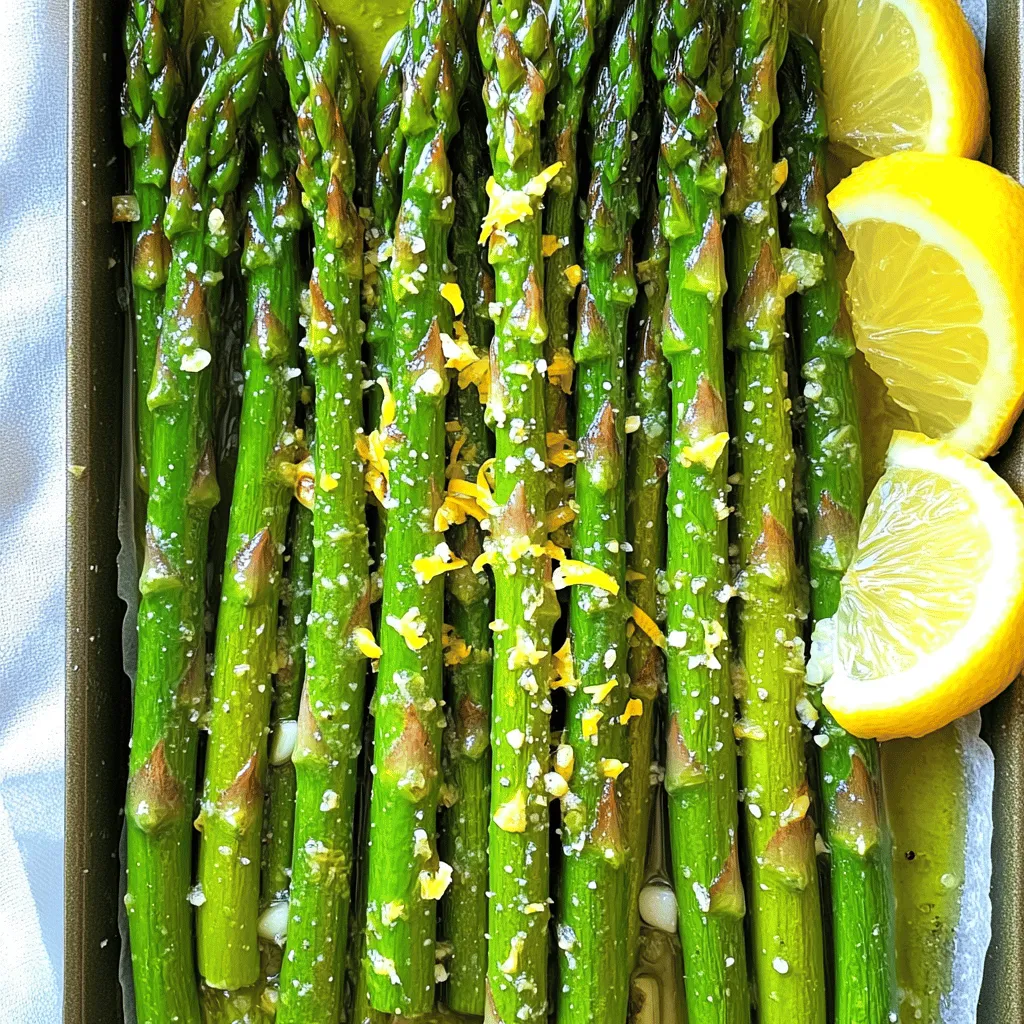
Lemon Garlic Asparagus Flavorful and Easy Recipe

Looking for a simple side dish to excite your taste buds? This Lemon Garlic Asparagus recipe combines fresh flavors with easy steps. You will love how vibrant lemon and garlic enhance the natural taste of asparagus. Whether you’re an experienced cook or just starting, I’ll guide you through each step. So, grab your ingredients, and let’s dive into this flavorful dish that’s sure to impress!
Ingredients
Overview of Ingredients
Lemon garlic asparagus uses simple, fresh ingredients. Each plays a key role in flavor. Here’s what you need for this tasty dish:
– 1 pound fresh asparagus, trimmed and ends snapped off
– 3 tablespoons extra virgin olive oil
– 4 cloves garlic, finely minced
– Zest of 1 medium lemon
– 2 tablespoons freshly squeezed lemon juice
– 1 teaspoon crushed red pepper flakes (optional for heat)
– Sea salt and freshly cracked black pepper to taste
– 2 tablespoons freshly grated Parmesan cheese (optional for a savory finish)
– Lemon wedges for a zesty serving suggestion
Specific Ingredient Details
1. Fresh Asparagus: Choose firm, green spears. They should snap easily when bent. This means they are fresh and full of flavor.
2. Extra Virgin Olive Oil: This oil adds richness and helps the asparagus roast well. It also enhances the garlic flavor.
3. Garlic: Use fresh garlic for the best taste. It gives a strong, savory punch to the dish.
4. Lemon: The zest and juice brighten the flavors. It balances the richness of the olive oil and adds freshness.
5. Crushed Red Pepper Flakes: If you like heat, this adds a nice kick. Adjust the amount to your taste.
6. Sea Salt and Black Pepper: These seasonings bring out all the flavors. Use them to taste for the best result.
7. Parmesan Cheese: This is optional, but it gives a savory finish. It melts slightly on the warm asparagus.
8. Lemon Wedges: Serve these on the side for extra brightness. A squeeze of fresh lemon juice adds a final touch.
Optional Additions
You can customize this dish with some fun extras. Consider adding:
– Cherry Tomatoes: They add sweetness and a pop of color.
– Balsamic Vinegar: A drizzle can give depth and sweetness.
– Nuts: Chopped almonds or pine nuts add crunch and nutrition.
– Herbs: Fresh basil or parsley can brighten the dish further.
Step-by-Step Instructions
Preparation Steps
Start by gathering all your ingredients. You need 1 pound of fresh asparagus, 3 tablespoons of olive oil, 4 cloves of garlic, lemon zest, lemon juice, red pepper flakes, salt, pepper, and Parmesan cheese if desired. Trim the asparagus by snapping off the tough ends. This helps keep the texture tender and fresh. Preheat your oven to 425°F (220°C) while you prepare.
Cooking Techniques
In a large bowl, toss the asparagus with olive oil. Make sure each spear is coated well. Next, add the minced garlic, lemon zest, and lemon juice. If you like some heat, sprinkle in the crushed red pepper flakes. Season with salt and pepper to taste. Mix everything well so the flavors blend. Spread the asparagus on a lined baking sheet in a single layer. This helps them roast evenly. Bake for 12 to 15 minutes. Keep an eye on them to ensure they stay crunchy.
Tips for Monitoring Cooking Time
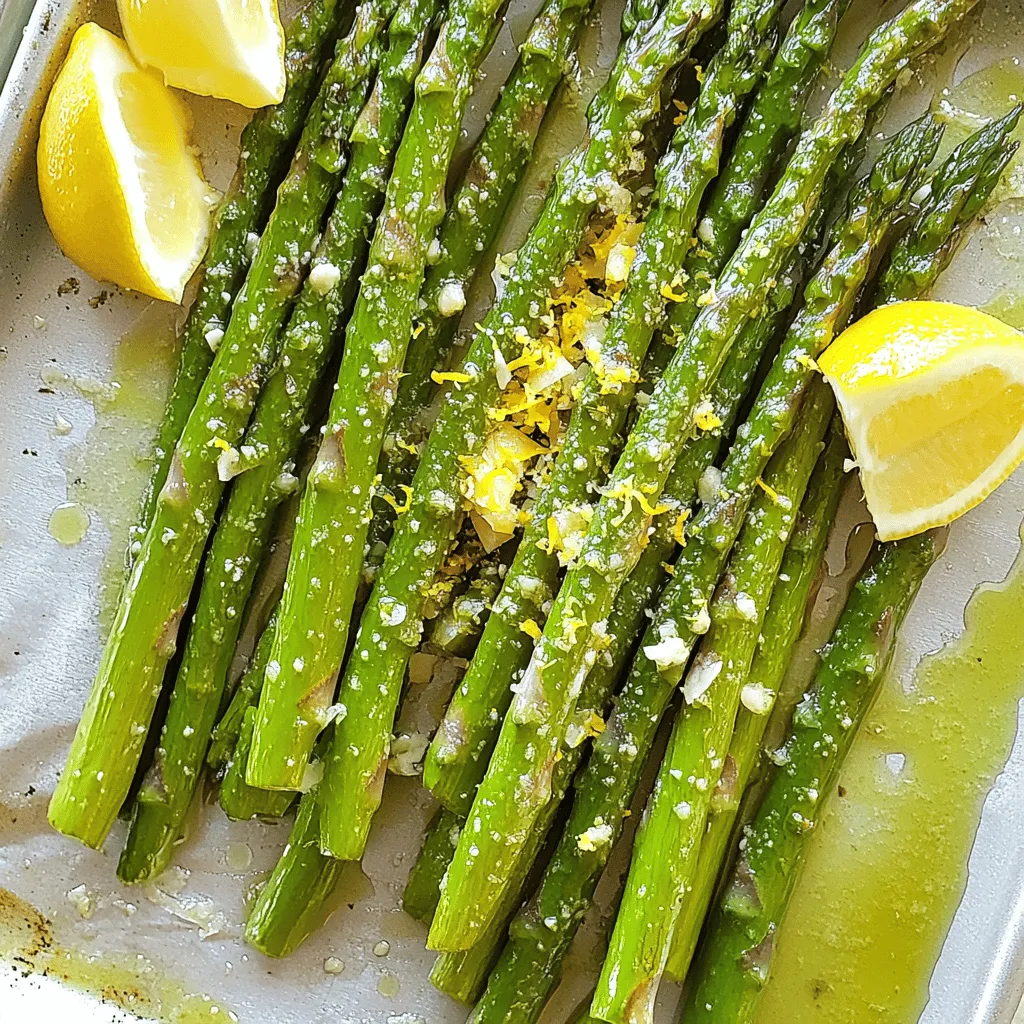
Check the asparagus around the 10-minute mark. Look for a slight browning on the tips. They should be tender but not mushy. If you want, add Parmesan cheese right after taking them out of the oven. The heat will melt it nicely. For serving, arrange the asparagus on a platter and add lemon wedges for a fresh squeeze right before eating.
Tips & Tricks
How to Achieve the Perfect Roast
To get the best roast, start with fresh asparagus. Look for bright green, firm spears. Trim the ends to ensure even cooking. Coat them well with olive oil and seasonings. Spread them out in a single layer on your baking sheet. This allows hot air to circulate freely. Roasting at 425°F makes them tender and crisp. Keep an eye on them as they roast. You want them tender but still crunchy.
Enhancing Flavor Profiles
Lemon and garlic work together to boost flavor. Use fresh garlic for the best taste. Zest the lemon before juicing it; this adds a bright note. For some heat, add crushed red pepper flakes. You can also sprinkle Parmesan cheese on top. This adds a savory twist to your dish. If you want a twist, try adding fresh herbs like thyme or dill.
Serving Suggestions
Serve lemon garlic asparagus on a nice platter. Drizzle any leftover oil over the top for shine. Garnish with extra lemon wedges for a pop of color. This dish pairs well with grilled fish or chicken. It also works great as a side for pasta dishes. Enjoy this zesty asparagus warm, or let it cool for a refreshing salad.
Variations
Alternative Ingredients to Consider
You can swap asparagus for other veggies. Try green beans, broccoli, or zucchini. These vegetables work well with the lemon and garlic flavors. If you want a different taste, use sesame oil instead of olive oil. You can also add herbs like thyme or rosemary for a twist.
Different Cooking Methods
Roasting is the most common method, but you can grill asparagus too. Grilling gives it a smoky flavor. Simply toss the asparagus with oil and seasonings, then grill for 5-7 minutes. You can also steam the asparagus for a lighter dish. Just steam for about 4-5 minutes until tender.
Seasonal Adaptations
In spring, fresh asparagus shines best. You can enjoy it with fresh lemon. In summer, add cherry tomatoes or bell peppers for color and taste. Fall is great for adding a sprinkle of nuts, like almonds or walnuts. Winter? Try pairing it with hearty grains like quinoa or farro for a warm meal.
Storage Info
Best Practices for Storing Leftovers
After enjoying your lemon garlic asparagus, store any leftovers properly. Place the asparagus in an airtight container. This keeps the flavor fresh. You can also wrap it tightly with plastic wrap. Make sure it is sealed well to avoid moisture. Store the container in the fridge. It helps to keep the asparagus crisp.
Reheating Instructions
To reheat your lemon garlic asparagus, use the oven for the best results. Preheat your oven to 350°F (175°C). Spread the asparagus on a baking sheet, and drizzle a bit of olive oil on top. Heat for about 10 minutes, or until warm. You can also use the microwave. Place the asparagus in a microwave-safe dish. Cover it with a damp paper towel and heat for 1-2 minutes.
Shelf Life of Prepared Lemon Garlic Asparagus
Prepared lemon garlic asparagus lasts about 3 to 5 days in the fridge. Keep an eye on its look and smell. If it appears slimy or has an off odor, it’s best to throw it away. Always trust your senses to judge freshness. For longer storage, consider freezing it. In the freezer, it can last up to 3 months. Just remember to blanch it first for the best taste!
FAQs
What can I serve with Lemon Garlic Asparagus?
You can pair Lemon Garlic Asparagus with many dishes. It goes well with grilled chicken or fish. You can also serve it alongside a hearty steak. For a vegetarian option, try it with quinoa or rice. Lemon Garlic Asparagus adds a fresh touch to any meal. You can also toss it in a salad for added crunch.
Can I make Lemon Garlic Asparagus in advance?
Yes, you can make Lemon Garlic Asparagus ahead of time. Roast the asparagus and let it cool. Then store it in the fridge for up to three days. When you’re ready to eat, just reheat it in the oven. This keeps the flavor and crunch intact. You can even serve it cold in a salad for a quick meal.
How do I clean and prepare asparagus?
To clean asparagus, start by rinsing it under cold water. This removes dirt and sand. Next, snap off the tough ends of each spear. Simply bend the asparagus until it snaps. This point is where the tender part begins. If you want, you can peel the lower part of the stem for a more delicate bite. Now your asparagus is ready for cooking!
In this blog post, we explored the key ingredients for lemon garlic asparagus. We discussed specific details and optional additions that enhance flavor. Next, we walked through each step, from preparation to cooking techniques with handy tips.
Finally, I shared ways to achieve the perfect roast, variations to try, and best practices for storing leftovers. Remember, whether you serve it fresh or reheat it later, lemon garlic asparagus can delight your taste buds. Enjoy cooking and experimenting with this vibrant dish!


. 1. Heat olive oil in a large skillet over medium heat. 2. Add finely chopped red onion to the skillet. 3. Sauté the onion for 2-3 minutes until it becomes soft. 4. Now, add diced red and green bell peppers to the skillet. 5. Cook for 3-4 minutes until the peppers soften. 6. Stir in corn kernels and black beans. 7. Season with ground cumin, smoked paprika, garlic powder, salt, and pepper. 8. Mix well and cook for 5 more minutes until hot. 1. Heat another skillet over medium heat. 2. Place a tortilla in the skillet and sprinkle ¼ cup of cheese on it. 3. Layer ½ cup of the veggie mixture over the cheese. 4. Top with another ¼ cup of cheese for extra flavor. 5. Fold the tortilla in half, covering the filling. 6. Cook for 3-4 minutes until golden brown on one side. 7. Flip the quesadilla gently using a spatula. 8. Cook for another 3-4 minutes until crispy and cheese melts. - Keep the heat at medium for a crispy texture. - Use a spatula to flip the quesadilla easily. - Check for doneness by ensuring both sides are golden brown. These simple steps make it easy to create loaded veggie quesadillas at home. For the full recipe, refer to the recipe section above. Enjoy the process! Choosing the right cheese is key. I love a mix of cheddar and mozzarella. This mix melts well and adds great flavor. You want the cheese to stretch and pull when you take a bite. Balancing spices and seasonings is also important. Start with the basics like salt and pepper. Then, add spices like cumin and smoked paprika. Adjust them to fit your taste. A little heat can come from red pepper flakes if you like it spicy. Day-to-day storage tips help keep your quesadillas fresh. Place leftovers in an airtight container. Keep them in the fridge for up to three days. You can also wrap them tightly in foil or plastic wrap. Reheating suggestions for best flavor include using the oven or skillet. For the oven, preheat to 350°F. Heat the quesadillas for about 10 minutes. In a skillet, cook them over medium heat. This method keeps them crispy and delicious. Plating ideas can make your meal pop. Arrange the quesadillas in a fan shape on a colorful plate. This makes them look fun and inviting. Adding colorful garnishes like fresh cilantro adds a nice touch. You can also sprinkle some diced tomatoes or avocado on top. These small changes make your meal look gourmet. Enjoy your loaded veggie quesadillas! For the full recipe, check out the Loaded Veggie Quesadillas 🥑 section. {{image_4}} You can make loaded veggie quesadillas even more fun. Here are some easy ideas. Want some extra protein? You can add grilled chicken or tofu. Just cook them first, then slice and add to your quesadilla mix. If you like seafood, try shrimp. Cook them quickly and toss them in for a tasty twist. Spices can change the game. Try different spices like chili powder or oregano. They add depth and warmth. You can also add sauces or marinades. A dash of hot sauce or a sprinkle of lime juice can elevate your quesadillas. Need gluten-free options? Use gluten-free tortillas. They work great and taste just as good. If you're vegan, swap out the cheese for a plant-based version. There are many tasty dairy-free cheeses out there that melt well. You can find the full recipe for loaded veggie quesadillas to get started on these variations. To keep your uncooked quesadillas fresh, wrap them tightly in plastic wrap. This keeps out moisture and air. You can also place them in an airtight container. If you want to freeze them, stack the quesadillas with parchment paper in between. This prevents them from sticking together. Uncooked quesadillas can stay in the freezer for up to three months. After cooking, let the quesadillas cool completely. Then, wrap them in foil or place them in a container. Store them in the fridge for up to four days. I find they taste best within the first two days. If you notice any odd smell or mold, it’s best to toss them. To reheat, use an oven or a skillet. For the oven, preheat to 350°F (175°C). Place the quesadilla on a baking sheet and heat for about 10 minutes. If using a skillet, add a little oil and heat over medium heat for about 3-4 minutes on each side. Leftover quesadillas can also become a fun breakfast. Chop them up and add them to scrambled eggs for a tasty twist. For more ideas, check out the Full Recipe. Making loaded veggie quesadillas is quick and easy. It takes about 10 minutes to prep. Cooking them takes around 15 minutes. In total, you can make them in about 25 minutes. This makes them a great choice for busy days or quick meals. Yes, you can prep loaded veggie quesadillas in advance. To do this, cook the veggie mixture and let it cool. Then, assemble the quesadillas but do not cook them. Store them in an airtight container in the fridge for up to two days. You can also freeze them for a month. When ready to eat, just cook them straight from the fridge or freezer. This makes meal prepping super easy! You can mix and match many veggies in quesadillas. Some great options include: - Spinach or kale for a green boost - Mushrooms for a savory taste - Zucchini or squash for extra texture - Jalapeños for a spicy kick - Tomatoes for freshness Feel free to get creative! Each veggie adds its own flavor and texture. You can make quesadillas that fit your taste perfectly. For more ideas, check out the Full Recipe. These loaded veggie quesadillas are fun and easy to make. We explored essential ingredients like black beans, bell peppers, and corn. I’ve shared tips for perfect texture, storing leftovers, and creative garnishes. Remember, you can customize them with protein or spices to suit your taste. In the end, these quesadillas are more than just food; they bring flavor and joy. Enjoy making them your own!](https://goldendishy.com/wp-content/uploads/2025/06/a7c52493-2108-4a2f-8f90-ee80e7df7b2a-768x768.webp)

. Enjoy mixing and matching these ideas! To store leftover grilled vegetable skewers, let them cool first. Place them in an airtight container. You can keep them in the fridge for up to three days. If you want to keep them longer, freezing is a better choice. When you're ready to eat leftovers, you have a few options for reheating. You can use the microwave for quick heat. Place the skewers on a plate and cover them with a damp paper towel. Heat for 30 seconds to 1 minute. You can also reheat them on the grill. This method helps keep the smoky flavor. Just grill them for about 5 minutes over low heat, turning occasionally. If you want to freeze grilled vegetable skewers, first remove the veggies from the skewers. Place the veggies in a single layer on a baking sheet. Freeze them for an hour, then transfer them to a freezer-safe bag. This way, they won't stick together. You can store them in the freezer for up to three months. When you're ready to use them, just thaw them overnight in the fridge. You can then reheat as mentioned above. Enjoy your flavorful grilled veggies anytime! For a full recipe, check out the vibrant grilled vegetable skewers. Yes, you can use frozen vegetables for skewers. However, fresh vegetables are better. Frozen veggies have more water. This can make them mushy when grilled. If you use frozen, thaw them first. Pat them dry to remove excess moisture. This helps keep them firm and tasty. You can tell the vegetables are done by looking at them. They should be tender and have nice grill marks. When a fork goes in easily, they are ready. Each vegetable cooks a bit differently. Zucchini and bell peppers may take less time than mushrooms. Keep an eye on them while grilling. Many dips go well with grilled vegetable skewers. Here are a few great options: - Hummus - Tzatziki - Garlic aioli - Ranch dip - Pesto Each dip adds a new flavor. You can mix and match to find what you love best. Enjoy exploring these tasty options! Grilling vegetable skewers is fun and easy. We covered tasty ingredients, from fresh veggies to zesty marinades. You learned step-by-step methods for marinating and grilling. I shared tips for the best grilling and how to achieve those perfect marks. Explore variations to suit your taste and consider storage tips for leftovers. Remember, this dish is adaptable. You can create a healthy meal that fits your style. Now, it’s your turn to fire up the grill and enjoy delicious skewers!](https://goldendishy.com/wp-content/uploads/2025/06/ba27ef34-bcc3-4460-8414-05014c8a22e5-768x768.webp)
