
Baked Lemon Garlic Salmon Simple and Flavorful Dish

Looking for a quick and tasty meal? You’ve found it! This Baked Lemon Garlic Salmon is simple and bursting with flavor. I’ll guide you through the easy steps to make this dish perfect every time. Whether you’re an experienced chef or a kitchen newbie, you can impress anyone with this meal. Let’s dive into the ingredients and start cooking your new favorite dinner!
Ingredients
List of Ingredients for Baked Lemon Garlic Salmon
To make this dish, gather these simple ingredients:
– 4 fresh salmon fillets
– 4 tablespoons extra virgin olive oil
– 3 cloves of garlic, finely minced
– 2 medium lemons (one for juicing, one sliced into rounds)
– 1 teaspoon dried thyme
– 1 teaspoon dried rosemary
– Salt and freshly cracked black pepper to taste
– Fresh parsley, roughly chopped (for garnish)
Fresh vs. Frozen Salmon: Which to Choose?
When making Baked Lemon Garlic Salmon, fresh salmon gives the best flavor. Fresh salmon has a bright, clean taste. It cooks well and stays moist. If you can’t find fresh salmon, frozen is a great option. Frozen salmon holds its flavor and nutrients well. Just thaw it overnight in the fridge before cooking. Always check for a fresh smell, whether fresh or frozen.
Helpful Substitutes for Ingredients
If you don’t have every ingredient, here are some easy swaps:
– Use avocado oil instead of olive oil for a different flavor.
– If you don’t have fresh garlic, garlic powder works too. Use 1 teaspoon.
– For the herbs, you can try dill or basil if thyme and rosemary are not on hand.
– Lime juice can replace lemon juice for a zesty twist.
– If you want a different fish, try trout or sea bass; they work well too.
These tips help you adapt the recipe to what you have at home. Enjoy cooking!
Step-by-Step Instructions
Prepping the Oven and Ingredients
First, preheat your oven to 400°F (200°C). This step is key for even cooking. While the oven heats, gather your ingredients. You need fresh salmon fillets, olive oil, garlic, lemons, thyme, rosemary, salt, and pepper. Set these items on your workspace for easy access.
How to Prepare the Garlic-Lemon Mixture
In a small bowl, mix the olive oil, minced garlic, and juice from one lemon. Add the dried thyme, dried rosemary, salt, and pepper. Use a whisk to blend everything well. This mixture will bring bright flavor to the salmon.
Arranging and Baking the Salmon
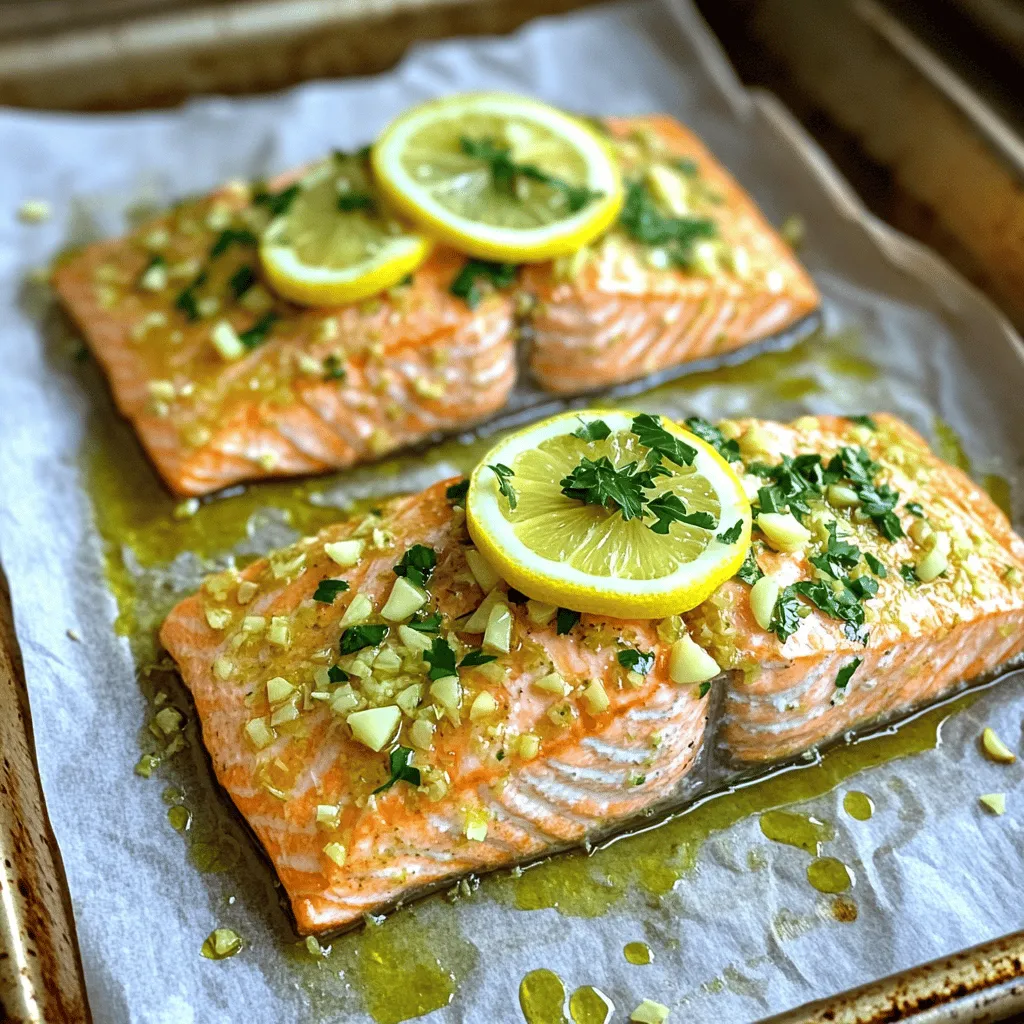
Line a baking sheet with parchment paper. Place the salmon fillets on the sheet with the skin side down. Make sure they are spaced apart. Pour the garlic-lemon mixture over each fillet, coating them well. Place lemon slices on top for added flavor. Bake the salmon for 12 to 15 minutes. It’s ready when it flakes easily with a fork. Let it rest for a few minutes, then garnish with chopped parsley. Enjoy this simple and flavorful dish!
Tips & Tricks
Ensuring Perfectly Cooked Salmon
To cook salmon just right, keep an eye on the time. Bake it for 12-15 minutes at 400°F (200°C). The fish should flake easily when done. Use a fork to check the texture. If it falls apart, it’s perfect! Always check that the internal temperature reaches 145°F (63°C) for safety.
Enhancing Flavor with Herbs and Spices
To boost the taste, use fresh herbs like parsley or dill. You can mix fresh herbs into the garlic-lemon marinade. Dried herbs like thyme and rosemary also work well. They add depth and richness. Don’t forget to season with salt and pepper to bring all the flavors together.
Serving Suggestions for a Complete Meal
Serve your salmon with sides that balance the flavors. Try steamed vegetables like broccoli or asparagus. A light salad with a lemon vinaigrette pairs nicely too. For a hearty option, serve the salmon over a bed of rice or quinoa. This makes for a colorful and satisfying meal.
Variations
Different Marinade Options for Salmon
You can change the flavor of your salmon with different marinades. Try a soy sauce mix for a salty taste. A honey mustard blend adds sweetness. You can also use a spicy harissa paste for a kick. Each marinade gives the salmon a unique twist.
Alternatives for Cooking Methods (Grilling, Pan-Searing)
If you don’t want to bake, grilling is a great choice. It adds a nice char and smoky flavor. Just preheat your grill and cook the salmon for about 6-8 minutes per side. Pan-searing is another option. Heat oil in a pan, place the salmon skin-side down, and cook for 4-5 minutes before flipping. Each method makes the salmon tasty in its own way.
Vegetable Pairings That Complement the Dish
Pairing vegetables with your salmon can enhance the meal. Asparagus and green beans are fresh choices. Roasted tomatoes add a sweet burst. You can also serve salmon with a simple salad of mixed greens. These veggies balance the dish and add color to your plate.
Storage Info
Best Practices for Storing Leftovers
To keep your baked salmon fresh, allow it to cool first. Once cooled, place the salmon in an airtight container. Make sure to seal it tightly. Leftovers can stay in the fridge for up to three days. For longer storage, consider freezing the salmon. Wrap it in plastic wrap, then place it in a freezer bag. This method helps prevent freezer burn.
How to Reheat Baked Salmon Properly
When you’re ready to enjoy leftovers, reheating them properly is key. To keep the salmon moist, use your oven. Preheat your oven to 275°F (135°C). Place the salmon on a baking sheet and cover it with foil. Heat for about 15 minutes. Check if it’s warm all the way through. You can also use a microwave. Heat it on low power for short bursts. This method helps to avoid overcooking.
Recommended Storage Containers
For storing baked salmon, choose containers made of glass or BPA-free plastic. These materials keep the food fresh longer. Look for containers with tight lids to avoid spills or air exposure. If freezing, use heavy-duty freezer bags for better protection against cold air. Remember to label each container with the date for easy tracking.
FAQs
What to Serve with Baked Lemon Garlic Salmon?
I love serving baked lemon garlic salmon with fresh sides. Here are my top picks:
– Steamed green beans
– Roasted asparagus
– Garlic mashed potatoes
– Quinoa salad
– Rice pilaf
These sides add color and flavor. They balance the rich taste of salmon. You can also add a light salad for extra crunch.
How to Tell When Salmon is Fully Cooked?
To check if salmon is cooked, use a fork. Gently press down on the fish. If it flakes easily, it is done. The salmon should also have a bright pink color inside. The USDA recommends an internal temperature of 145°F (63°C) for safety.
Can I Use Other Fish Instead of Salmon?
Yes, you can use other fish! Here are some great choices:
– Trout
– Mahi-mahi
– Cod
– Tilapia
Each fish has its own taste. Adjust cooking times as needed. Just make sure to follow the same lemon and garlic mix for flavor.
This article covered how to make baked lemon garlic salmon easily. We discussed choosing fresh or frozen salmon and shared helpful ingredient substitutes. I provided a step-by-step guide for prepping, baking, and serving. You now have tips for perfect cooking and flavor enhancements. We also explored variations, storage advice, and answered common questions.
Enjoy making this dish! With these methods and tips, you can create a delicious meal every time.


![To make vegan creamy pesto pasta, gather these fresh and simple ingredients. - 12 oz pasta (penne, spaghetti, or your favorite variety) - 2 cups fresh basil leaves, tightly packed - 1/2 cup raw cashews (soaked in water for at least 2 hours) - 1/4 cup nutritional yeast (for a cheesy flavor) - 3 cloves garlic, minced - 1/4 cup extra virgin olive oil - 1 tablespoon fresh lemon juice - Sea salt and freshly ground black pepper, to taste - 1 cup cherry tomatoes, halved (for topping) - Extra fresh basil leaves (for garnish) Each ingredient plays a vital role. The pasta is the base, while basil brings freshness. Cashews create a rich, creamy texture. Nutritional yeast adds a cheesy taste, perfect for vegan dishes. Garlic gives depth, while olive oil provides smoothness. Lemon juice brightens the flavors. Salt and pepper enhance everything. Cherry tomatoes add color and sweetness. Extra basil leaves make the dish look beautiful. For the full recipe, check out the link to ensure a delicious meal! First, fill a large pot with water and add a generous amount of salt. Bring the water to a rapid boil. This step is key; the salt helps flavor the pasta. Once boiling, add 12 ounces of your favorite pasta, like penne or spaghetti. Cook according to the package instructions. You want the pasta to be al dente, which means it should be tender but still firm to bite. Usually, this takes about 8 to 12 minutes. When the pasta is ready, drain it well and set it aside. Next, it’s time to make the vegan pesto. Grab your blender or food processor. Add 2 cups of fresh basil leaves, 1/2 cup of soaked raw cashews, and 1/4 cup of nutritional yeast. Also, include 3 cloves of minced garlic and 1 tablespoon of fresh lemon juice. Season with a pinch of sea salt and freshly ground black pepper. Blend this mixture until it becomes smooth and creamy. If it doesn't blend well, scrape down the sides of the blender and blend again until you get a silky texture. Now, combine the drained pasta with the creamy pesto sauce. Use a large mixing bowl for this. Pour the pesto over the pasta. With a pair of tongs or a spatula, toss everything together. Ensure that each piece of pasta gets coated with the vibrant pesto. If the sauce looks too thick, add a little water, one teaspoon at a time, until it reaches the desired consistency. Don't forget to taste! Adjust the seasoning with more salt, pepper, or lemon juice if needed. Finally, gently fold in 1 cup of halved cherry tomatoes for a fresh burst of flavor. Serve this delicious dish warm, garnished with extra basil leaves. Enjoy your vegan creamy pesto pasta! For the complete recipe, check the [Full Recipe]. Soaked cashews are the secret to a smooth and creamy sauce. They soften and blend well, making the pesto rich. Soak them in water for at least two hours before use. This step is key for a silky texture. If your pesto is too thick, don’t worry. Just add water! Start with a teaspoon at a time. Blend until you reach your desired creaminess. This helps the sauce hug the pasta perfectly. Don’t stop at just basil! You can spice it up with some red pepper flakes for heat. A pinch of black pepper adds depth. Try adding a bit of garlic powder for more flavor. Lemon juice adds freshness, but balance is key. If it’s too tangy, add a pinch of sugar or more cashews. This helps round out the flavors and brings the dish to life. Pair this pasta with roasted vegetables for a colorful plate. A side salad adds crunch and freshness. For a drink, consider a light white wine, like Sauvignon Blanc. As for portion sizes, aim for about one and a half cups per person. This ensures everyone leaves satisfied. Enjoy this dish warm for the best flavor experience! {{image_4}} You can change nuts or seeds in your pesto. Try using almonds or sunflower seeds. Each option brings a unique taste. For those avoiding gluten, select gluten-free pasta. Options like brown rice or chickpea pasta work well. Both choices give a nice texture and flavor. To mix up the flavor, add different herbs like parsley or spinach. These herbs bring extra freshness to your dish. You can also incorporate various vegan cheeses. Options like cashew cheese or nutritional yeast can enhance the creamy taste. This helps create layers of flavor in your pesto. Make your dish fresh by using seasonal veggies. For example, zucchini or asparagus can add crunch and color. You can also try different tomatoes. Roasted tomatoes can bring a sweet touch, while cherry tomatoes add a pop of freshness. Finish with garnishes like pine nuts or extra basil for a lovely look. For the complete recipe, check the Full Recipe. After enjoying your vegan creamy pesto pasta, store any leftovers in an airtight container. This keeps the pasta fresh and tasty. Place it in the fridge right away. The best storage time is up to 3 days. Beyond that, the pasta may lose its flavor and texture. To reheat your pasta, the best method is using a stovetop. Heat a pan over medium heat. Add a splash of water or olive oil to keep it moist. Stir gently to warm it up. When reheating, avoid high heat, as this can dry out the sauce. You want to keep that creamy goodness intact. Enjoy your delicious meal again! To make vegan creamy pesto pasta, follow these simple steps: 1. Cook the Pasta: Bring salted water to a boil. Add 12 oz of your pasta and cook until tender. This usually takes about 8-12 minutes. Drain and set aside. 2. Prepare the Pesto: In a blender, add 2 cups of fresh basil leaves, 1/2 cup of soaked raw cashews, and 3 minced garlic cloves. Pour in 1/4 cup of nutritional yeast and 1 tablespoon of lemon juice. Add a pinch of sea salt and black pepper. Blend until smooth. 3. Emulsify with Olive Oil: While blending, slowly add 1/4 cup of extra virgin olive oil. Keep blending until creamy. If it’s too thick, add water, one teaspoon at a time. 4. Combine Pasta and Pesto: In a large bowl, mix the drained pasta with your creamy pesto. Toss gently to coat the pasta well. 5. Final Touches: Taste the mix and adjust the seasoning. Fold in 1 cup of halved cherry tomatoes for a fresh touch. 6. Serve: Serve warm with extra basil leaves on top. Enjoy your delicious vegan creamy pesto pasta! Yes, you can freeze vegan creamy pesto pasta. Here are some tips to keep it tasty: - Cool Before Freezing: Let the pasta cool down before packing it. - Use Airtight Containers: Store the pasta in airtight containers or freezer bags. - Leave Space: Leave some room in the container for the pasta to expand. - Label and Date: Always label your containers with the date. Use within 2-3 months for best quality. When ready to eat, thaw in the fridge overnight. Reheat gently on the stove or in the microwave. Add a splash of water if it seems dry. If you don’t have nutritional yeast, try these alternatives: - Grated Vegan Cheese: Use a dairy-free cheese for a similar flavor. - Ground Flaxseed: This can add a nutty taste, though it won't mimic the cheese flavor. - T nutritional yeast: You can use this if you want a similar profile. - Parmesan Substitute: Some brands offer vegan parmesan that works well in pesto. Each substitute will change the flavor a bit, so adjust to your taste! This blog post covered how to make vegan creamy pesto pasta. You learned about ingredients, cooking pasta, and blending the pesto. We explored tips for smooth texture and flavor. I shared variations to keep things fresh, plus storage and reheating advice. In the end, making this dish is quick and fun. Enjoy experimenting with flavors and textures. This pasta will please vegans and non-vegans alike!](https://goldendishy.com/wp-content/uploads/2025/07/928f57b2-1357-48f3-b20e-4d7b01e4c937-768x768.webp)