Teriyaki Salmon Rice Bowls Healthy Weeknight Meal
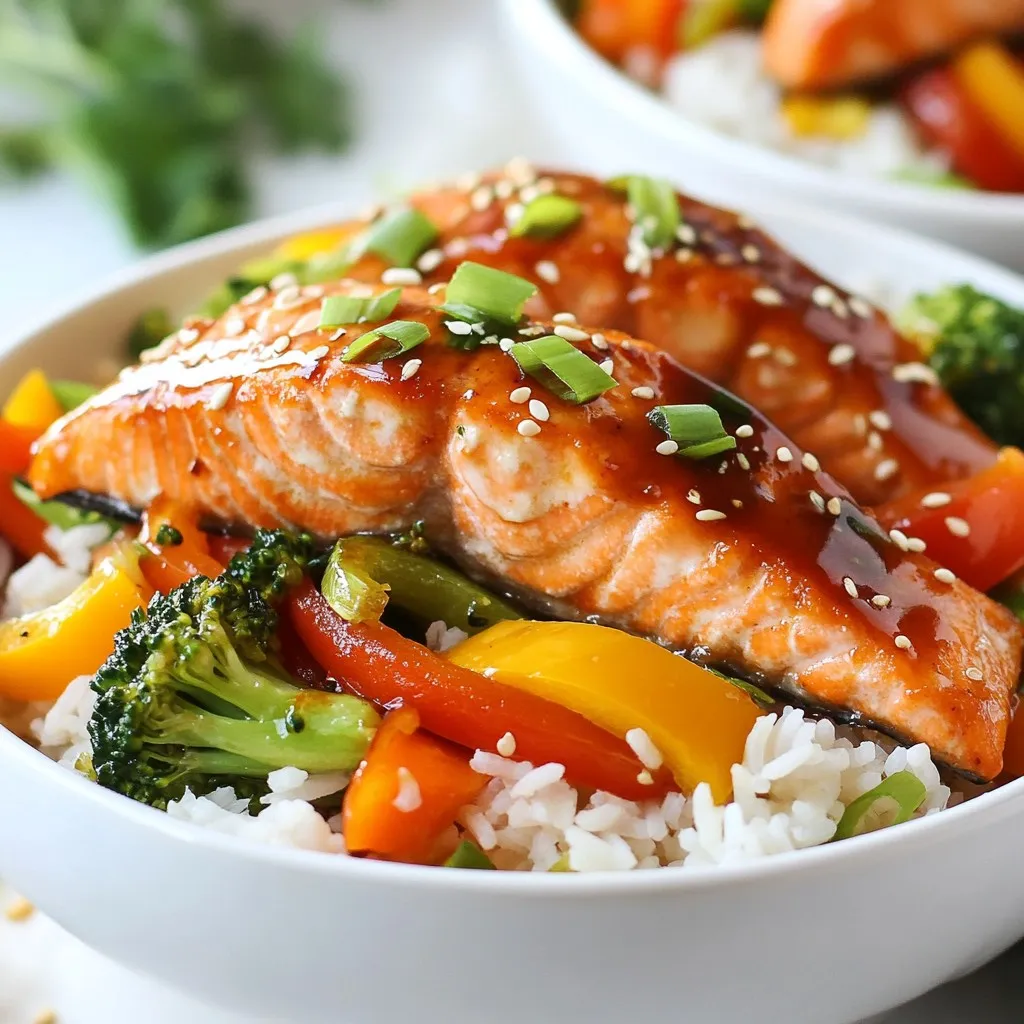

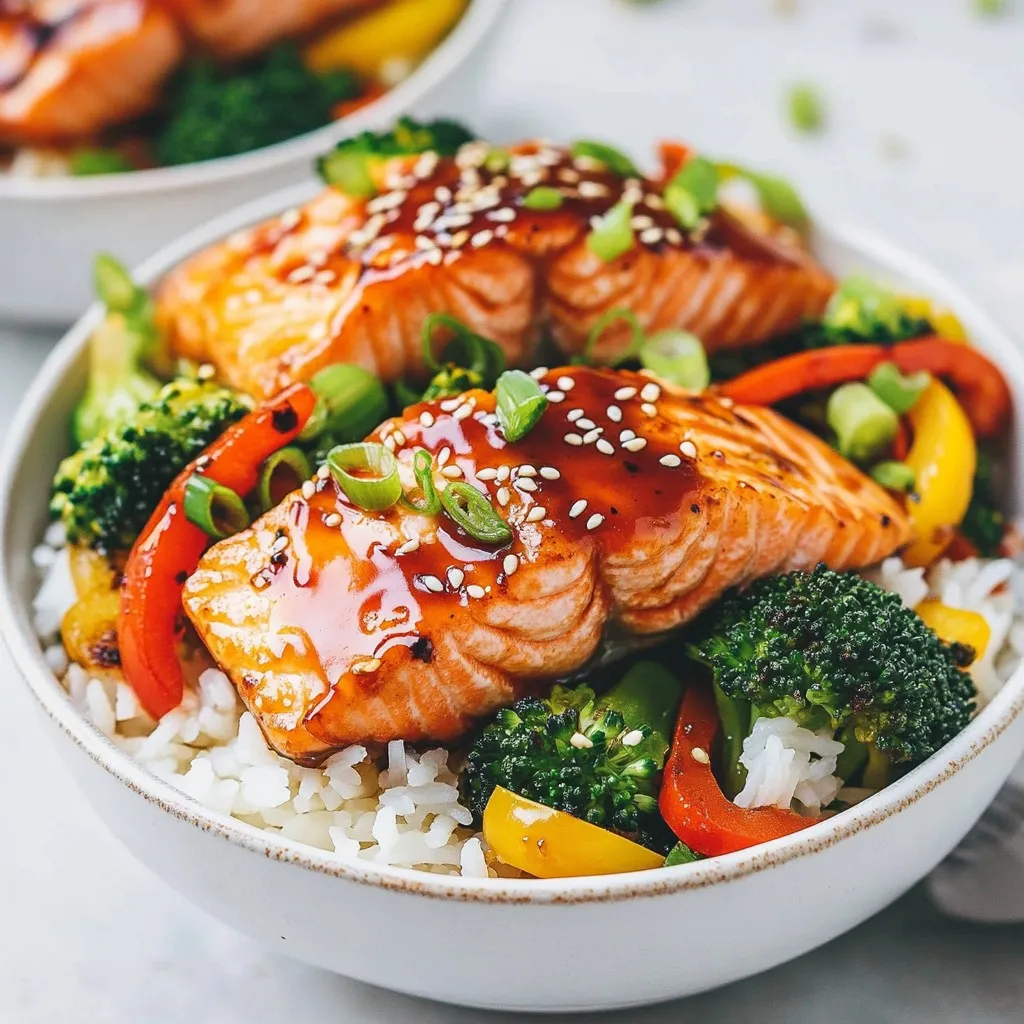
Looking for a healthy weeknight meal that’s both quick and delicious? Try my Teriyaki Salmon Rice Bowls! This dish combines tender salmon with fluffy jasmine rice and vibrant mixed veggies, all drizzled in a tasty homemade teriyaki sauce. It’s packed with flavor, easy to make, and perfect for busy evenings. Let’s dive into the ingredients and get cooking! Your family will love it, and you’ll feel great serving it!
Why I Love This Recipe
- Delicious Flavor Combination: The sweet and savory teriyaki sauce pairs perfectly with the rich salmon, creating a delightful balance that excites the palate.
- Quick and Easy: This recipe takes just 30 minutes from start to finish, making it a perfect weeknight dinner option without compromising on taste.
- Healthy Ingredients: With fresh salmon, nutritious vegetables, and wholesome jasmine rice, this dish is packed with essential nutrients, making it a healthy choice.
- Customizable: You can easily switch up the vegetables or adjust the sauce ingredients to suit your taste, allowing for endless variations.
Ingredients
Main Ingredients
– 2 salmon fillets (approximately 6 oz each)
– 1 cup jasmine rice
– 1 cup mixed vegetables (suggested: bell peppers, broccoli, and carrots)
Teriyaki Sauce Ingredients
– 1/4 cup soy sauce
– 2 tablespoons honey
– 1 tablespoon rice vinegar
– 1 teaspoon minced fresh ginger
– 1 teaspoon minced garlic
– 1/2 teaspoon sesame oil
Seasoning and Garnishes
– Salt and pepper to taste
– 2 green onions, thinly sliced
– Sesame seeds for garnish
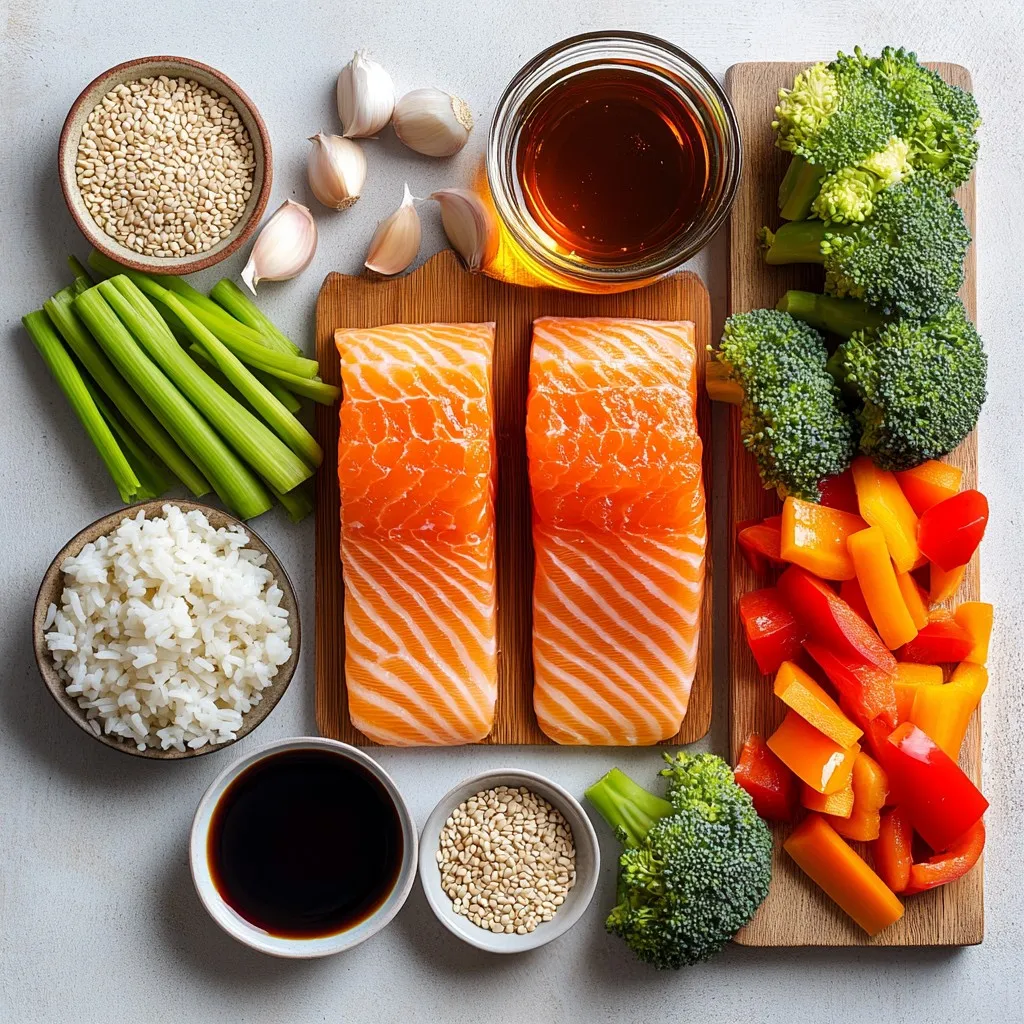
Gathering these ingredients is the first step to making your Teriyaki Salmon Rice Bowls. The salmon is the star here, rich in healthy fats and protein. Jasmine rice offers a light, fluffy base that pairs well with the teriyaki sauce. Adding mixed vegetables gives you color and crunch.
For the teriyaki sauce, soy sauce brings that umami flavor. Honey adds sweetness, balancing the saltiness. Rice vinegar gives a tangy note, while ginger and garlic boost the taste. Finally, sesame oil adds a nutty aroma.
Don’t forget your seasonings! Salt and pepper enhance the flavors. The green onions and sesame seeds add a nice finish, making the dish pop. With these ingredients, you can create a meal that is both healthy and satisfying.
Step-by-Step Instructions
Cooking the Jasmine Rice
– Start by rinsing 1 cup of jasmine rice under cold water. Keep rinsing until the water runs clear. This helps remove extra starch and makes the rice fluffy.
– In a medium pot, boil 2 cups of water over high heat. When it boils, add the rinsed rice.
– Lower the heat to a simmer and cover the pot. Let it cook for about 15 minutes until the water is absorbed. After cooking, let it sit for 5 minutes to steam.
Preparing the Teriyaki Sauce
– In a small bowl, mix 1/4 cup of soy sauce, 2 tablespoons of honey, and 1 tablespoon of rice vinegar.
– Add 1 teaspoon of minced ginger, 1 teaspoon of minced garlic, and 1/2 teaspoon of sesame oil to the bowl.
– Whisk the mix until smooth and well combined. Set the teriyaki sauce aside for later.
Cooking the Salmon
– Season both sides of 2 salmon fillets with salt and pepper.
– Heat 1 tablespoon of olive oil in a skillet over medium heat. Once the oil shines, add the salmon skin-side down.
– Cook the salmon for 4-5 minutes until the skin gets crispy. Flip the fillets and brush with teriyaki sauce. Cook for another 4-5 minutes until the salmon flakes easily.
Sautéing the Vegetables
– After removing the salmon, add 1 cup of mixed vegetables to the same skillet.
– Add a splash of water to help steam the veggies. Sauté for 3-4 minutes until they are tender but still crisp. Season with salt and pepper to taste.
Assembling the Bowls
– Fluff the cooked jasmine rice with a fork.
– Divide the rice into two bowls. Top each bowl with the sautéed vegetables and teriyaki-glazed salmon.
– Drizzle any extra teriyaki sauce over the salmon for more flavor.
Garnishing the Dish
– Finish by adding sliced green onions on top of the bowls.
– Sprinkle sesame seeds over everything for texture and crunch.
Tips & Tricks
Ensuring Perfectly Cooked Salmon
To get the best salmon, you need to focus on cooking time and technique. Cook salmon fillets for about 4-5 minutes on each side. The skin should get crispy and the fish should be opaque. If you flip them gently, you will keep them whole. Choose fresh salmon fillets for the best flavor. Look for bright color and no fishy smell. Farm-raised or wild-caught both work well, but wild often tastes better.
Rice Cooking Tips
To avoid mushy rice, rinse jasmine rice under cold water until clear. This removes excess starch. Use 1 cup of rice with 2 cups of water. Bring the water to a boil, then reduce heat and cover the pot. Let it simmer for 15 minutes. After that, let it sit for 5 minutes with the lid on. Fluff the rice with a fork to keep it light and airy.
Enhancing the Teriyaki Flavor
Spices can add fun twists to your teriyaki sauce. Try adding a pinch of red pepper flakes for heat. You might also swap honey for maple syrup if you like. Fresh herbs like cilantro can brighten the dish, too. If you want a tangy kick, add a splash of lime juice. These small tweaks can make a big difference in flavor.
Pro Tips
- Proper Rice Rinsing: Rinsing the jasmine rice until the water runs clear removes excess starch, which helps achieve a fluffy texture.
- Fish Freshness: Always choose fresh, high-quality salmon for the best flavor. Look for bright, moist fillets with no fishy smell.
- Adjust Sauce Sweetness: Feel free to adjust the amount of honey in the teriyaki sauce to suit your taste preferences. More honey will result in a sweeter sauce.
- Vegetable Variety: Customize your rice bowl by adding your favorite vegetables. Zucchini, snap peas, or mushrooms can also work beautifully!
Variations
Alternative Protein Options
You can switch salmon with chicken or tofu. For chicken, use boneless breasts or thighs. Cook them the same way as salmon. Sear the chicken in the skillet until it’s golden. Then glaze it with the teriyaki sauce. For tofu, use firm or extra-firm. Press it to remove water, then cut it into cubes. Sauté it in the skillet until golden and crispy. Brush the teriyaki sauce on the tofu to add flavor.
Different Vegetable Combinations
Feel free to change up the veggies. You can use seasonal options like zucchini, snap peas, or asparagus. These add color and nutrients. Spice it up with some chili flakes or a dash of sesame oil. You can also mix in sauces like hoisin or sriracha for extra flavor. Just sauté the veggies until they are tender but still crisp.
Serving Alternatives
Try different types of rice for your bowl. Brown rice adds a nutty taste and is healthier. Quinoa is another great option for protein. You can also serve the bowl with a side of edamame or seaweed salad. These sides enhance the meal and provide a balanced plate. Enjoy experimenting with different textures and flavors!
Storage Info
Storing Leftovers
To keep your teriyaki salmon rice bowls fresh, use airtight containers. Glass or plastic containers work well. Make sure to cool the food before sealing it. Store any leftovers in the fridge. They will last for about 2 to 3 days.
Reheating Instructions
For the best flavor, reheat the salmon and rice gently. Use a microwave or a skillet. If using a microwave, cover the bowl to prevent drying. Heat in short bursts, checking often. For the skillet, add a drop of water to keep moisture. Reheat the rice separately to avoid overcooking the salmon.
Freezing Options
Yes, you can freeze teriyaki salmon! Wrap the salmon tightly in foil or plastic wrap. Place it in a freezer-safe bag. This way, it can last up to 3 months. To thaw, move it to the fridge overnight. Reheat gently after thawing to keep the salmon juicy.
FAQs
How do I know when salmon is cooked?
To check if salmon is cooked, look for a few signs. The flesh should change from a bright red to a pale pink. Use a fork to see if it flakes easily. If it does, it’s ready! You can also check the internal temperature. It should reach 145°F (63°C). If you’re unsure, it’s better to cook it a little longer than to undercook it.
Can I make the teriyaki sauce in advance?
Yes, you can make teriyaki sauce in advance. Store it in an airtight container in the fridge. It stays fresh for about a week. This way, you can save time on busy nights. Just give it a good stir before using it again. You can also freeze the sauce for longer storage. Just thaw it in the fridge overnight when you’re ready to use it.
What can I serve with Teriyaki Salmon Rice Bowls?
You can serve many delicious sides with your teriyaki salmon rice bowls. Here are some great options:
– Steamed broccoli
– Sautéed spinach
– Cucumber salad
– Miso soup
– Edamame
These sides add flavor and nutrition to your meal.
Is this recipe gluten-free?
This recipe can be made gluten-free. Use gluten-free soy sauce instead of regular soy sauce. Many brands offer gluten-free options that taste great. Always check the labels to make sure. With this swap, you can enjoy a tasty meal that suits your diet.
Can I use brown rice instead of jasmine rice?
Yes, you can use brown rice instead of jasmine rice. However, cooking times will change. Brown rice takes longer to cook, about 40-45 minutes. Use 2.5 cups of water for every cup of brown rice. Remember to adjust the cooking time to ensure it’s tender and fluffy.
This blog post covered how to make tasty Teriyaki Salmon Rice Bowls. You learned about the main ingredients, from salmon fillets to fresh veggies and teriyaki sauce. I shared step-by-step instructions for cooking everything to perfection.
Remember to try different proteins or veggies for fun twists. Store leftovers properly to enjoy your meal later. With these tips, cooking these bowls will be easy and delicious. Enjoy your tasty creatio
Teriyaki Salmon Rice Bowls
Ingredients
- 2 fillets salmon fillets (approximately 6 oz each)
- 1 cup jasmine rice
- 2 cups water
- 1 tablespoon olive oil
- 1 quarter cup soy sauce
- 2 tablespoons honey
- 1 tablespoon rice vinegar
- 1 teaspoon minced fresh ginger
- 1 teaspoon minced garlic
- 1 half teaspoon sesame oil
- 1 cup mixed vegetables (suggested: bell peppers, broccoli, and carrots)
- 2 green onions thinly sliced
- to taste sesame seeds for garnish
- to taste salt and pepper
Instructions
- Cook the Rice: Begin by rinsing the jasmine rice under cold running water until the water appears clear, ensuring any excess starch is removed. In a medium saucepan, bring 2 cups of water to a rapid boil. Add the rinsed rice, then reduce the heat to low. Cover the pot and let it simmer for 15 minutes or until all the water has been absorbed. Afterward, remove the pot from the heat and let it sit covered for an additional 5 minutes to allow the rice to steam and become fluffy.
- Make the Teriyaki Sauce: In a small mixing bowl, combine the soy sauce, honey, rice vinegar, minced ginger, minced garlic, and sesame oil. Use a whisk to blend the ingredients thoroughly until you achieve a smooth sauce. Set the sauce aside for later use.
- Prepare the Salmon: Season both sides of the salmon fillets generously with salt and pepper. In a skillet over medium heat, add the olive oil. Once the oil shimmers, carefully place the salmon fillets in the skillet skin-side down. Cook for approximately 4-5 minutes, allowing the skin to crisp up. Gently flip the fillets over and brush a generous amount of the teriyaki sauce over the top. Cook for another 4-5 minutes or until the salmon is opaque and flakes easily when tested with a fork.
- Sauté the Vegetables: After removing the cooked salmon, add the mixed vegetables to the same skillet. Add a small splash of water to help steam them. Sauté the vegetables for about 3-4 minutes or until they are tender but still maintain a slight crunch. Season with additional salt and pepper to taste.
- Assemble the Bowls: Fluff the cooked jasmine rice with a fork to separate the grains. Divide the rice evenly between two serving bowls. Top each bowl with an equal portion of the sautéed vegetables followed by the teriyaki-glazed salmon fillets. Drizzle any remaining teriyaki sauce over the salmon for extra flavor.
- Garnish: Finish the dish by sprinkling the sliced green onions and sesame seeds over the top for added color and texture.

![- 2 chicken breasts, sliced into thin strips - 1 ripe, juicy mango, diced into small cubes - 1 red bell pepper, sliced into thin strips - 1 yellow bell pepper, sliced into thin strips - 1 cup snap peas, trimmed - 2 cloves garlic, finely minced - 1 tablespoon fresh ginger, grated - 3 tablespoons soy sauce (low sodium recommended) - 1 tablespoon honey (or maple syrup for a vegan option) - 1 tablespoon olive oil or sesame oil - Fresh cilantro leaves for garnish - Cooked jasmine rice or your choice of rice (for serving) The magic of Mango Chicken Stir Fry comes from simple, fresh ingredients. Chicken breasts form the base, bringing protein to your meal. The ripe mango adds sweetness. Bell peppers bring color and crunch. Snap peas give that crisp bite. Aromatics like garlic and ginger add depth. Soy sauce gives a savory touch, while honey balances it out with sweetness. For extra richness, use olive or sesame oil. Fresh cilantro adds a burst of flavor. Jasmine rice makes the perfect bed for this dish. Check out the Full Recipe to gather everything you need! To start, take your chicken breasts and slice them into thin strips. Aim for even cuts so they cook uniformly. Once sliced, season the chicken with salt and pepper. This simple step adds great flavor to the dish. Now, let’s heat the oil. In a large skillet or wok, pour in your olive oil. Set the heat to medium-high and wait until the oil shimmers. This means it’s ready for cooking. Next, add the sliced chicken to the hot pan. Cook the chicken for about 5-7 minutes. Stir frequently to ensure it browns nicely and cooks all the way through. After cooking, remove the chicken from the pan and set it aside on a plate. In the same pan, it’s time for aromatics. Add minced garlic and grated ginger. Sauté these for about 30 seconds. The smell will be amazing, but be careful not to burn them! Now, let’s add the vibrant vegetables. Toss in your sliced red and yellow bell peppers along with the snap peas. Stir-fry them for about 3-4 minutes. You want them tender but still crisp. Return the cooked chicken to the pan. Gently fold in the diced mango to mix everything together. The sweet mango will balance the savory chicken perfectly. Next, let’s make the sauce. In a small bowl, whisk together soy sauce and honey. Pour this mixture over your chicken and veggies. Stir well to coat everything evenly. Let it cook together for an additional 2 minutes. This allows all the flavors to meld. Once done, remove the stir-fry from the heat. It’s now ready to serve. Enjoy your Mango Chicken Stir Fry over cooked jasmine rice. Don’t forget to garnish with fresh cilantro for that extra pop of flavor! For the full recipe, check out the details above. To get the best results, pay close attention to your heat. Use high heat to sear the chicken and veggies. This helps keep the food juicy and full of flavor. If your pan isn't hot enough, the chicken will steam instead of sear. Avoid overcooking your vegetables. Cook them just until they are bright and crisp. This usually takes about 3-4 minutes. If you let them cook too long, they will lose their crunch and color. To add more depth, try spices like cumin or paprika. These can give your dish a unique twist. You can also add a pinch of red pepper flakes for heat. If you want a different sauce, consider teriyaki or sweet chili sauce. These can add a different layer of flavor that pairs well with mango. When serving, place your stir-fry over a bed of fluffy jasmine rice. This adds a nice base and absorbs the sauce. For garnishing, sprinkle fresh cilantro on top. You can also add lime wedges on the side. This adds color and a zesty kick. For the complete experience, check out the Full Recipe. Enjoy your cooking! {{image_4}} You can easily make this dish vegetarian. Use tofu instead of chicken. Firm tofu works best. Press it to remove excess water. Cut it into cubes and sauté until golden. For sauce, you can swap honey with maple syrup. This keeps it vegan-friendly. You might also try tamari instead of soy sauce. It’s gluten-free and tastes great. If you want more protein, shrimp or beef are great choices. For shrimp, cook them for about 3-4 minutes. The shrimp turn pink when done. If you use beef, slice it thinly. Cook it for about 5-7 minutes. Always check it’s fully cooked. You can use flank steak or sirloin for the best flavor. You can switch out fruits and veggies based on the season. In summer, try peaches or pineapple for a juicy twist. Winter calls for hearty vegetables like carrots or broccoli. Adding seasonal greens like kale or spinach boosts nutrition too. Get creative with what you have. This keeps your Mango Chicken Stir Fry fresh and exciting. For the full recipe, check above! To keep your Mango Chicken Stir Fry fresh, store leftovers in an airtight container. Let the stir-fry cool before sealing. It stays good for up to three days in the fridge. Always label your container with the date. This helps you keep track of freshness. When you want to enjoy your stir-fry again, reheat it carefully. You can use a microwave or a skillet. If using a microwave, heat in short bursts. Stir between heating to ensure even warmth. If using a skillet, add a splash of water to keep it moist. Always make sure it reaches a safe temperature of 165°F (74°C) before eating. You can freeze Mango Chicken Stir Fry if you want to store it longer. Place it in a freezer-safe container and leave some space for expansion. It can last up to three months in the freezer. To thaw, move it to the fridge overnight. For reheating, use a skillet or microwave, just like before. This method helps maintain the flavors and textures well. Check the [Full Recipe] for more details on making this dish. Mango Chicken Stir Fry lasts about 3 to 4 days in the fridge. Store it in an airtight container to keep it fresh. Make sure to cool it down before putting it in the fridge. This helps keep the texture and flavor. Yes, you can use frozen mango in this recipe. Frozen mango works well when fresh mango is not available. Just thaw the mango before adding it to the stir-fry. This will help it blend well with the other ingredients. Fresh mango offers a firmer texture and brighter flavor, but frozen is a great alternative. You can serve this dish with jasmine rice, quinoa, or even noodles. These sides soak up all the tasty sauce. You can also add a simple salad on the side. A cucumber salad or a green bean salad pairs nicely with the stir-fry. Yes, the recipe can be made gluten-free. Use tamari or coconut aminos instead of soy sauce. These options give a similar taste without gluten. Always check the labels to ensure there are no hidden gluten ingredients. This blog post covered everything you need to make a tasty Mango Chicken Stir Fry. We explored key ingredients like chicken, mango, and veggies. I provided step-by-step instructions to help you cook with confidence. You learned tips for perfecting the dish, plus variations to keep things fresh. In short, this recipe is fun and easy to customize. Get creative in the kitchen and enjoy your stir-fry!](https://goldendishy.com/wp-content/uploads/2025/06/67704695-6c72-4914-a503-47315e3cdcd3-768x768.webp)