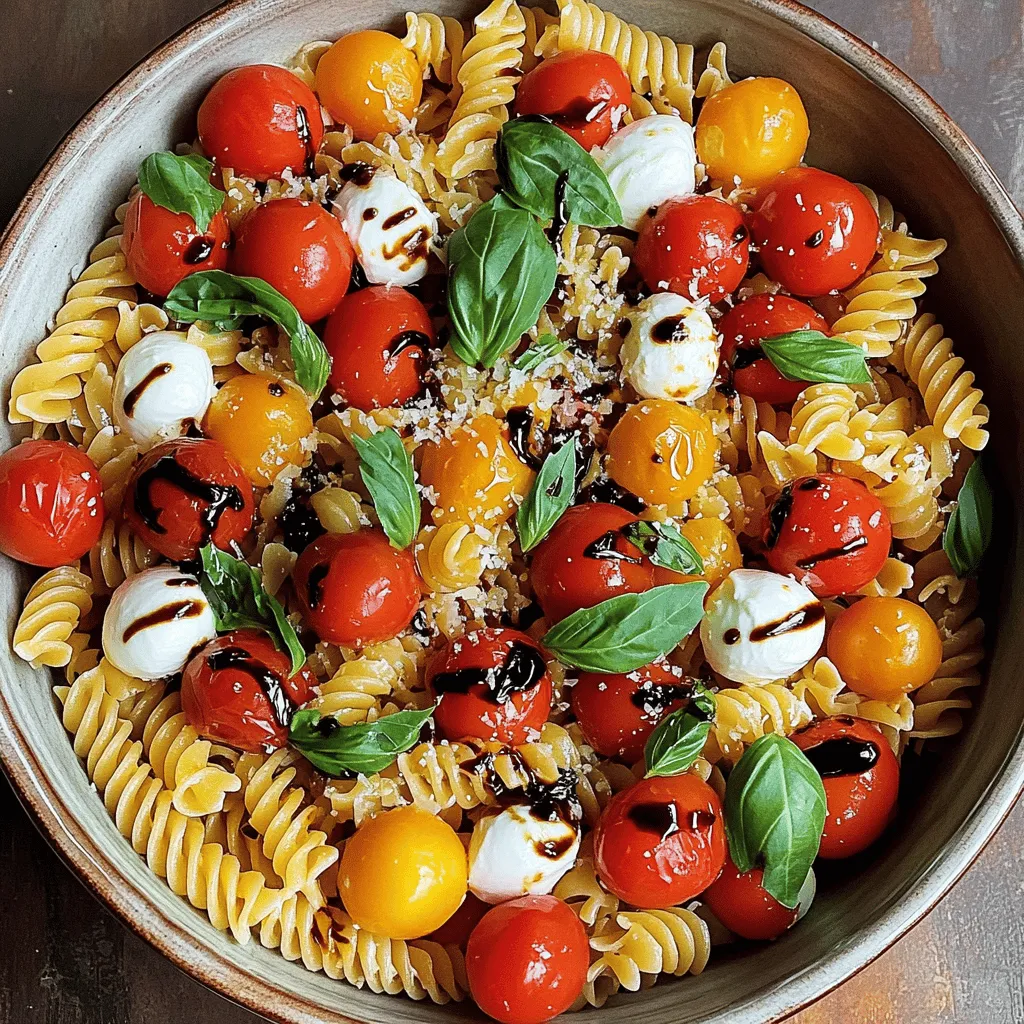
Caprese Pasta with Balsamic Glaze Simple Recipe
![To make Caprese Pasta with Balsamic Glaze, gather these key ingredients: - 12 oz pasta (fusilli or penne recommended) - 2 cups cherry tomatoes, halved - 1 cup fresh mozzarella balls (bocconcini), drained and patted dry - 1/2 cup fresh basil leaves, roughly torn - 1/4 cup extra virgin olive oil - 2 tablespoons balsamic glaze (store-bought or homemade) - 1 teaspoon garlic powder - Salt and freshly ground black pepper to taste Each ingredient plays a vital role. The pasta serves as the base. Cherry tomatoes add sweetness and color. Fresh mozzarella adds creaminess. Basil brings freshness, while balsamic glaze ties everything together with a sweet-tangy kick. You can enhance your dish with a few optional garnishes: - Freshly grated Parmesan cheese - Extra basil leaves for a pop of color - A drizzle of olive oil before serving These garnishes boost flavor and make your pasta look stunning. They add a gourmet touch that impresses everyone. Choosing high-quality ingredients makes a big difference. Here are some tips: - Use fresh pasta for a softer texture and richer flavor. - Select ripe cherry tomatoes for better sweetness. - Buy mozzarella balls packed in water for the best taste. - Pick fresh basil with vibrant green leaves. When you use quality ingredients, your Caprese Pasta will shine. Each bite will burst with flavor, making your meal truly special. For the full recipe, check the section above. Start by boiling a large pot of salted water. Once it reaches a rolling boil, add 12 ounces of pasta. I recommend using fusilli or penne for this dish. Cook the pasta according to the package instructions, usually around 8 to 10 minutes. You want it al dente, which means it should remain firm to the bite. After cooking, drain the pasta in a colander. Rinse it under cold water to stop the cooking process, then set it aside. In a small mixing bowl, combine 1/4 cup of extra virgin olive oil, 1 teaspoon of garlic powder, and salt and black pepper to taste. Whisk these ingredients together until they form a smooth mixture. This dressing adds flavor to your pasta and brings all the ingredients together. Set the dressing aside for now. In a large mixing bowl, add the drained pasta, 2 cups of halved cherry tomatoes, and 1 cup of fresh mozzarella balls. Use a spatula or wooden spoon to gently mix these ingredients together. Next, pour the prepared dressing over the pasta mix. Toss everything until all the ingredients are coated with the dressing. Then, gently fold in 1/2 cup of torn fresh basil leaves. Be careful not to bruise them. Just before serving, drizzle 2 tablespoons of balsamic glaze over the pasta. Toss the dish again for an even flavor. You can serve this pasta warm or chill it in the fridge for about 30 minutes for a cold salad. Enjoy your Caprese Pasta with Balsamic Glaze! For the complete recipe, check the Full Recipe section. To boost the flavors in your Caprese pasta, focus on fresh ingredients. The magic lies in ripe cherry tomatoes and creamy mozzarella. Use extra virgin olive oil for a rich taste. If you want a zesty kick, add a bit of lemon juice. It brightens the dish. Consider also using garlic powder for depth—just a teaspoon will do. Lastly, a sprinkle of salt and pepper can make all the difference. Cooking pasta to the right texture is key. Aim for al dente, which means it should be firm but cooked. Start with a large pot of salted boiling water. This helps flavor the pasta. Follow the package’s recommended cook time, usually about 8-10 minutes. Once cooked, drain it but do not rinse. Rinsing washes away the starch, which helps sauce cling to the pasta. A beautiful presentation makes any meal special. Use a large, shallow bowl for serving. This allows the colors to pop. Top your pasta with fresh basil leaves and a sprinkle of Parmesan cheese. You can drizzle a bit more balsamic glaze on top for that extra visual appeal. Serve it warm or chill it for a refreshing treat. Remember, we eat with our eyes first! For the full recipe, check out the Caprese Pasta Delight. {{image_4}} You can mix up this Caprese pasta recipe easily. Use different pasta shapes like spaghetti or farfalle for fun. Swap cherry tomatoes for sun-dried tomatoes if you want a bolder taste. You can also try adding grilled chicken or shrimp for protein. Instead of fresh mozzarella, use feta for a tangy twist. Seasonal ingredients can brighten this dish. In spring, add asparagus or peas for freshness. Summer is perfect for zucchini or bell peppers. In fall, consider roasted butternut squash for a sweet flavor. Winter calls for hearty greens like kale or spinach. These additions can enhance color and taste. You can make this dish fit many diets. To make it vegan, skip the mozzarella and use avocado or cashew cheese instead. For a gluten-free option, choose gluten-free pasta made from rice or quinoa. Adjust the dressing by using a vegan-friendly oil. This way, everyone can enjoy Caprese pasta. For the full recipe, check [Full Recipe]. To keep your Caprese pasta fresh, store it properly. Place any leftovers in an airtight container. This helps keep moisture in and prevents the pasta from drying out. If you have extra balsamic glaze, store it separately. This way, you can drizzle it on just before serving. When it's time to eat your leftovers, reheat the pasta gently. Use a microwave or a pan on low heat. If using the microwave, heat in short bursts to avoid overcooking. Add a splash of olive oil or a bit of water to keep it moist. Stir well to ensure even heat. Caprese pasta stays fresh for about 3 days in the fridge. After that, the flavors can fade. If you want to keep it longer, consider freezing it. But remember, the texture might change once it's thawed. Enjoy your delicious meal within those days for the best taste! To make balsamic glaze, start with balsamic vinegar. Pour one cup of vinegar into a small saucepan. Heat it over medium heat. Stir it often as it heats. Once it boils, reduce the heat. Let it simmer for about 15 to 20 minutes. The vinegar will reduce and thicken. You want it to coat the back of a spoon. Take it off the heat and let it cool. The glaze will thicken more as it cools. Yes, you can use many types of pasta. Fusilli and penne are great choices. You can also try rotini, farfalle, or spaghetti. Each type offers a unique texture. Choose what you like best. Just remember to cook it until it is al dente. Absolutely! Caprese pasta is great for meal prep. You can make it ahead of time. Store it in an airtight container in the fridge. It keeps well for up to three days. Just add the balsamic glaze right before serving. This will keep the flavors fresh. For the full recipe, check out the Caprese Pasta Delight section. This article covered key ingredients for Caprese pasta, how to cook it, and tips for flavor and texture. We also explored variations for different diets and seasonal tastes. Remember, quality ingredients make a big difference. Experiment with flavors and enjoy your meals. It’s all about making food that you love. Enjoy creating your perfect Caprese pasta!](https://goldendishy.com/wp-content/uploads/2025/05/8e484e0a-c503-4741-abc1-b7211b9a34a5.webp)
Are you ready to elevate your pasta game? This simple recipe for Caprese Pasta with Balsamic Glaze combines fresh flavors and easy steps to create a dish you’ll love. With ripe tomatoes, creamy mozzarella, and rich balsamic glaze, every bite bursts with joy. I’ll guide you through each part, from choosing the best ingredients to helpful tips for serving. Let’s dive into this delicious, crowd-pleasing meal!
Ingredients
Key Ingredients Overview
To make Caprese Pasta with Balsamic Glaze, gather these key ingredients:
– 12 oz pasta (fusilli or penne recommended)
– 2 cups cherry tomatoes, halved
– 1 cup fresh mozzarella balls (bocconcini), drained and patted dry
– 1/2 cup fresh basil leaves, roughly torn
– 1/4 cup extra virgin olive oil
– 2 tablespoons balsamic glaze (store-bought or homemade)
– 1 teaspoon garlic powder
– Salt and freshly ground black pepper to taste
Each ingredient plays a vital role. The pasta serves as the base. Cherry tomatoes add sweetness and color. Fresh mozzarella adds creaminess. Basil brings freshness, while balsamic glaze ties everything together with a sweet-tangy kick.
Optional Garnishes
You can enhance your dish with a few optional garnishes:
– Freshly grated Parmesan cheese
– Extra basil leaves for a pop of color
– A drizzle of olive oil before serving
These garnishes boost flavor and make your pasta look stunning. They add a gourmet touch that impresses everyone.
Quality Tips for Ingredients
Choosing high-quality ingredients makes a big difference. Here are some tips:
– Use fresh pasta for a softer texture and richer flavor.
– Select ripe cherry tomatoes for better sweetness.
– Buy mozzarella balls packed in water for the best taste.
– Pick fresh basil with vibrant green leaves.
When you use quality ingredients, your Caprese Pasta will shine. Each bite will burst with flavor, making your meal truly special.
Step-by-Step Instructions
Cooking the Pasta
Start by boiling a large pot of salted water. Once it reaches a rolling boil, add 12 ounces of pasta. I recommend using fusilli or penne for this dish. Cook the pasta according to the package instructions, usually around 8 to 10 minutes. You want it al dente, which means it should remain firm to the bite. After cooking, drain the pasta in a colander. Rinse it under cold water to stop the cooking process, then set it aside.
Preparing the Dressing
In a small mixing bowl, combine 1/4 cup of extra virgin olive oil, 1 teaspoon of garlic powder, and salt and black pepper to taste. Whisk these ingredients together until they form a smooth mixture. This dressing adds flavor to your pasta and brings all the ingredients together. Set the dressing aside for now.
Combining and Serving the Pasta
In a large mixing bowl, add the drained pasta, 2 cups of halved cherry tomatoes, and 1 cup of fresh mozzarella balls. Use a spatula or wooden spoon to gently mix these ingredients together. Next, pour the prepared dressing over the pasta mix. Toss everything until all the ingredients are coated with the dressing. Then, gently fold in 1/2 cup of torn fresh basil leaves. Be careful not to bruise them. Just before serving, drizzle 2 tablespoons of balsamic glaze over the pasta. Toss the dish again for an even flavor. You can serve this pasta warm or chill it in the fridge for about 30 minutes for a cold salad. Enjoy your Caprese Pasta with Balsamic Glaze!
Tips & Tricks
Enhancing Flavor Profiles
To boost the flavors in your Caprese pasta, focus on fresh ingredients. The magic lies in ripe cherry tomatoes and creamy mozzarella. Use extra virgin olive oil for a rich taste. If you want a zesty kick, add a bit of lemon juice. It brightens the dish. Consider also using garlic powder for depth—just a teaspoon will do. Lastly, a sprinkle of salt and pepper can make all the difference.
Perfecting Pasta Texture
Cooking pasta to the right texture is key. Aim for al dente, which means it should be firm but cooked. Start with a large pot of salted boiling water. This helps flavor the pasta. Follow the package’s recommended cook time, usually about 8-10 minutes. Once cooked, drain it but do not rinse. Rinsing washes away the starch, which helps sauce cling to the pasta.
Presentation Tips for Serving
A beautiful presentation makes any meal special. Use a large, shallow bowl for serving. This allows the colors to pop. Top your pasta with fresh basil leaves and a sprinkle of Parmesan cheese. You can drizzle a bit more balsamic glaze on top for that extra visual appeal. Serve it warm or chill it for a refreshing treat. Remember, we eat with our eyes first!
Variations
Ingredient Swaps for Different Flavors
You can mix up this Caprese pasta recipe easily. Use different pasta shapes like spaghetti or farfalle for fun. Swap cherry tomatoes for sun-dried tomatoes if you want a bolder taste. You can also try adding grilled chicken or shrimp for protein. Instead of fresh mozzarella, use feta for a tangy twist.
Seasonal Additions
Seasonal ingredients can brighten this dish. In spring, add asparagus or peas for freshness. Summer is perfect for zucchini or bell peppers. In fall, consider roasted butternut squash for a sweet flavor. Winter calls for hearty greens like kale or spinach. These additions can enhance color and taste.
Dietary Adjustments (Vegan, Gluten-Free)
You can make this dish fit many diets. To make it vegan, skip the mozzarella and use avocado or cashew cheese instead. For a gluten-free option, choose gluten-free pasta made from rice or quinoa. Adjust the dressing by using a vegan-friendly oil. This way, everyone can enjoy Caprese pasta.
Storage Info
Proper Storage Techniques
To keep your Caprese pasta fresh, store it properly. Place any leftovers in an airtight container. This helps keep moisture in and prevents the pasta from drying out. If you have extra balsamic glaze, store it separately. This way, you can drizzle it on just before serving.
Reheating Tips
When it’s time to eat your leftovers, reheat the pasta gently. Use a microwave or a pan on low heat. If using the microwave, heat in short bursts to avoid overcooking. Add a splash of olive oil or a bit of water to keep it moist. Stir well to ensure even heat.
Shelf Life of Caprese Pasta
Caprese pasta stays fresh for about 3 days in the fridge. After that, the flavors can fade. If you want to keep it longer, consider freezing it. But remember, the texture might change once it’s thawed. Enjoy your delicious meal within those days for the best taste!
FAQs
How can I make homemade balsamic glaze?
To make balsamic glaze, start with balsamic vinegar. Pour one cup of vinegar into a small saucepan. Heat it over medium heat. Stir it often as it heats. Once it boils, reduce the heat. Let it simmer for about 15 to 20 minutes. The vinegar will reduce and thicken. You want it to coat the back of a spoon. Take it off the heat and let it cool. The glaze will thicken more as it cools.
Can I use different types of pasta?
Yes, you can use many types of pasta. Fusilli and penne are great choices. You can also try rotini, farfalle, or spaghetti. Each type offers a unique texture. Choose what you like best. Just remember to cook it until it is al dente.
Is Caprese Pasta suitable for meal prep?
Absolutely! Caprese pasta is great for meal prep. You can make it ahead of time. Store it in an airtight container in the fridge. It keeps well for up to three days. Just add the balsamic glaze right before serving. This will keep the flavors fresh.
This article covered key ingredients for Caprese pasta, how to cook it, and tips for flavor and texture. We also explored variations for different diets and seasonal tastes.
Remember, quality ingredients make a big difference. Experiment with flavors and enjoy your meals. It’s all about making food that you love. Enjoy creating your perfect Caprese pasta!
![To make Caprese Pasta with Balsamic Glaze, gather these key ingredients: - 12 oz pasta (fusilli or penne recommended) - 2 cups cherry tomatoes, halved - 1 cup fresh mozzarella balls (bocconcini), drained and patted dry - 1/2 cup fresh basil leaves, roughly torn - 1/4 cup extra virgin olive oil - 2 tablespoons balsamic glaze (store-bought or homemade) - 1 teaspoon garlic powder - Salt and freshly ground black pepper to taste Each ingredient plays a vital role. The pasta serves as the base. Cherry tomatoes add sweetness and color. Fresh mozzarella adds creaminess. Basil brings freshness, while balsamic glaze ties everything together with a sweet-tangy kick. You can enhance your dish with a few optional garnishes: - Freshly grated Parmesan cheese - Extra basil leaves for a pop of color - A drizzle of olive oil before serving These garnishes boost flavor and make your pasta look stunning. They add a gourmet touch that impresses everyone. Choosing high-quality ingredients makes a big difference. Here are some tips: - Use fresh pasta for a softer texture and richer flavor. - Select ripe cherry tomatoes for better sweetness. - Buy mozzarella balls packed in water for the best taste. - Pick fresh basil with vibrant green leaves. When you use quality ingredients, your Caprese Pasta will shine. Each bite will burst with flavor, making your meal truly special. For the full recipe, check the section above. Start by boiling a large pot of salted water. Once it reaches a rolling boil, add 12 ounces of pasta. I recommend using fusilli or penne for this dish. Cook the pasta according to the package instructions, usually around 8 to 10 minutes. You want it al dente, which means it should remain firm to the bite. After cooking, drain the pasta in a colander. Rinse it under cold water to stop the cooking process, then set it aside. In a small mixing bowl, combine 1/4 cup of extra virgin olive oil, 1 teaspoon of garlic powder, and salt and black pepper to taste. Whisk these ingredients together until they form a smooth mixture. This dressing adds flavor to your pasta and brings all the ingredients together. Set the dressing aside for now. In a large mixing bowl, add the drained pasta, 2 cups of halved cherry tomatoes, and 1 cup of fresh mozzarella balls. Use a spatula or wooden spoon to gently mix these ingredients together. Next, pour the prepared dressing over the pasta mix. Toss everything until all the ingredients are coated with the dressing. Then, gently fold in 1/2 cup of torn fresh basil leaves. Be careful not to bruise them. Just before serving, drizzle 2 tablespoons of balsamic glaze over the pasta. Toss the dish again for an even flavor. You can serve this pasta warm or chill it in the fridge for about 30 minutes for a cold salad. Enjoy your Caprese Pasta with Balsamic Glaze! For the complete recipe, check the Full Recipe section. To boost the flavors in your Caprese pasta, focus on fresh ingredients. The magic lies in ripe cherry tomatoes and creamy mozzarella. Use extra virgin olive oil for a rich taste. If you want a zesty kick, add a bit of lemon juice. It brightens the dish. Consider also using garlic powder for depth—just a teaspoon will do. Lastly, a sprinkle of salt and pepper can make all the difference. Cooking pasta to the right texture is key. Aim for al dente, which means it should be firm but cooked. Start with a large pot of salted boiling water. This helps flavor the pasta. Follow the package’s recommended cook time, usually about 8-10 minutes. Once cooked, drain it but do not rinse. Rinsing washes away the starch, which helps sauce cling to the pasta. A beautiful presentation makes any meal special. Use a large, shallow bowl for serving. This allows the colors to pop. Top your pasta with fresh basil leaves and a sprinkle of Parmesan cheese. You can drizzle a bit more balsamic glaze on top for that extra visual appeal. Serve it warm or chill it for a refreshing treat. Remember, we eat with our eyes first! For the full recipe, check out the Caprese Pasta Delight. {{image_4}} You can mix up this Caprese pasta recipe easily. Use different pasta shapes like spaghetti or farfalle for fun. Swap cherry tomatoes for sun-dried tomatoes if you want a bolder taste. You can also try adding grilled chicken or shrimp for protein. Instead of fresh mozzarella, use feta for a tangy twist. Seasonal ingredients can brighten this dish. In spring, add asparagus or peas for freshness. Summer is perfect for zucchini or bell peppers. In fall, consider roasted butternut squash for a sweet flavor. Winter calls for hearty greens like kale or spinach. These additions can enhance color and taste. You can make this dish fit many diets. To make it vegan, skip the mozzarella and use avocado or cashew cheese instead. For a gluten-free option, choose gluten-free pasta made from rice or quinoa. Adjust the dressing by using a vegan-friendly oil. This way, everyone can enjoy Caprese pasta. For the full recipe, check [Full Recipe]. To keep your Caprese pasta fresh, store it properly. Place any leftovers in an airtight container. This helps keep moisture in and prevents the pasta from drying out. If you have extra balsamic glaze, store it separately. This way, you can drizzle it on just before serving. When it's time to eat your leftovers, reheat the pasta gently. Use a microwave or a pan on low heat. If using the microwave, heat in short bursts to avoid overcooking. Add a splash of olive oil or a bit of water to keep it moist. Stir well to ensure even heat. Caprese pasta stays fresh for about 3 days in the fridge. After that, the flavors can fade. If you want to keep it longer, consider freezing it. But remember, the texture might change once it's thawed. Enjoy your delicious meal within those days for the best taste! To make balsamic glaze, start with balsamic vinegar. Pour one cup of vinegar into a small saucepan. Heat it over medium heat. Stir it often as it heats. Once it boils, reduce the heat. Let it simmer for about 15 to 20 minutes. The vinegar will reduce and thicken. You want it to coat the back of a spoon. Take it off the heat and let it cool. The glaze will thicken more as it cools. Yes, you can use many types of pasta. Fusilli and penne are great choices. You can also try rotini, farfalle, or spaghetti. Each type offers a unique texture. Choose what you like best. Just remember to cook it until it is al dente. Absolutely! Caprese pasta is great for meal prep. You can make it ahead of time. Store it in an airtight container in the fridge. It keeps well for up to three days. Just add the balsamic glaze right before serving. This will keep the flavors fresh. For the full recipe, check out the Caprese Pasta Delight section. This article covered key ingredients for Caprese pasta, how to cook it, and tips for flavor and texture. We also explored variations for different diets and seasonal tastes. Remember, quality ingredients make a big difference. Experiment with flavors and enjoy your meals. It’s all about making food that you love. Enjoy creating your perfect Caprese pasta!](https://goldendishy.com/wp-content/uploads/2025/05/8e484e0a-c503-4741-abc1-b7211b9a34a5-300x300.webp)
![- 4 large russet potatoes - 2 cups fresh broccoli florets, steamed to perfection - 1 cup sharp shredded cheddar cheese - 1/2 cup cream cheese, softened at room temperature To make cheesy broccoli stuffed potatoes, you need the right main ingredients. Start with large russet potatoes. These potatoes have thick skins and a fluffy inside. They hold the filling well. Next, grab fresh broccoli florets. Steaming them keeps their bright color and nutrients. For the cheesy goodness, use sharp cheddar cheese. It adds a bold flavor. Cream cheese makes the filling rich and creamy. Mixing these ingredients creates a tasty filling. - 1/4 cup sour cream for creaminess - 2 tablespoons unsalted butter, melted - 1 teaspoon garlic powder for flavor - Salt and freshly cracked black pepper to taste - Fresh chopped chives for an eye-catching garnish Seasonings enhance the flavors of your dish. Sour cream adds a nice creaminess. Melted butter gives richness to the filling. Garlic powder brings a warm, savory taste. Don't forget salt and pepper. They balance all the flavors perfectly. For a lovely garnish, use fresh chives. They add color and a mild onion taste. This combination of seasonings makes your cheesy broccoli stuffed potatoes even more delightful. For the full recipe, check [Full Recipe]. To start, you need to preheat your oven to 400°F (200°C). This helps ensure your potatoes bake evenly. Next, wash and scrub the russet potatoes to remove dirt. Use a fork to prick each potato 6-8 times. This allows steam to escape while baking. Place the potatoes on a baking sheet and bake them for 45-60 minutes. They should feel soft when you poke them with a fork. While your potatoes bake, it’s time to prepare the broccoli. Steam the fresh broccoli florets in a steamer basket over boiling water. This should take about 5-7 minutes. You want the broccoli to be bright green and tender. After steaming, set it aside to cool. In a large bowl, mix the steamed broccoli with shredded cheddar cheese, softened cream cheese, sour cream, melted butter, garlic powder, salt, and pepper. Stir until everything is creamy and well combined. Once your potatoes are done baking, take them out and let them cool for about 5 minutes. Cut each potato in half lengthwise. Scoop out some of the potato flesh, but leave a thin border for strength. Take the scooped potato and mix it into the cheesy broccoli filling. Stir until it is well blended. Now, spoon this mixture back into the potato skins. Make sure to pile it high for a nice look. Place the stuffed potatoes back on the baking sheet and return them to the oven. Bake for 15-20 minutes, or until the tops are golden and bubbly. Once they are ready, let them cool slightly before serving. You can find the full recipe for even more details on how to make this dish! To achieve a creamy consistency in your Cheesy Broccoli Stuffed Potatoes, you need the right balance of ingredients. Here’s how: - Use soft cheeses: Cream cheese and sour cream create a smooth mix. They help blend well with the broccoli. - Don’t overcook the broccoli: Steam it just until tender. Overcooking makes it mushy. - Mix well: Stir the cheese and broccoli together thoroughly. This way, every bite will be creamy. Ensuring the potatoes are fully cooked is crucial for best results. Here’s how to check: - Baking time: Bake russet potatoes for 45-60 minutes. They should feel soft when pierced. - Test for doneness: Use a fork to poke the potatoes. They should yield easily without resistance. You can add extra flavors to make your dish unique. Here are some ideas: - Bacon bits: Add crispy bacon for a salty crunch. It pairs well with broccoli. - Fresh herbs: Chopped chives or parsley can brighten the dish. They add a fresh taste. Adjusting spices can also elevate your stuffed potatoes. Here are some suggestions: - Garlic powder: Add more if you love garlic. It enhances the overall flavor. - Spice it up: A pinch of red pepper flakes gives a nice kick. For more details, check the Full Recipe. {{image_4}} You can switch up the cheese in your Cheesy Broccoli Stuffed Potatoes. Use different blends to create new flavors. For a milder taste, try using mozzarella or Monterey Jack. If you want a stronger flavor, go for Gouda or blue cheese. Mixing cheeses adds a fun twist to this dish! If you need a dairy-free option, try vegan cheese. Many brands offer tasty dairy-free cheese that melts well. You could also use nutritional yeast for a cheesy flavor without dairy. This keeps your dish creamy and delicious. Want to make your stuffed potatoes more filling? Add proteins! You can mix in cooked chicken or turkey. Shredded rotisserie chicken works great and saves time. For a vegetarian option, consider black beans or lentils. They add protein and make the dish hearty. If you love seafood, shrimp or crab can be exciting additions. Cook the seafood first, then fold it into the cheese and broccoli mix. This adds a unique flavor that makes your stuffed potatoes special. To store leftovers safely, let the stuffed potatoes cool to room temperature. Place them in an airtight container. You can keep them in the fridge for up to three days. When reheating, preheat your oven to 350°F (175°C). Place the stuffed potatoes on a baking sheet. Cover them with foil to prevent drying. Heat for about 15-20 minutes, or until they are hot throughout. This method helps keep them creamy and delicious. You can freeze stuffed potatoes for later use. First, let them cool completely after baking. Wrap each potato tightly in plastic wrap. Then, place them in a freezer bag or container. They can last up to three months in the freezer. When you want to enjoy them, take the potatoes out of the freezer. Let them thaw in the fridge overnight. Then, bake them in a preheated oven at 350°F (175°C) for about 30-40 minutes. Make sure they are hot inside before serving. This way, you can savor a tasty meal anytime. For the full recipe, check out the detailed steps included above. Cheesy broccoli stuffed potatoes are baked russet potatoes filled with a creamy mix of broccoli and cheese. The dish is hearty and comforting. You can serve them as a side or a main dish. They are perfect for family dinners or casual get-togethers. Kids and adults love this meal, making it a family favorite. To make these stuffed potatoes healthier, you can reduce calories by using low-fat cheese. You can also swap sour cream for Greek yogurt. This keeps the creaminess but cuts fat. Try using less butter or replacing it with olive oil for a healthier fat option. Fresh herbs can add flavor without extra calories. Yes, you can prepare cheesy broccoli stuffed potatoes ahead of time. After filling the potatoes, cover them and store them in the fridge for up to two days. When you are ready to eat, reheat them in the oven at 350°F (175°C) for about 20-25 minutes. Make sure they are warmed through before serving. In this post, we explored how to make Cheesy Broccoli Stuffed Potatoes. You learned about the key ingredients and the step-by-step process. I also shared tips and variations to make it your own. Remember, you can adjust flavors and textures to fit your taste. These stuffed potatoes are easy to prepare and perfect for any meal. Enjoy making them, and share your creations with friends and family!](https://goldendishy.com/wp-content/uploads/2025/07/b761c5e5-34eb-4a0c-a694-3380b074c9b4-768x768.webp)
![For this tasty dish, you need some key items: - 2 medium eggplants, sliced into ¼-inch rounds - 1 teaspoon salt (for sweating the eggplant) - 1 cup all-purpose flour - 3 large eggs, beaten - 2 cups breadcrumbs (whole wheat adds a nutty touch) - 3 cups marinara sauce (store-bought or homemade) - 2 cups shredded mozzarella cheese - 1 cup grated Parmesan cheese - 2 tablespoons fresh basil, chopped (plus extra for garnish) - 1 teaspoon garlic powder - Olive oil for frying These ingredients form the heart of your eggplant parmesan. The eggplant brings a rich texture, while the cheeses add creaminess. Besides the main ingredients, consider these seasonings: - Fresh basil adds a fragrant touch. - Oregano gives a hint of earthiness. - Red pepper flakes can add some heat. These seasonings will elevate your dish. Feel free to experiment! If you want to mix it up, try these cheese alternatives: - Provolone for a different flavor. - Goat cheese for creaminess and tang. - Vegan cheese for a plant-based version. These options can change the taste while keeping it delicious. Feel free to swap cheeses based on your preference! For the full recipe, check out the detailed instructions. Start with the eggplant. Slice it into ¼-inch rounds. Sprinkle salt on the slices. This helps to draw out moisture and bitterness. Put the slices in a colander for about 30 minutes. After that, rinse them under cold water. Use paper towels to pat them dry. Now, let’s set up your breading station. You need three shallow dishes. Fill one with flour, the second with beaten eggs, and the third with breadcrumbs mixed with garlic powder. Organizing these dishes makes the breading easy. It’s time to bread the eggplant. Take a slice and coat it in flour first. Shake off any extra flour. Next, dip it into the eggs. Make sure it is fully covered. After that, roll it in the breadcrumb mix until it is well-coated. Place the breaded slices on a plate. Heat olive oil in a large skillet over medium heat. You want enough oil to cover the bottom of the pan. Fry the eggplant slices in batches. Cook each side until golden brown, which takes about 3-4 minutes. Once cooked, put them on a paper towel-lined plate to drain any excess oil. To assemble, spread a thin layer of marinara sauce in a large baking dish. Layer half of the fried eggplant slices on the sauce. Sprinkle a third of the mozzarella and half of the Parmesan cheese on top. Add another layer of marinara sauce. Repeat these layers with the remaining eggplant, mozzarella, and Parmesan. Don’t forget the chopped basil between the layers. Cover the dish with aluminum foil. Place it in your preheated oven at 375°F (190°C). Bake for about 25 minutes. After that, carefully remove the foil. Bake uncovered for another 15 minutes. This will make the top bubbly and golden brown. Let the dish cool for a few minutes before slicing. Serve it hot and garnish with fresh basil. Enjoy your cheesy eggplant delight. For the full recipe, check out the details above. To get the best flavor, start with fresh eggplants. Look for shiny, firm ones. Salt helps to draw out moisture and bitterness. After sweating the eggplant, rinse it well. This step makes your dish taste better. Use a good marinara sauce. Homemade sauce adds depth, but store-bought works too. Mixing cheeses also boosts flavor. Try a blend of mozzarella and Parmesan for a creamy texture. One common mistake is skipping the sweating step. This can lead to a soggy dish. Also, don’t rush the frying process. Cook eggplant slices until they are golden brown. If you overcrowd the pan, they won’t fry evenly. Another pitfall is not letting the dish rest after baking. Allow it to cool for a few minutes. This helps the layers set nicely. Serve your Easy Eggplant Parmesan hot from the oven. Garnish with fresh basil for a pop of color. A side salad complements this dish well. You can also serve it with crusty bread. For a twist, pair it with a light red wine. This adds a nice touch to your meal. If you want leftovers, try layering it in a sandwich for lunch the next day. Enjoy your cheesy eggplant delight! {{image_4}} You can make Easy Eggplant Parmesan even more veggie-friendly. Try adding layers of sautéed mushrooms or spinach. Both add flavor and nutrients. You can also swap out eggplant for zucchini or butternut squash. These alternatives taste great and keep the dish fresh and exciting. If you need a gluten-free version, use gluten-free breadcrumbs. You can also use crushed rice cereal or ground almonds. These options still give that crunchy texture without the gluten. Just ensure your marinara sauce is gluten-free, too. Get creative with your toppings! You can add roasted red peppers or artichoke hearts for extra flavor. For a spicy kick, sprinkle some red pepper flakes on top before baking. If you love herbs, consider adding fresh oregano or thyme. These small changes can make a big difference in taste. For the full recipe, check out the [Full Recipe]. To keep your Easy Eggplant Parmesan fresh, let it cool first. Then, transfer it to an airtight container. You can store it in the fridge for up to three days. If you have many leftovers, consider dividing them into smaller portions. This way, you can easily grab a serving when you're hungry. When it's time to enjoy your leftovers, reheating properly is key. For the best results, use the oven. Preheat it to 350°F (175°C). Place the eggplant in an oven-safe dish. Cover it with foil to keep it moist. Heat for about 20 minutes or until it's hot. You can also microwave it, but the oven gives a better texture. If you want to save your Easy Eggplant Parmesan for later, freezing is a great option. First, let it cool completely. Then, wrap it tightly in plastic wrap and foil. This helps prevent freezer burn. You can freeze it for up to three months. When ready to eat, thaw it overnight in the fridge before reheating. Enjoy your delicious meal anytime! You can use crushed crackers or ground oats instead of breadcrumbs. Both options add a nice crunch. If you want a gluten-free choice, use almond flour or gluten-free breadcrumbs. These alternatives work well and keep the dish tasty. Yes, you can prepare this dish a day ahead. Just follow the recipe steps but stop before baking. Cover the dish and store it in the fridge. When you are ready, bake it straight from the fridge. This saves time and still tastes great! The eggplant is cooked when it is soft and golden brown. If you press it gently, it should feel tender. Look for a bubbly top with a nice golden color. This means it’s ready to serve and enjoy! Absolutely! You can mix cheeses like provolone or fontina for added flavor. If you want it to be creamier, try adding ricotta. Just remember to balance the flavors to keep it delicious. For the best taste, use a blend of cheeses. This blog post covered the key ingredients and steps for easy eggplant parmesan. You learned about preparation, seasoning, and cooking methods. I shared tips to avoid common mistakes and offered serving suggestions. We discussed variations for different diets and how to store leftovers. Eggplant parmesan is simple and delicious. You can customize it to fit your taste. Enjoy making this dish with confidence!](https://goldendishy.com/wp-content/uploads/2025/06/85579090-c8c1-4217-8fdf-70085deda6dc-768x768.webp)
![- 1 pound boneless, skinless chicken breasts, cut into 1-inch cubes - 1/4 cup fresh basil leaves, finely chopped - Zest from 2 lemons (about 2 tablespoons) - 3 tablespoons freshly squeezed lemon juice The chicken breast serves as a great base. It’s lean, tender, and perfect for grilling. Fresh basil adds a bright, herbal note. The lemon zest and juice provide a refreshing tang that makes this dish stand out. - 2 tablespoons extra virgin olive oil - 2 cloves garlic, finely minced - 1 teaspoon honey (optional, for a touch of sweetness) Olive oil keeps the chicken moist and helps the flavors blend. Garlic adds depth and aroma, while honey can balance the tart lemon if you want a hint of sweetness. - Salt and freshly ground black pepper to taste - Wooden or metal skewers Salt and pepper are essential for enhancing flavors. If you use wooden skewers, soak them in water for 30 minutes. This prevents burning during grilling. For the Full Recipe, check the detailed instructions along with cooking tips. You’ll need these ingredients to create a fantastic summer delight. To start, mix the marinade ingredients in a bowl. Combine: - 1/4 cup fresh basil leaves, finely chopped - Zest from 2 lemons (about 2 tablespoons) - 3 tablespoons freshly squeezed lemon juice - 2 tablespoons extra virgin olive oil - 2 cloves garlic, finely minced - 1 teaspoon honey (optional) - Salt and pepper to taste Whisk these together until they blend well. This step builds flavor. The lemon and basil create a bright, fresh taste that makes the chicken sing. Marination is key for juicy chicken. It helps the meat soak up the marinade's flavors. Once you prepare the marinade, add the cubed chicken to the bowl. Make sure each piece is coated. Cover the bowl tightly with plastic wrap. Let the chicken marinate in the fridge for at least 30 minutes. For best results, aim for 1-2 hours. This allows the chicken to become tender and flavorful. While the chicken marinates, preheat your grill or grill pan over medium-high heat. A hot grill helps create a nice sear on the chicken. Once the chicken is ready, thread the cubes onto skewers. Leave small gaps between pieces for even cooking. Place the skewers on the grill. Cook them for about 10-12 minutes, turning them often. To ensure the chicken is done, use a meat thermometer. The internal temperature should reach 165°F. After grilling, let the skewers rest for a few minutes. This helps keep the chicken moist. For the full recipe, check the section above. Enjoy making your lemon basil chicken skewers! To get juicy chicken, monitor the grill's temperature. Aim for medium-high heat. This helps cook the chicken quickly while keeping it tender. Use a meat thermometer to check the inside. The chicken should reach 165°F. Avoid over-charring by turning the skewers. Rotate them every few minutes for even cooking. If you see dark spots, move the skewers to a cooler part of the grill. This way, the chicken cooks well without burning. You can add more spices and herbs to the marinade. Consider using oregano or thyme for extra zest. A pinch of red pepper flakes can give it a nice kick. Just be careful not to overpower the lemon and basil. For marinating, let the chicken soak for at least 30 minutes. If you have time, marinate it for a few hours. The longer it sits, the more flavor it absorbs. This step makes a big difference in taste. For plating, arrange the skewers on a wooden board or a nice platter. Adding fresh basil leaves and lemon wedges makes it look vibrant. This adds a pop of color and gives a hint of what’s inside. Pair the skewers with side dishes like grilled vegetables or a fresh salad. You can also serve them with rice or quinoa for a filling meal. These sides enhance the overall experience of your lemon basil chicken skewers. Check the Full Recipe for more ideas! {{image_4}} You can change things up with lemon basil chicken skewers. Try adding vegetable skewers. Bell peppers, zucchini, and cherry tomatoes make great choices. They add color and crunch. If you want to swap proteins, shrimp is a tasty option. Shrimp cooks fast and absorbs flavors well. Just marinate them the same way as chicken. Dipping sauces can take your skewers to new heights. A simple garlic aioli pairs well with the fresh flavors. You can also try tzatziki for a cool and creamy contrast. For a spicy kick, sriracha or a sweet chili sauce is perfect. These sauces work with the lemon and basil, enhancing each bite. If you need gluten-free options, check your sauces and marinades. Most of the ingredients are safe, but read labels. For vegan alternatives, use tofu or tempeh instead of chicken. Marinate them just like the chicken for the best taste. You can still enjoy the bright lemon and basil flavors in a plant-based version. For the full recipe, check the [Full Recipe]. Refrigeration Guidelines After cooking, allow the chicken skewers to cool. Place them in an airtight container. Refrigerate within two hours. The chicken can stay fresh for up to four days. Always check for any signs of spoilage before eating. Freezing Tips If you want to keep them longer, freezing is a great option. Wrap the skewers tightly in plastic wrap. Then, place them in a freezer bag. They can last for up to three months in the freezer. When ready to use, thaw them in the fridge overnight before reheating. Best Methods The best way to reheat your skewers is in the oven. Preheat it to 350°F (175°C). Place the skewers on a baking tray for about 10 to 15 minutes. This method helps keep the chicken juicy. You can also reheat them on the grill for a nice char. Maintaining Flavor and Texture To maintain the flavor, add a splash of water or broth while reheating. Cover the skewers with foil to keep moisture in. This prevents the chicken from drying out and keeps it tasty. How Long Can They Last? When stored properly, cooked lemon basil chicken skewers can last for about four days in the fridge. If frozen, they can last up to three months without losing quality. Signs of Spoilage Always check for signs of spoilage. If the chicken smells off or has a slimy texture, it's best to toss it. Color change can also indicate spoilage. Trust your senses; when in doubt, throw it out. If you want to swap chicken, many tasty options exist. You can use: - Turkey breast: It has a mild flavor like chicken. - Tofu: Great for a plant-based option. - Shrimp: Cooks fast and absorbs flavors well. - Pork tenderloin: Offers a different texture and taste. Each of these options works well with the lemon and basil marinade. Adjust cooking times based on the protein you choose. Yes! Preparing the marinade ahead saves time. Here are some tips: - Mix all marinade ingredients in a bowl. - Store it in a sealed container in the fridge for up to 2 days. - When ready, add your chicken and let it soak up those flavors. Make sure to mix well before using. This keeps the flavors fresh and vibrant. To make sure your chicken is safe to eat, use a meat thermometer. Here’s how: - Insert the thermometer into the thickest part of the chicken. - Look for a temperature of 165°F. This means it’s fully cooked. - If you don't have a thermometer, cut a piece open. The meat should be white, not pink. Using a thermometer helps you avoid undercooked chicken, keeping your meal safe and tasty. You now know how to make delicious grilled chicken skewers. Start with fresh chicken, herbs, and a tasty marinade. Marinade time is key for flavor. Grilling tips help you serve juicy chicken every time. You can try different add-ins or sauces for variety. Store leftovers properly to keep them fresh. This recipe is simple yet satisfying, perfect for meals anytime. Enjoy creating your perfect skewers!](https://goldendishy.com/wp-content/uploads/2025/06/c554147d-c949-48f7-8e40-7e32e563b89e-768x768.webp)
![- 9 lasagna noodles - 2 cups cooked chicken, shredded - 2 cups Alfredo sauce (store-bought or homemade) - 2 cups ricotta cheese - 2 cups shredded mozzarella cheese - 1 cup grated Parmesan cheese - 1 cup fresh spinach, chopped - 1 teaspoon garlic powder - 1 teaspoon onion powder - Salt and pepper to taste - Fresh basil leaves for garnish Each ingredient plays a big role in flavor and texture. - Lasagna noodles form the base, holding all the layers together. - Cooked chicken adds protein and heartiness. Use rotisserie chicken for ease. - Alfredo sauce gives creaminess and rich flavor. Store-bought saves time, or you can make your own. - Ricotta cheese provides a creamy filling. It’s soft and mild, blending well with other flavors. - Shredded mozzarella cheese melts beautifully, adding gooey texture. - Grated Parmesan cheese gives a salty, nutty kick on top. - Fresh spinach brings a pop of color and nutrients. - Garlic and onion powder enhance the flavor without overpowering the dish. - Salt and pepper are essential for seasoning, balancing the taste. - Fresh basil adds brightness when you serve the dish. You can change some ingredients to suit your taste. - Swap chicken for turkey or keep it meatless with a veggie mix. - Use cottage cheese instead of ricotta for a lighter option. - Try different cheeses like gouda or cheddar for unique flavors. - If you don't have Alfredo sauce, use a white sauce or a creamy tomato sauce. - For a gluten-free version, look for gluten-free lasagna noodles. These adjustments keep the spirit of the dish while catering to your needs. For the complete recipe, check the Full Recipe. To start, bring a large pot of salted water to a boil. This water helps cook the noodles evenly. Add 9 lasagna noodles to the pot. Cook them according to the package instructions. Aim for an al dente texture, which means they should be slightly firm. Once cooked, drain the noodles. Rinse them briefly under cold water to stop the cooking process and prevent sticking. Set them aside on a clean surface or a plate. Now, grab a spacious mixing bowl. In this bowl, combine 2 cups of shredded cooked chicken, 2 cups of ricotta cheese, and 1 cup of chopped fresh spinach. Add 1 teaspoon each of garlic powder and onion powder for flavor. Don’t forget to sprinkle in some salt and pepper to taste. Mix all these ingredients thoroughly. You want a nice, smooth filling that binds together well. This mixture is the heart of your lasagna. Take a 9x13 inch baking dish and spread a thin layer of Alfredo sauce on the bottom. This helps prevent the noodles from sticking. Lay down 3 noodles side by side over the sauce. Next, spread half of your chicken and ricotta mixture over the noodles. Top this layer with a third of the shredded mozzarella cheese. Repeat this layering: add another 3 noodles, the remaining chicken mixture, and another third of mozzarella cheese. For the final layer, place the last 3 noodles on top. Cover these noodles with the rest of the Alfredo sauce. Finish with the remaining mozzarella and all of the grated Parmesan cheese on top. This will create a beautiful, bubbly crust when baked. Now, cover the dish with aluminum foil and place it in your preheated oven at 375°F (190°C). Bake for 25 minutes. After that, remove the foil and bake for another 15 minutes. Keep an eye on it until the cheese is bubbly and golden brown. This step is key for that perfect, cheesy finish. When you layer your lasagna, start with a thin layer of sauce. This helps the noodles not stick. Use three noodles for each layer. Spread half of your filling evenly over the noodles. Sprinkle some cheese on top. Repeat until you have used all ingredients. Finish with noodles, sauce, and lots of cheese on top. Bake your lasagna at 375°F (190°C). Cover it with foil for the first 25 minutes. This keeps it moist. After that, take off the foil and bake for another 15 minutes. This makes the cheese bubbly and golden. Let it cool for 10 minutes before slicing. This helps the layers hold together. Cut the lasagna into squares for serving. Garnish with fresh basil leaves and extra Parmesan cheese. This makes it look great! Pair it with a green salad or garlic bread for a complete meal. Enjoy your cheesy chicken Alfredo lasagna with family or friends for a comforting dinner. For the full recipe, check the earlier section. {{image_4}} You can easily make a vegetarian version of this dish. Just swap the chicken for a mix of veggies. Try using mushrooms, zucchini, or bell peppers instead. For added flavor, sauté the veggies before mixing them with the ricotta. This change keeps the dish creamy and satisfying. Feel free to add more vegetables or proteins. Spinach is great for color and taste. You can also toss in some chopped broccoli or roasted red peppers. If you want more protein, consider adding cooked lentils or chickpeas. These ingredients boost nutrition and make the dish heartier. You can switch up the sauce or cheese for a twist. Use a white sauce or pesto instead of Alfredo for a different flavor. For cheese, try blending mozzarella with gouda or fontina for a richer taste. Mixing cheeses adds depth and makes each bite unique. For the full recipe, check out [Full Recipe]. After enjoying your cheesy chicken Alfredo lasagna, you may have some leftovers. To store them, let the lasagna cool completely. Then, cover it tightly with plastic wrap or aluminum foil. You can also place it in an airtight container. This helps keep it fresh for up to three days in the fridge. Make sure to keep it away from strong-smelling foods to avoid any unwanted flavors. When it's time to enjoy your leftovers, reheating is simple. Preheat your oven to 350°F (175°C). Place the lasagna in a baking dish. If you want, add a splash of Alfredo sauce on top to keep it moist. Cover it with foil to prevent drying out. Bake for about 20-25 minutes, or until heated through. You can also reheat individual slices in the microwave for about 1-2 minutes on high. Just check and stir halfway through for even heating. If you want to save some for later, freezing is a great option. Cut the lasagna into portions for easy serving. Wrap each piece tightly in plastic wrap, then foil. This double wrapping helps prevent freezer burn. You can freeze it for up to three months. When ready to eat, let it thaw in the fridge overnight. Reheat in the oven or microwave as mentioned above. Enjoy your homemade meal anytime! For the full recipe, refer to the earlier section. Yes, you can use different pasta shapes. You might try wide egg noodles or even gluten-free options. Just make sure they fit well in your dish. Cook them according to the package directions. This way, they will blend smoothly with the other layers. To make Alfredo sauce, start with butter and cream. Melt 1/2 cup of butter in a pan. Then stir in 1 cup of heavy cream. Cook for about 5 minutes on low heat. Add 1 cup of grated Parmesan cheese. Mix well until it melts. Season with salt, pepper, and garlic powder for flavor. Homemade sauce tastes fresh and creamy. You can tell your lasagna is done when the cheese on top is golden brown and bubbly. Insert a knife in the center; it should slide in easily. If the layers are hot and firm, your lasagna is ready to enjoy. Let it cool a bit before serving for the best slices. For the full recipe, check out the details above. This blog post covered key ingredients for an amazing lasagna. You learned about substitutions, step-by-step cooking, and tips for a perfect dish. I shared tasty variations and smart storage ideas. When you try this recipe, you’ll enjoy a delicious meal that fits your taste. Remember, cooking is fun. Experiment with different flavors and enjoy the process!](https://goldendishy.com/wp-content/uploads/2025/07/68bc65d6-2565-4554-ba8a-7f3921e48887-768x768.webp)